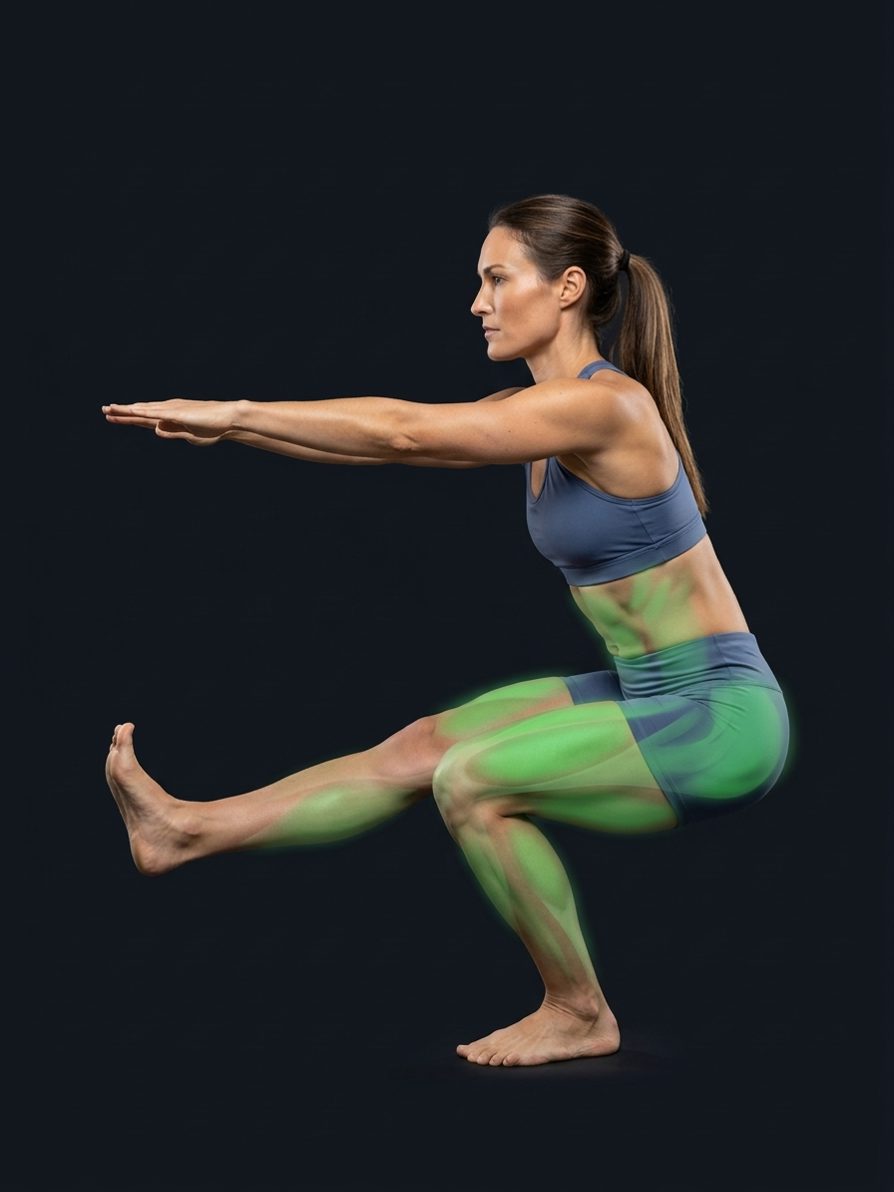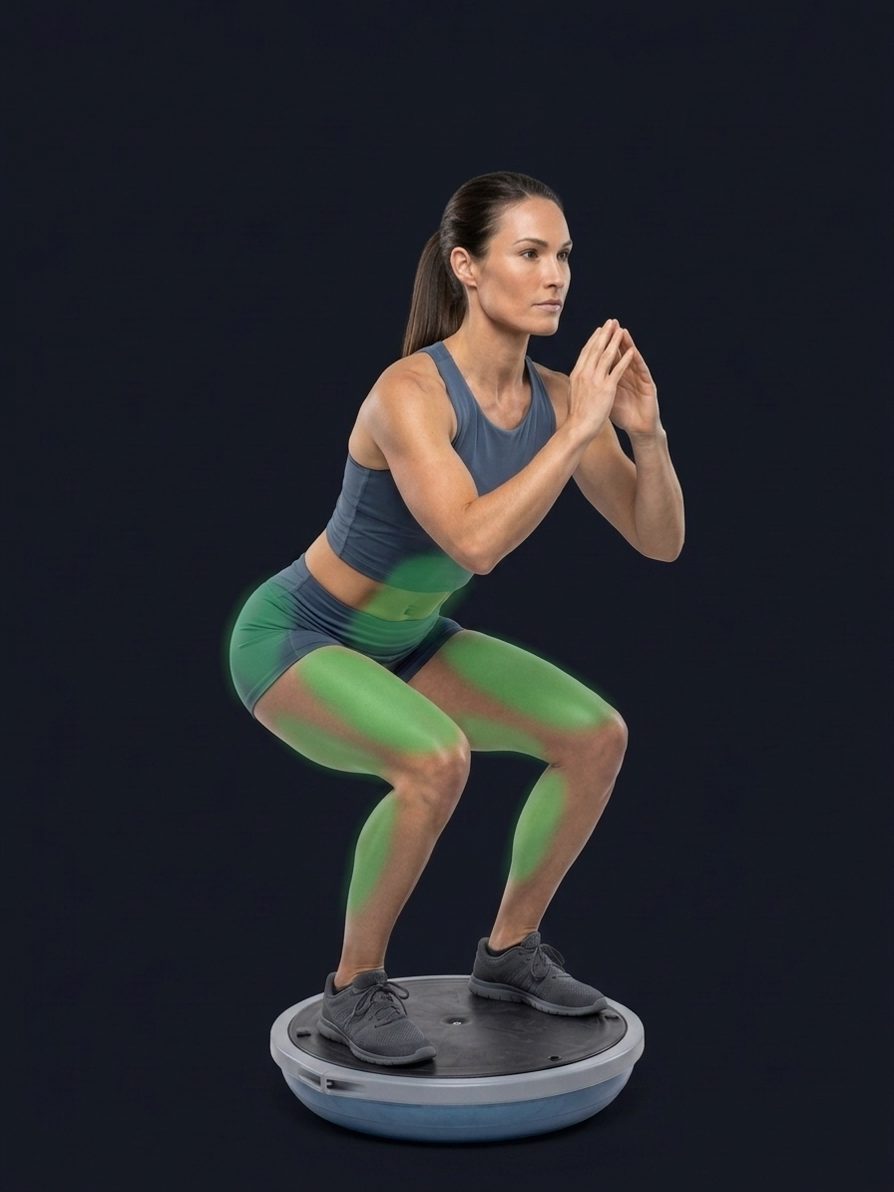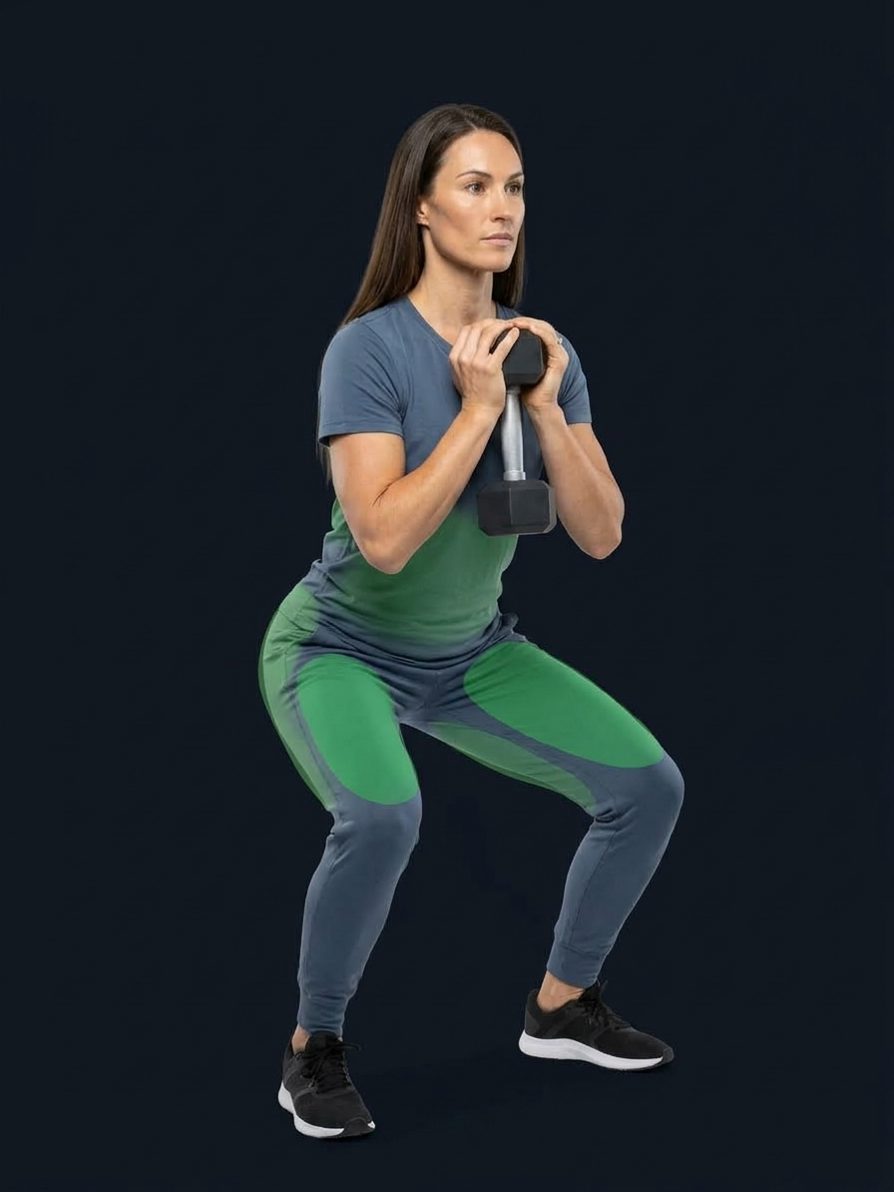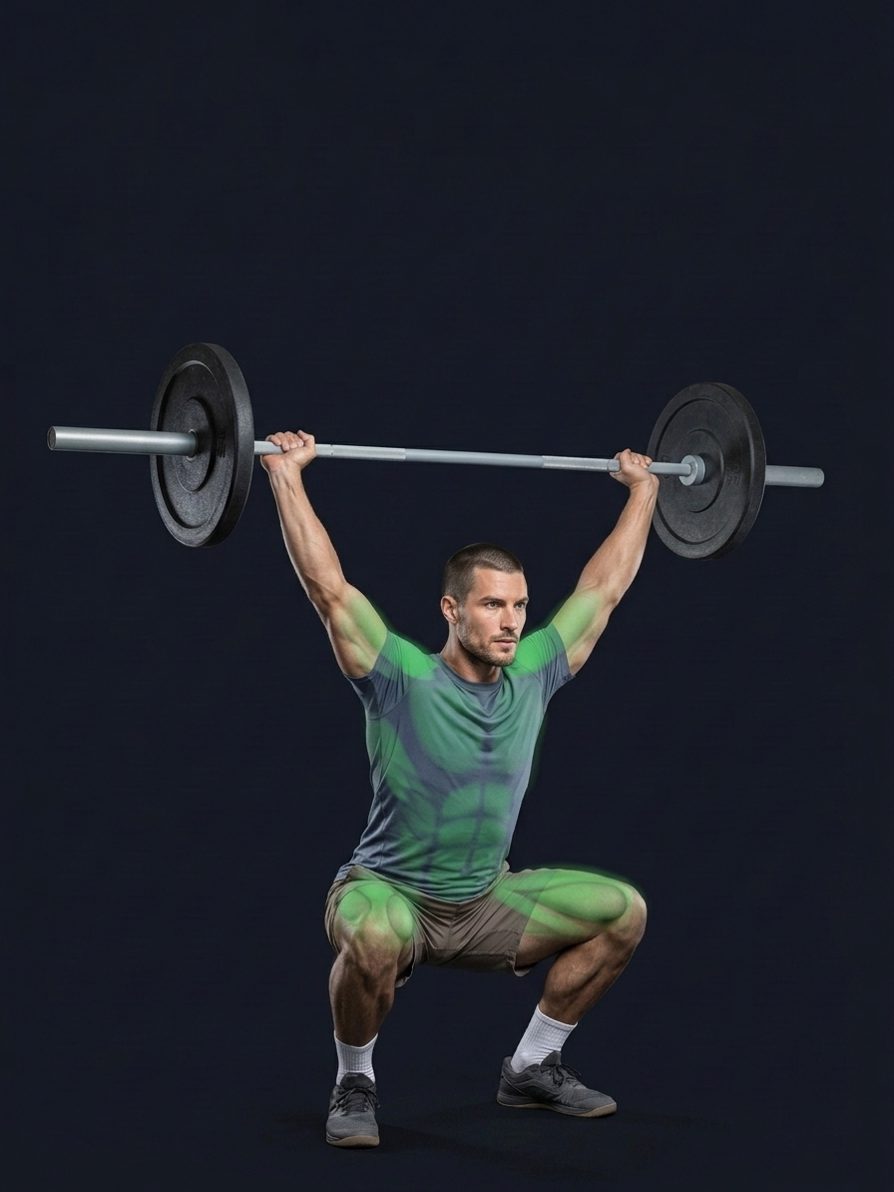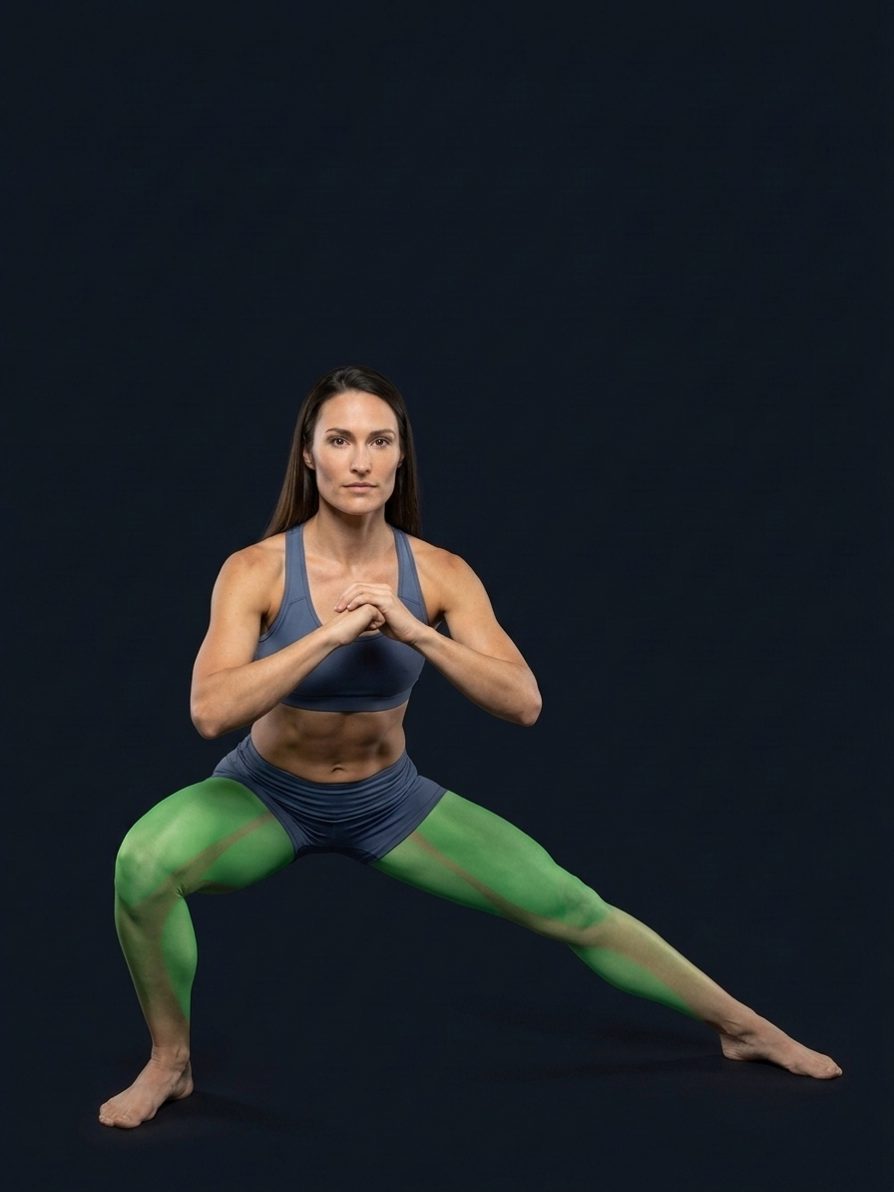
Air Squat
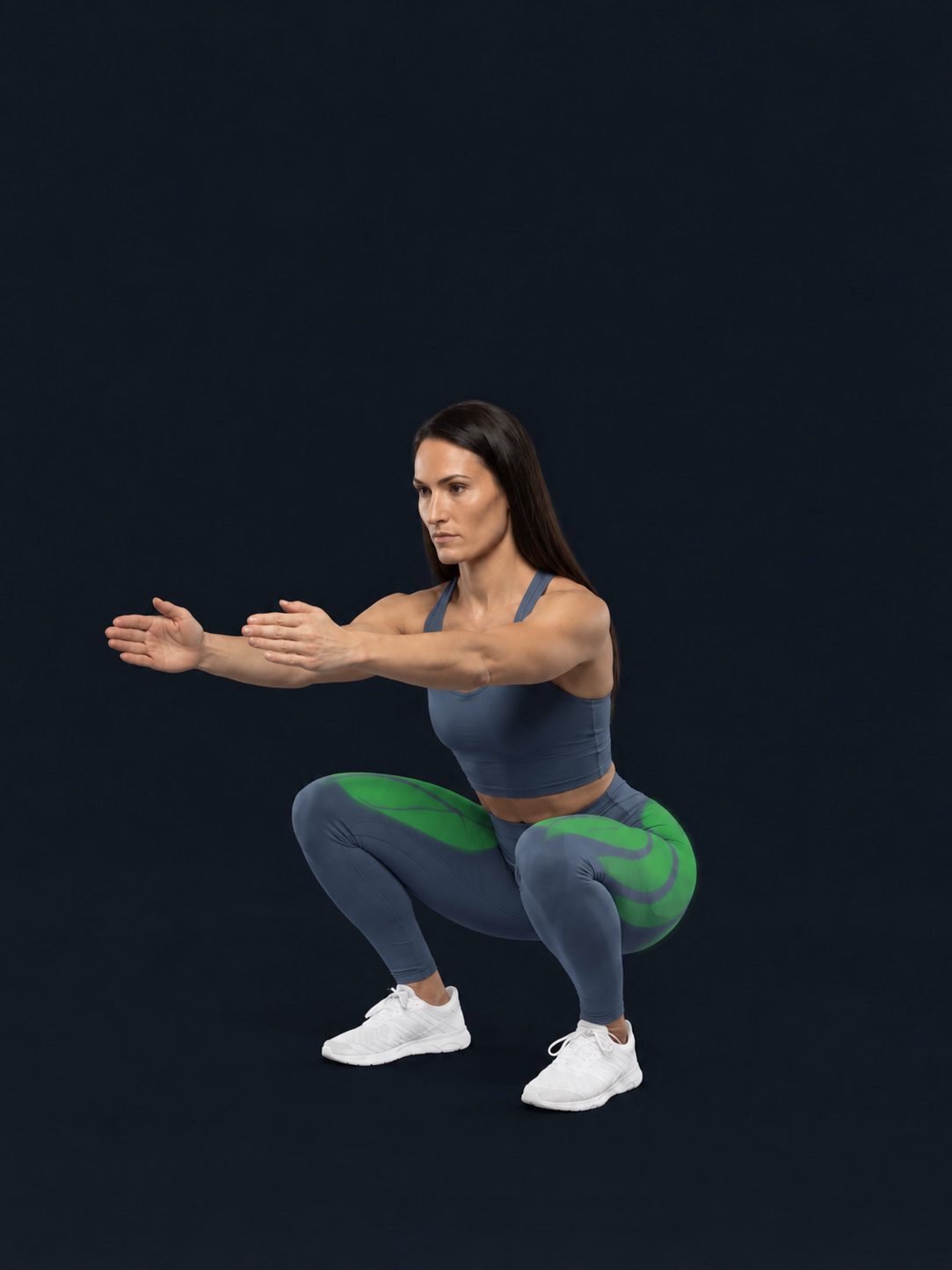
Hip crease drops below the top of the knee.
- Level
- Intermediate
- Movement
- Squat · Standing
- Tracks
- Reps only
Works
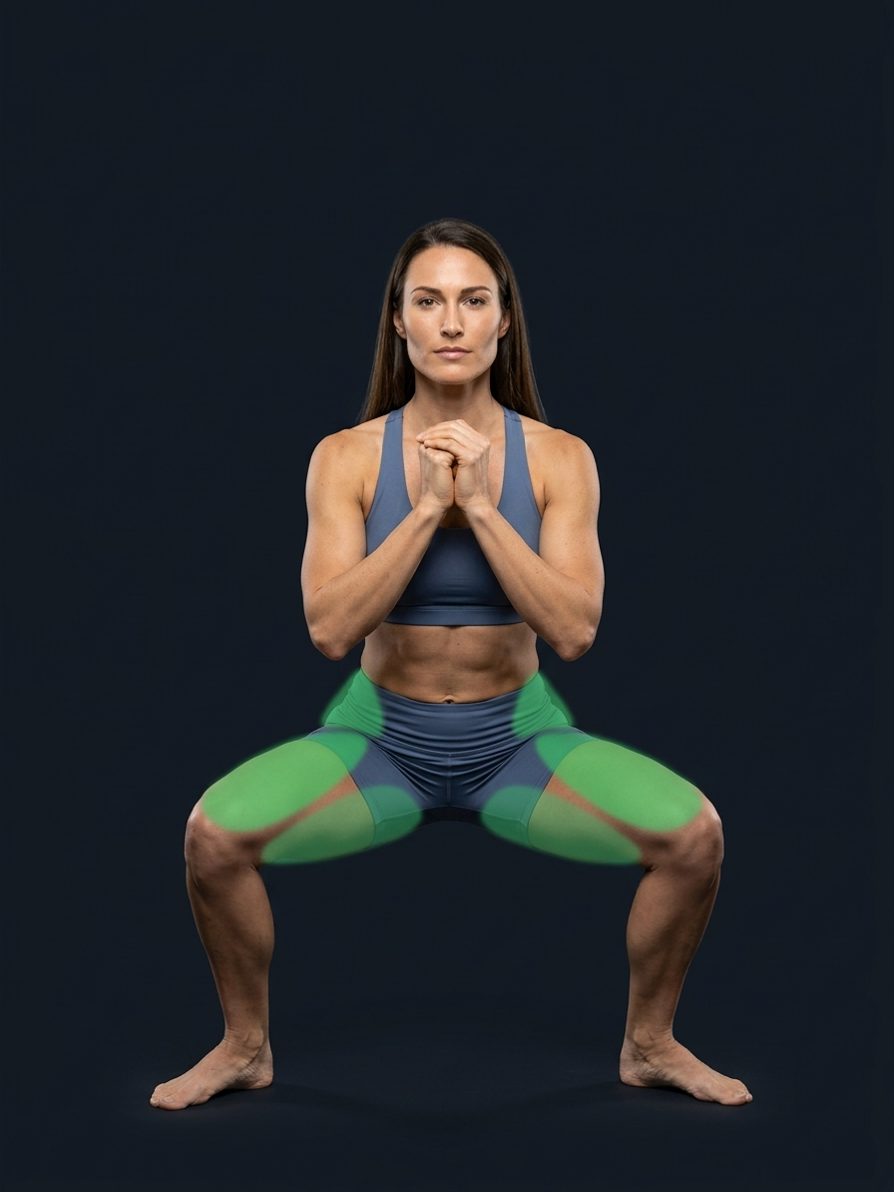
Quadriceps Glutes Hamstrings
How to do it
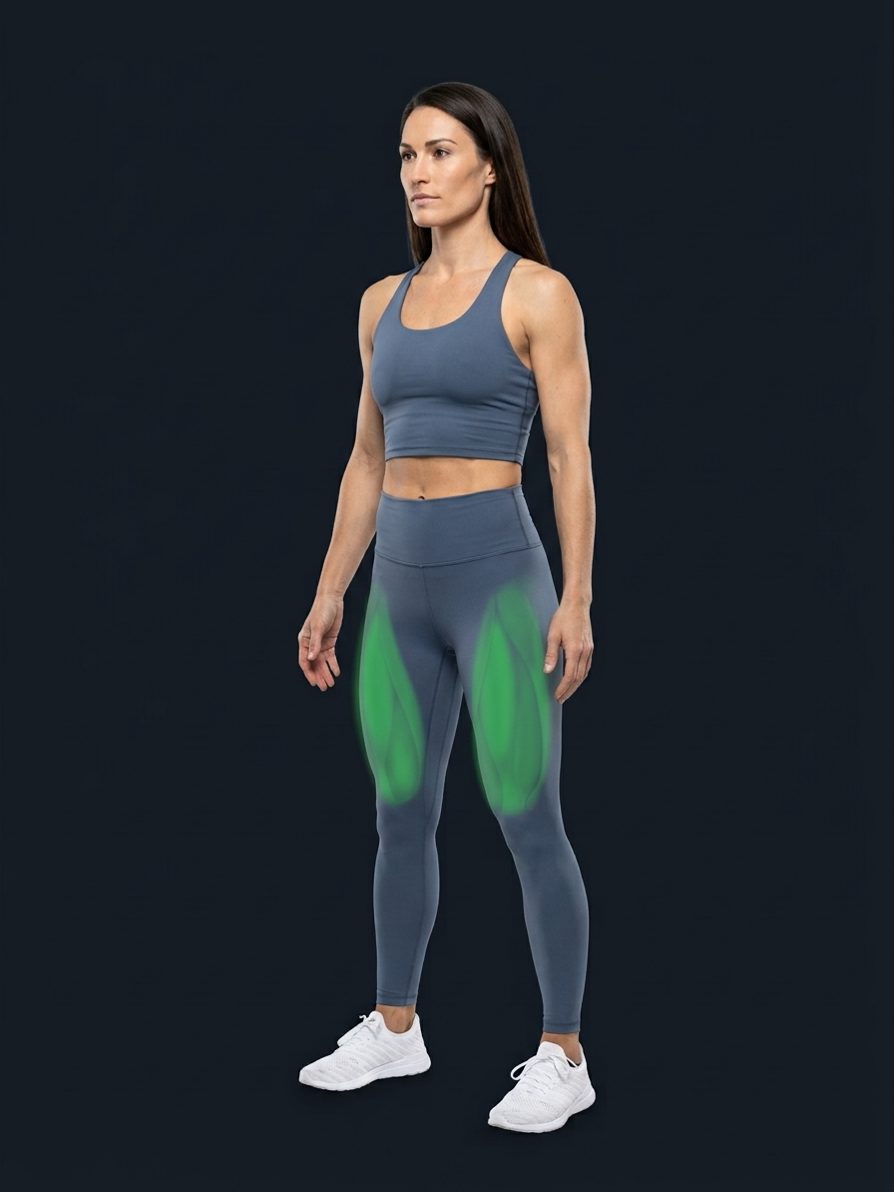
- Stand with feet shoulder-width apart and toes slightly turned out.
- Keep your chest up and core braced throughout the movement.
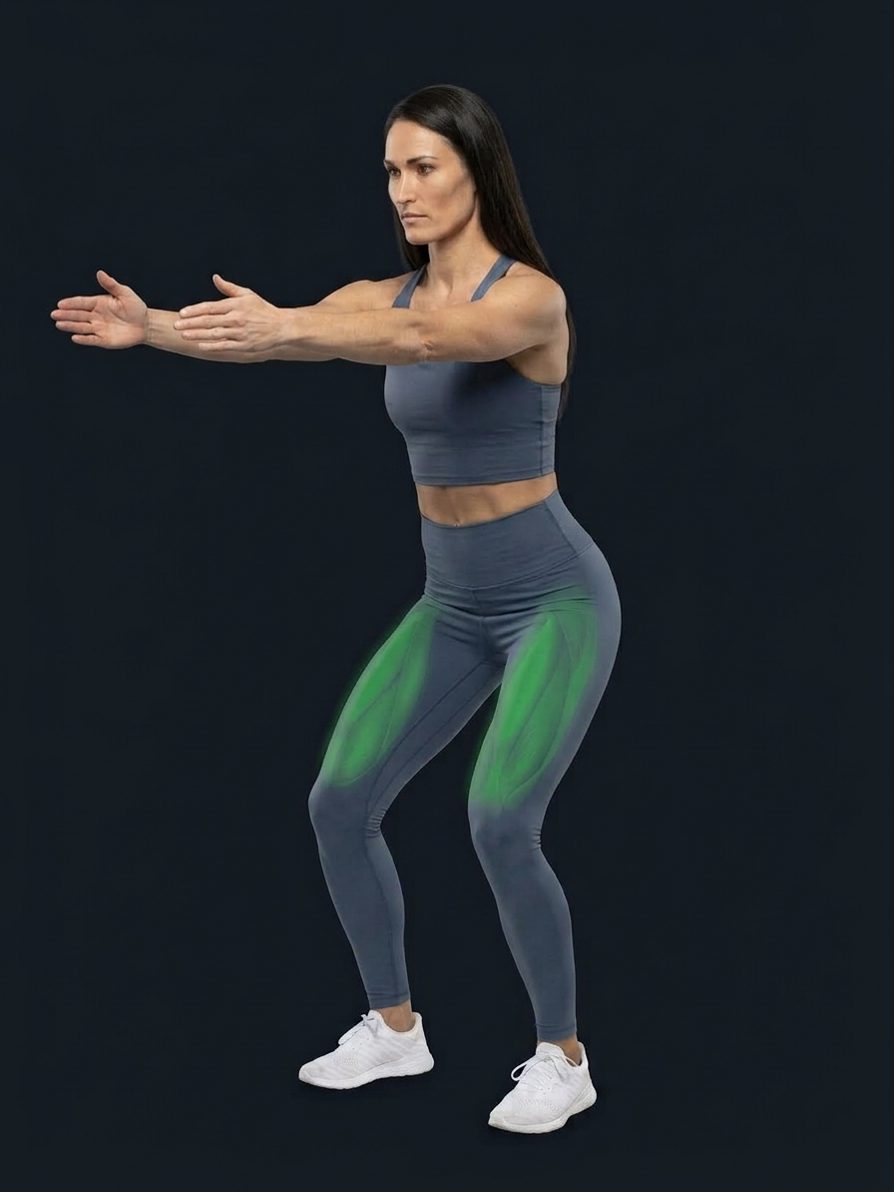
- Push your hips back and bend your knees to lower down.
- Descend until your hip crease drops below the top of your knee.
- Drive through your mid-foot to return to a standing position.
Setup
- Feet about shoulder-width, toes turned slightly out
- Chest up and trunk braced — before you descend.
- Push the hips back as the knees bend — hips travelling backward rather than straight down is what keeps this a squat rather than a knee bend.
- Weight over the middle of the foot — if the heels lift, that is ankle range rather than a fault, and a small plate under them fixes it.
- Knees tracking out in line with the toes — for the whole descent.
- Know the depth standard: the hip crease drops below the top of the knee — a measurable line, rather than going as low as you happen to manage.
Common mistakes
- Letting the knees cave inward during the descent.
- Lifting the heels off the floor at the bottom.
- Rounding the lower back while dropping into the squat.
- Failing to reach full depth before standing up.
Tips
- Keep your weight balanced over the middle of your foot.
- Push your knees outward in line with your toes.
- Maintain a neutral spine from start to finish.
Choosing it
- Before any loaded squatting — as a warm-up and a check.
- To learn or re-learn the pattern — cheap, repeatable, and nothing to bail out of.
- For conditioning — in high reps or intervals.
- When travelling — or with no equipment at all.
- Not as a strength exercise beyond the first few weeks — bodyweight is a fixed number, so load a goblet squat or a barbell once this stops being hard.
- Not as a leg-size exercise — hypertrophy wants load; this is the pattern, not the stimulus.
- Skip if — knee pain at depth. That does not improve with a slower tempo or a shallower range. Shorten the range rather than abandoning the pattern.
- Skip if — a lower back that rounds. At the bottom — stop at the depth where it does not, and raise the heels.
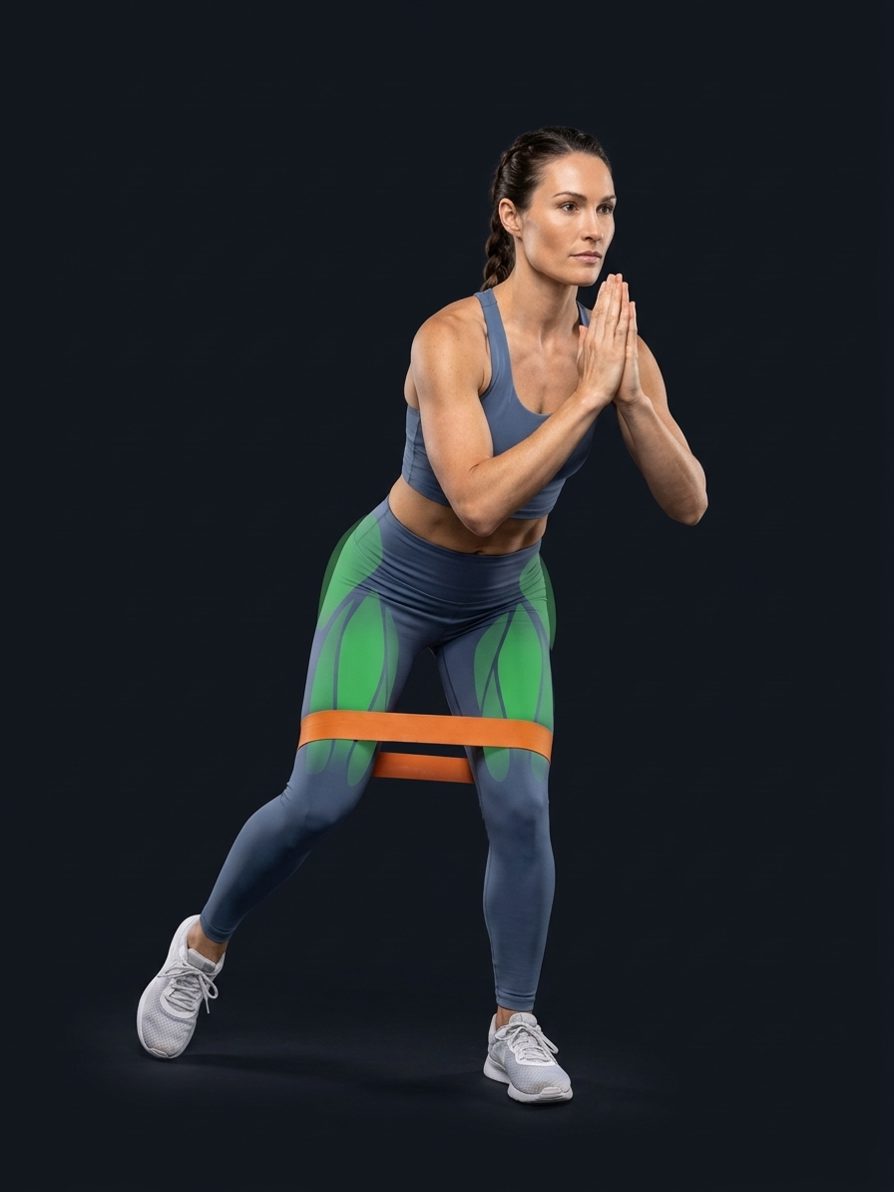
- Skip if — if depth only arrives by letting the knees fall in. Work on the position before the range. A band around the knees, pushing out against it, teaches it quickly.
Adapting it
- Heels on a 1–2 cm plate — if they lift, as above. Not cheating.
- Hold a light weight at your chest — counter-intuitively this makes depth easier, because the counterweight lets your torso stay upright.
- Box squat — sit back to a bench to learn the hip-back pattern and guarantee consistent depth.
- Tempo — three seconds down, one-second pause — turns a trivial exercise into a hard one without load.
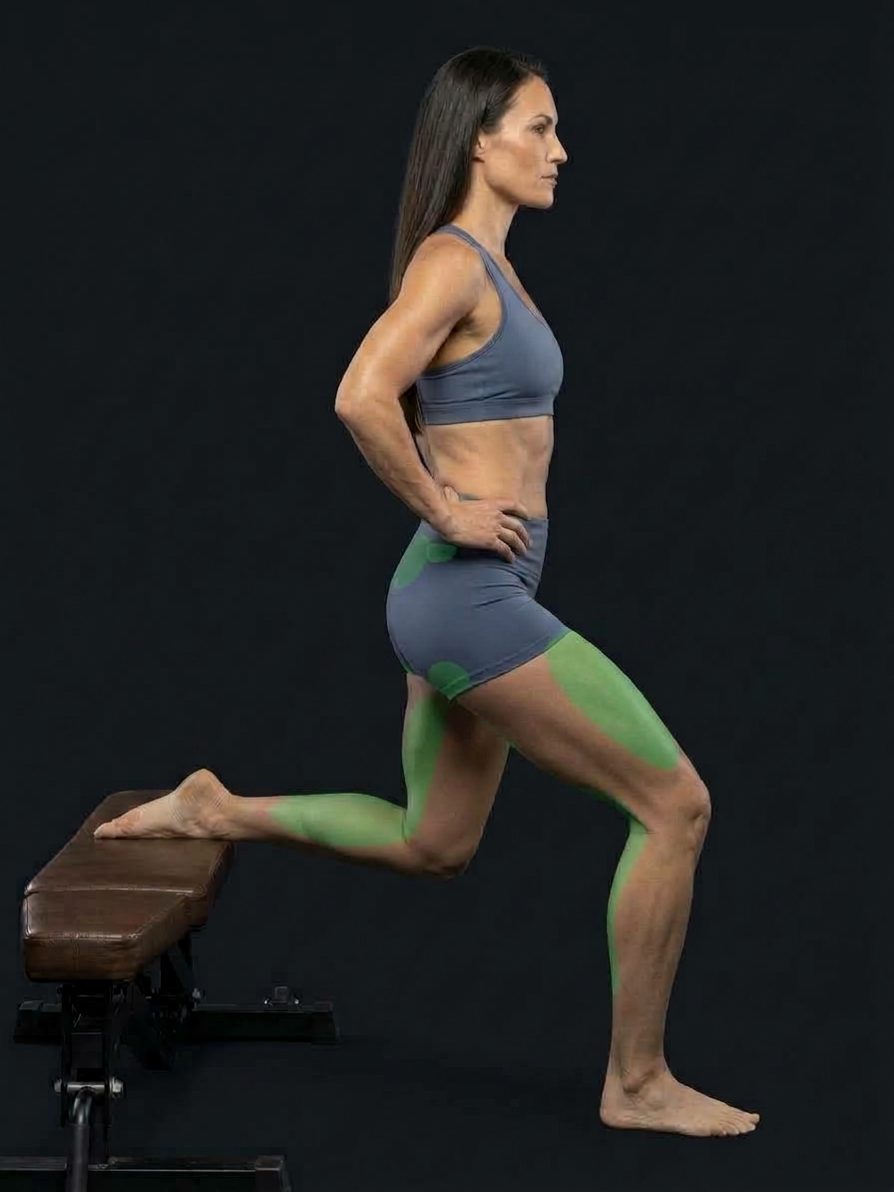
- Harder, in order — tempo, then a pause at the bottom, then a split squat, then a step-down, then a single-leg squat. Adding reps is the least useful way to progress it.
- Hands — out in front helps balance; behind the head makes the torso work.
Details
- Base movement
- Squat
- Legs
- Both
- Body position
- Standing
- Stance
- Shoulder-width