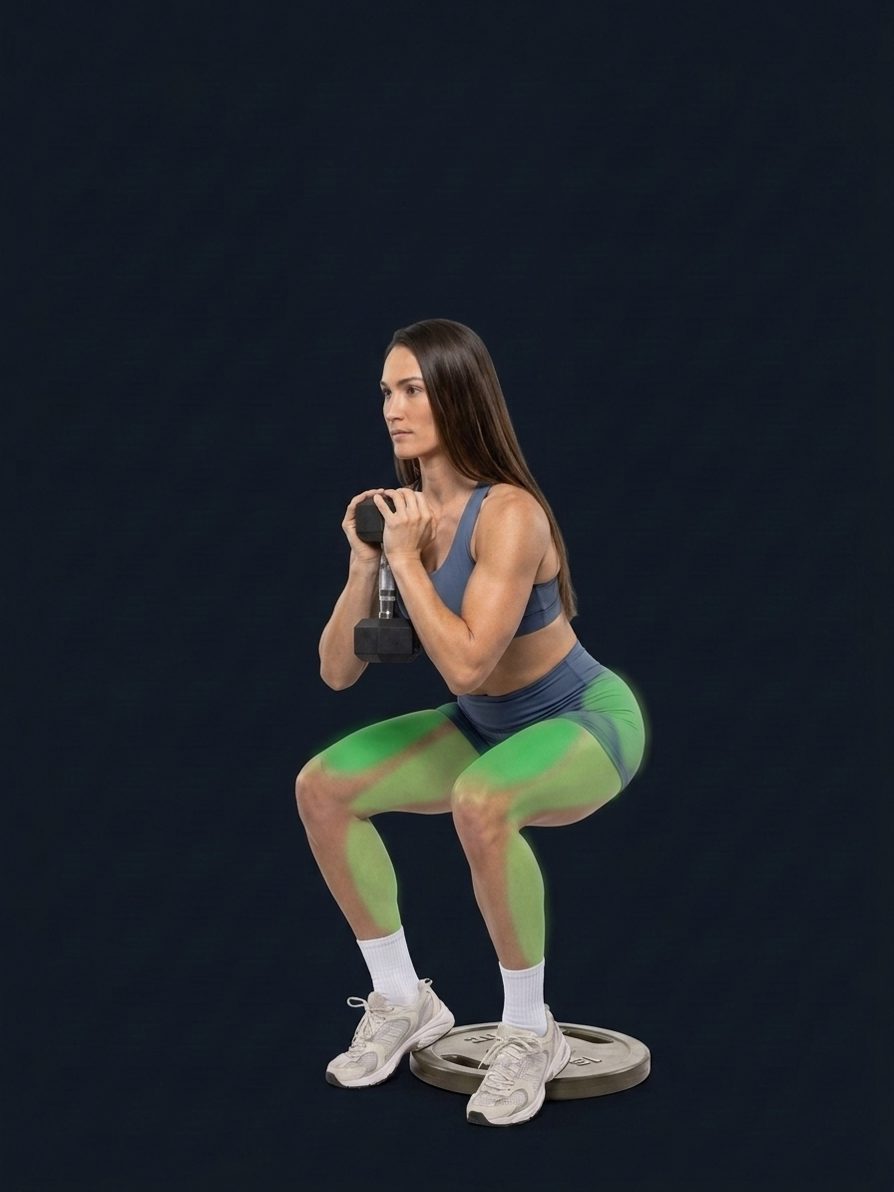
Heels Elevated Goblet Squat
- Level
- Beginner
- Equipment
- Dumbbell, Kettlebell
- Movement
- Squat · Standing
- Tracks
- Weight × reps
Works
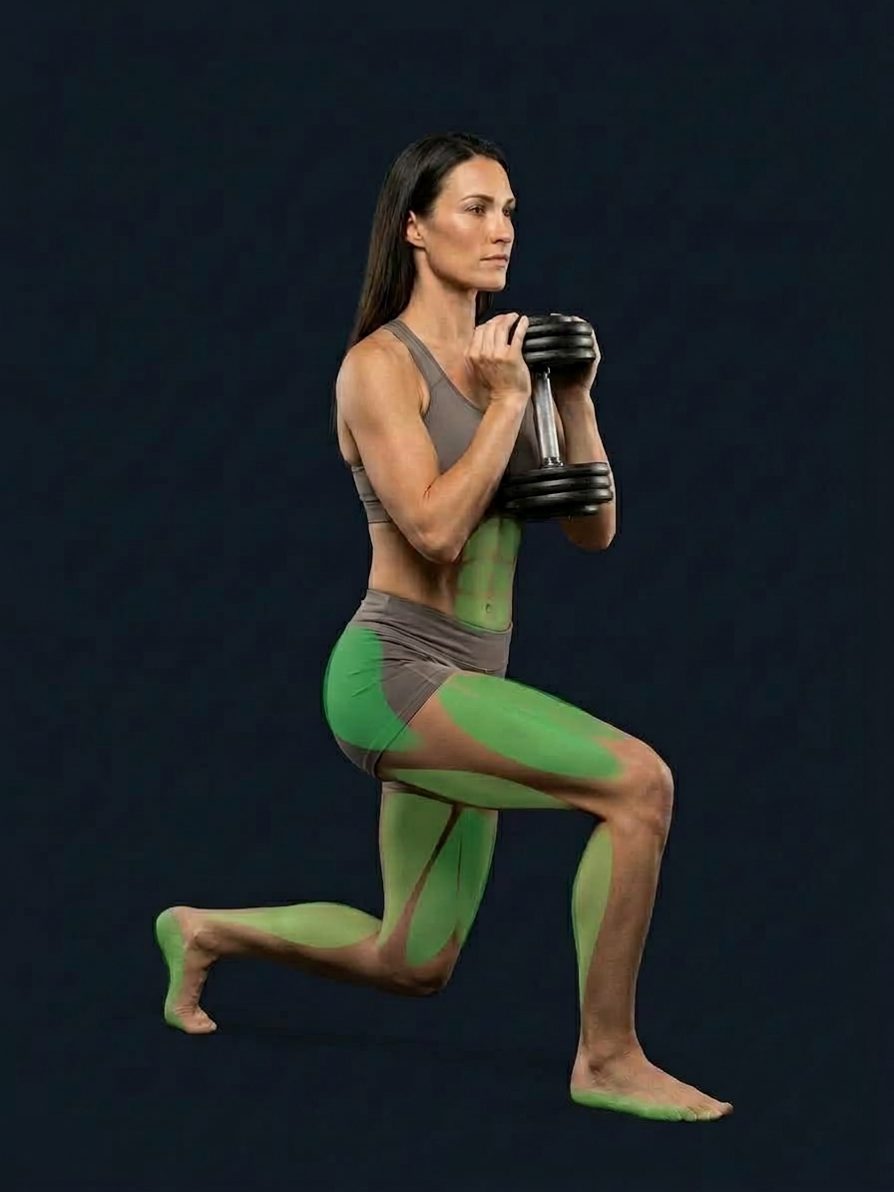
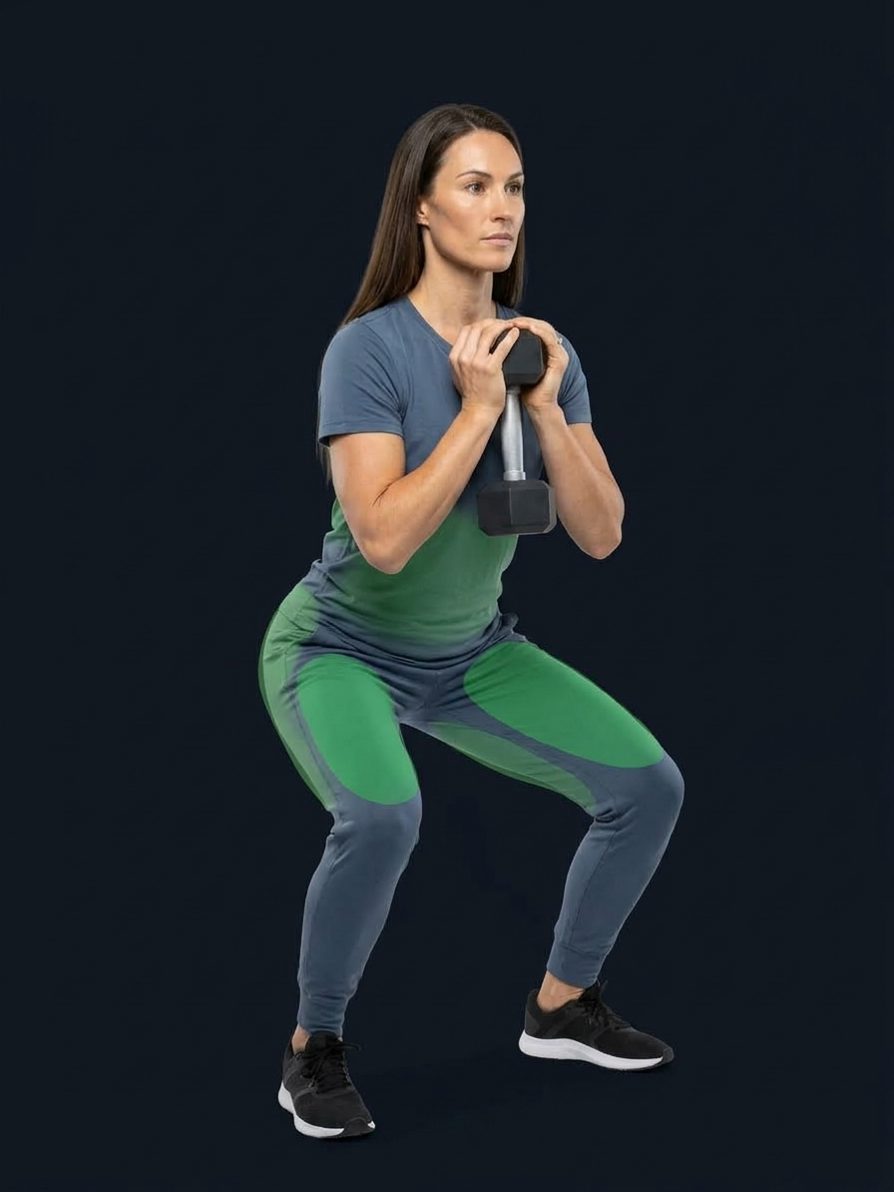
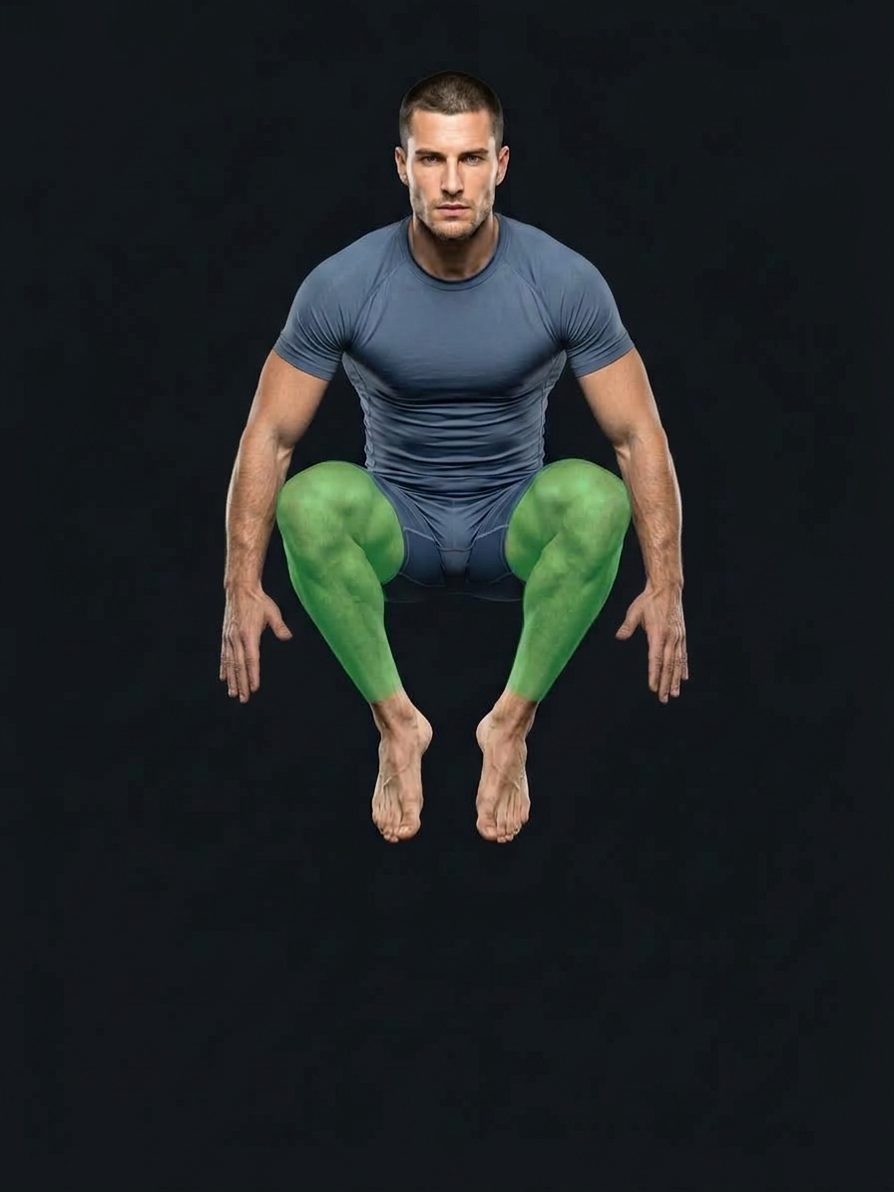
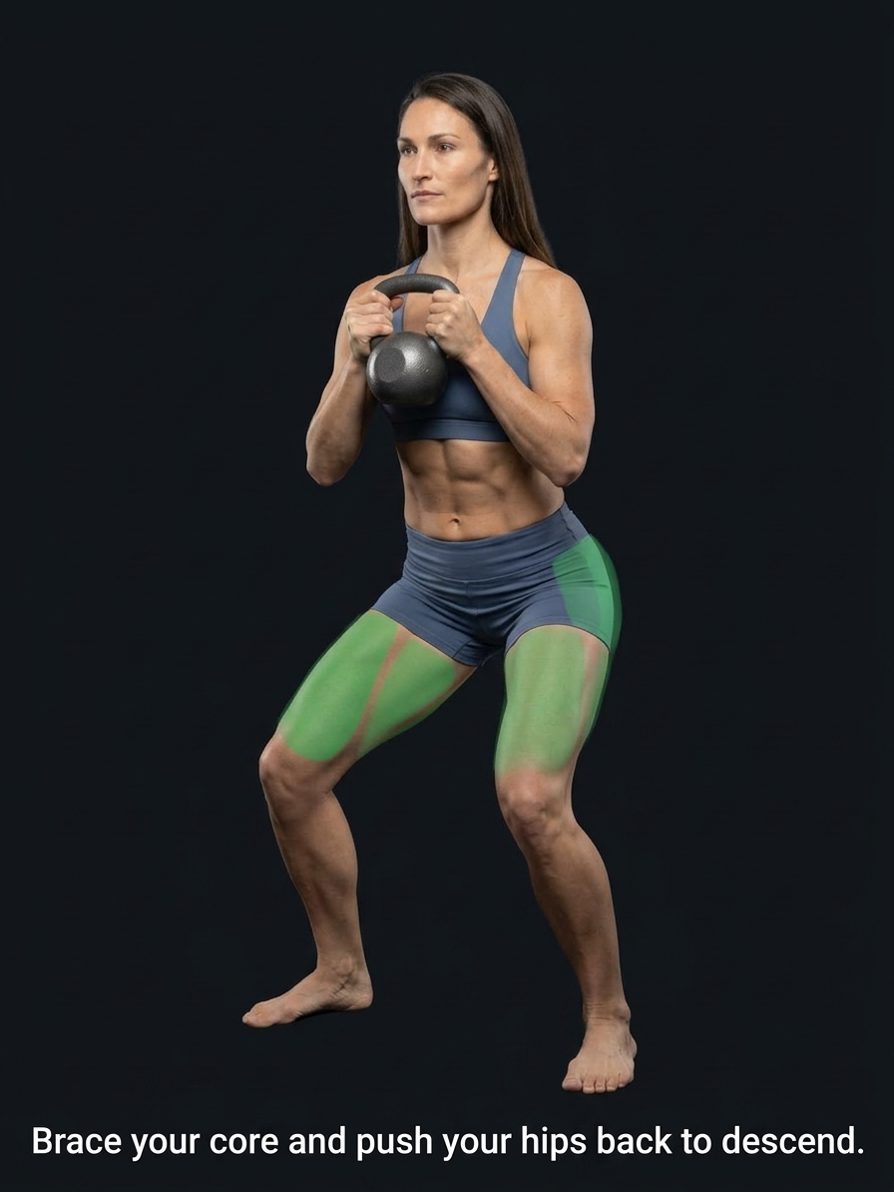
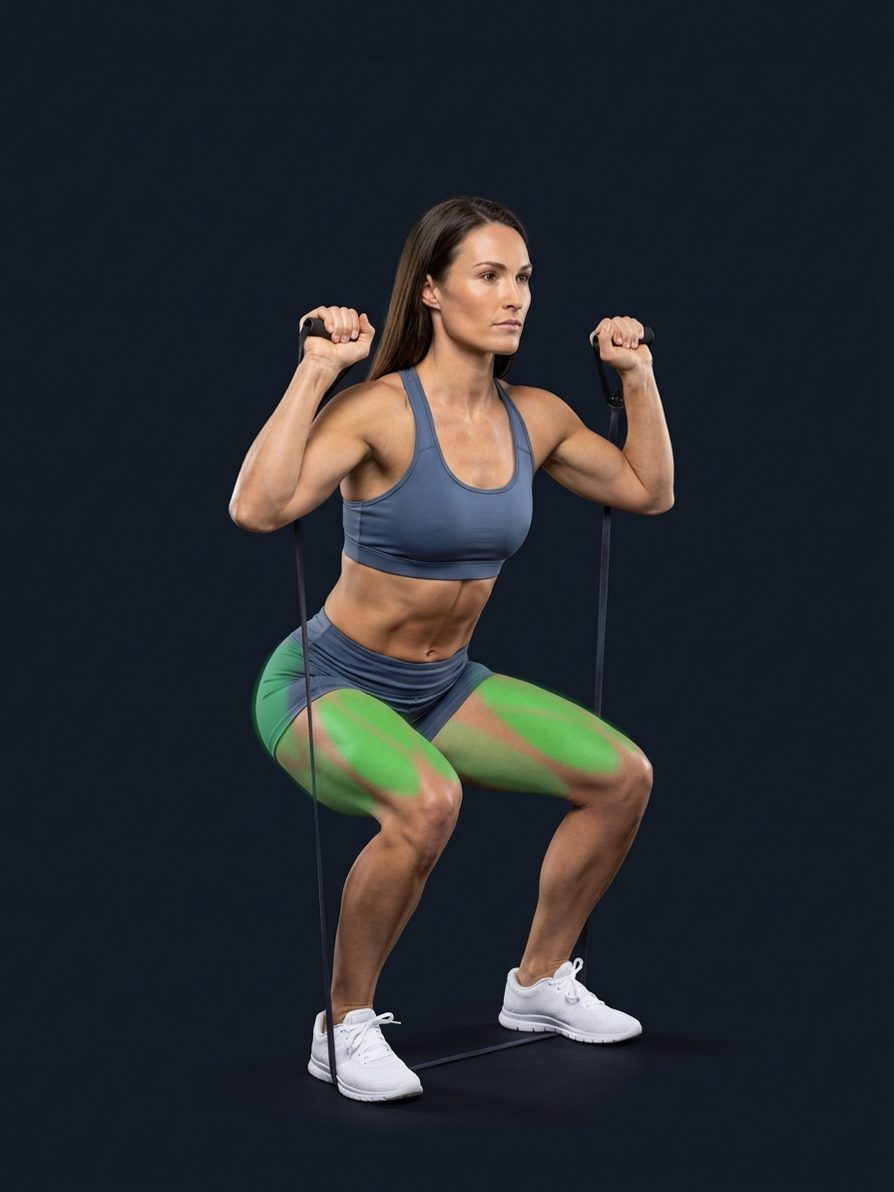
Quadriceps Glutes Adductors Abdominals Back
How to do it
- Place a plate or wedge on the floor and stand with your heels on it and the balls of your feet on the floor.
- Set your feet hip to shoulder width apart with your toes slightly turned out.
- Hold the dumbbell vertically by one end, or the kettlebell by the horns, close to your chest under your chin.
- Point your elbows down, brace your trunk, and stand tall.
- Take a breath and bend your knees and hips together, letting your knees travel forward over your toes.
- Lower with an upright torso until your hamstrings meet your calves, or as deep as your back stays neutral.
- Pause briefly at the bottom.
- Drive through your whole foot to stand up, breathe out near the top, and reset.
Common mistakes
- Letting the knees cave inward.
- Letting the weight drift away from the chest.
- Rounding the lower back at the bottom.
- Bouncing out of the bottom without control.
Safety
Use a stable, non-slip heel raise that will not shift under load.
Increase depth and load gradually if you are not used to deep knee bending.
Move to other squat variations when you need heavier loading than you can hold at your chest.
Tips
- Push your knees forward and out in line with your toes.
- Keep your chest tall and the weight pressed to your sternum.
- Sit straight down between your heels.
- Try a 3-second lowering phase for tempo work.
Details
- Base movement
- Squat
- Load position
- Goblet (at the chest)
- Legs
- Both
- Body position
- Standing
- Stance
- Shoulder-width
- What is raised
- Feet elevated