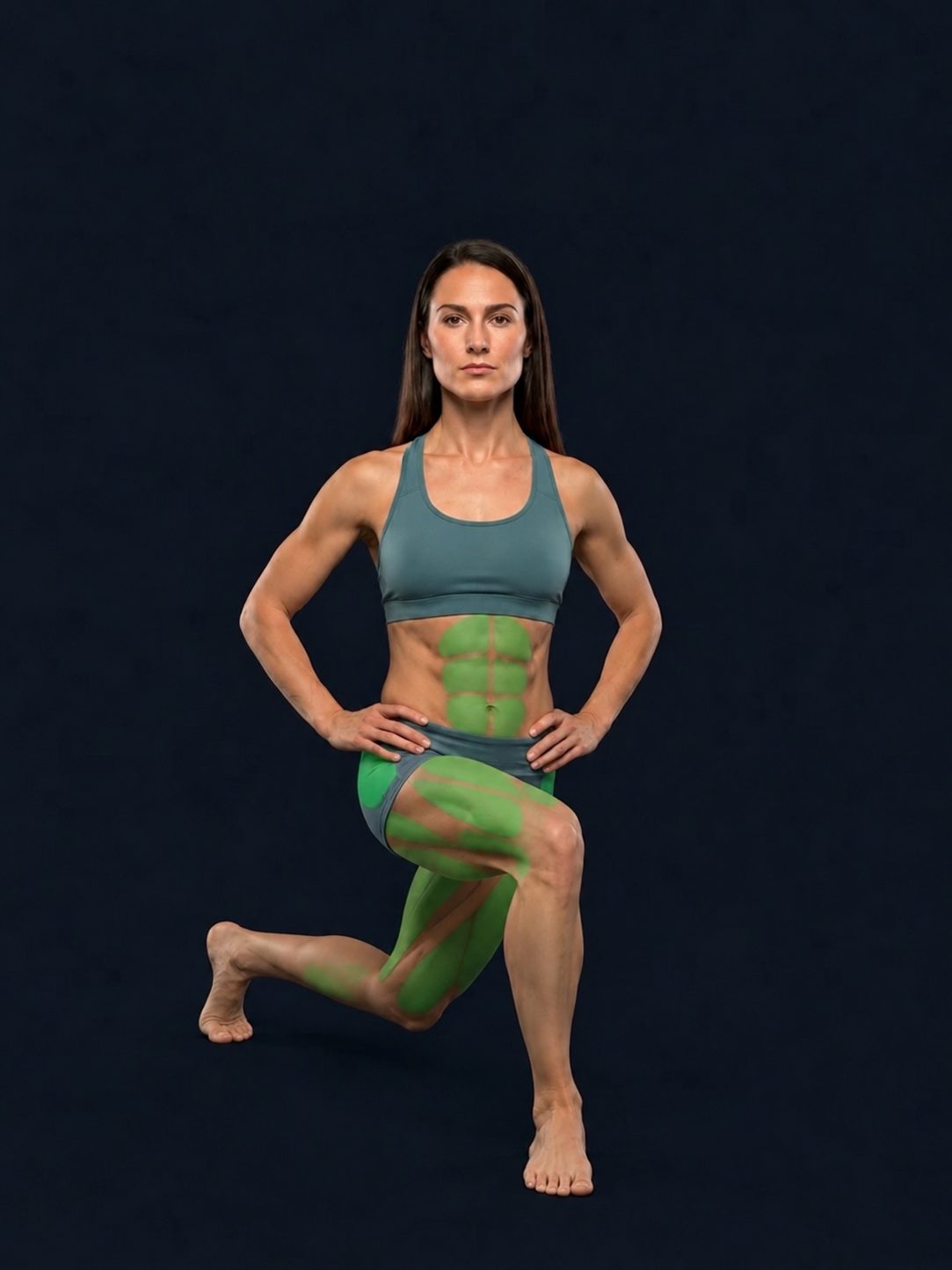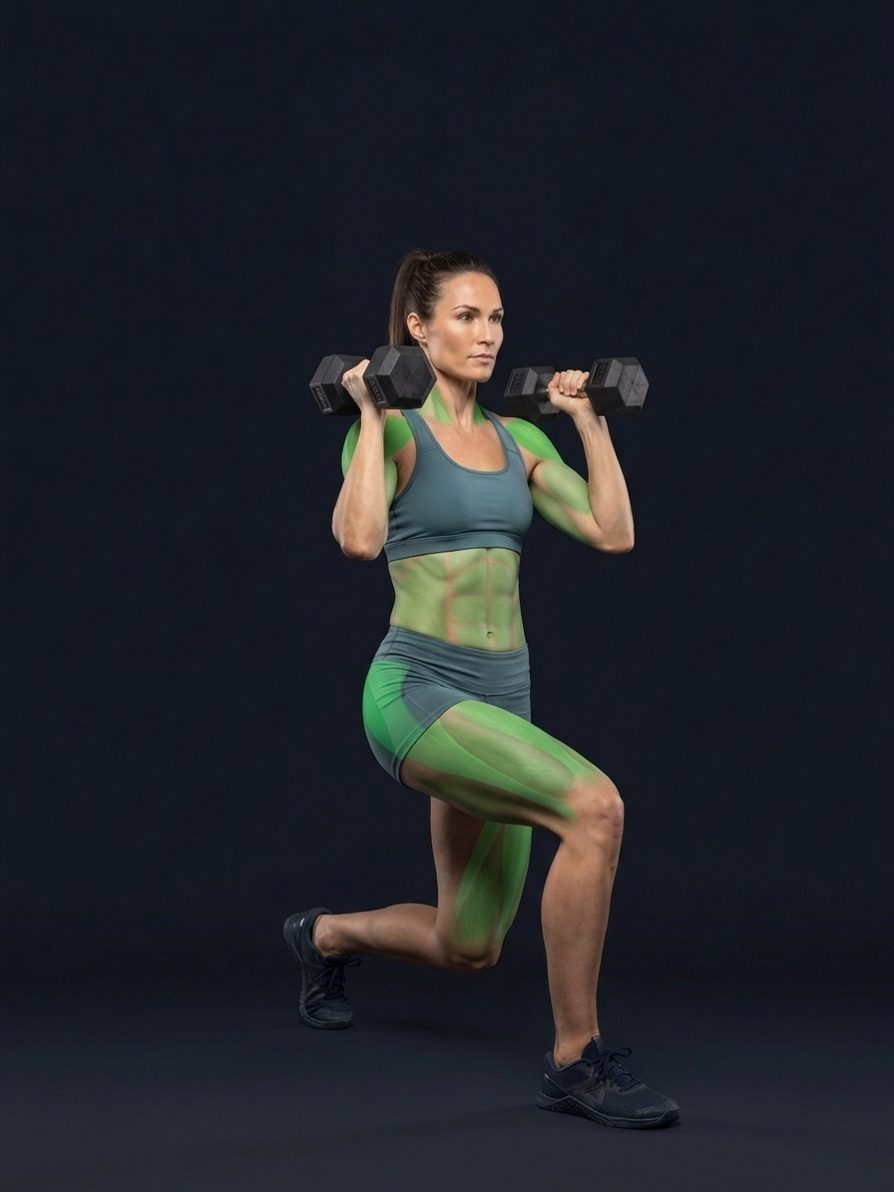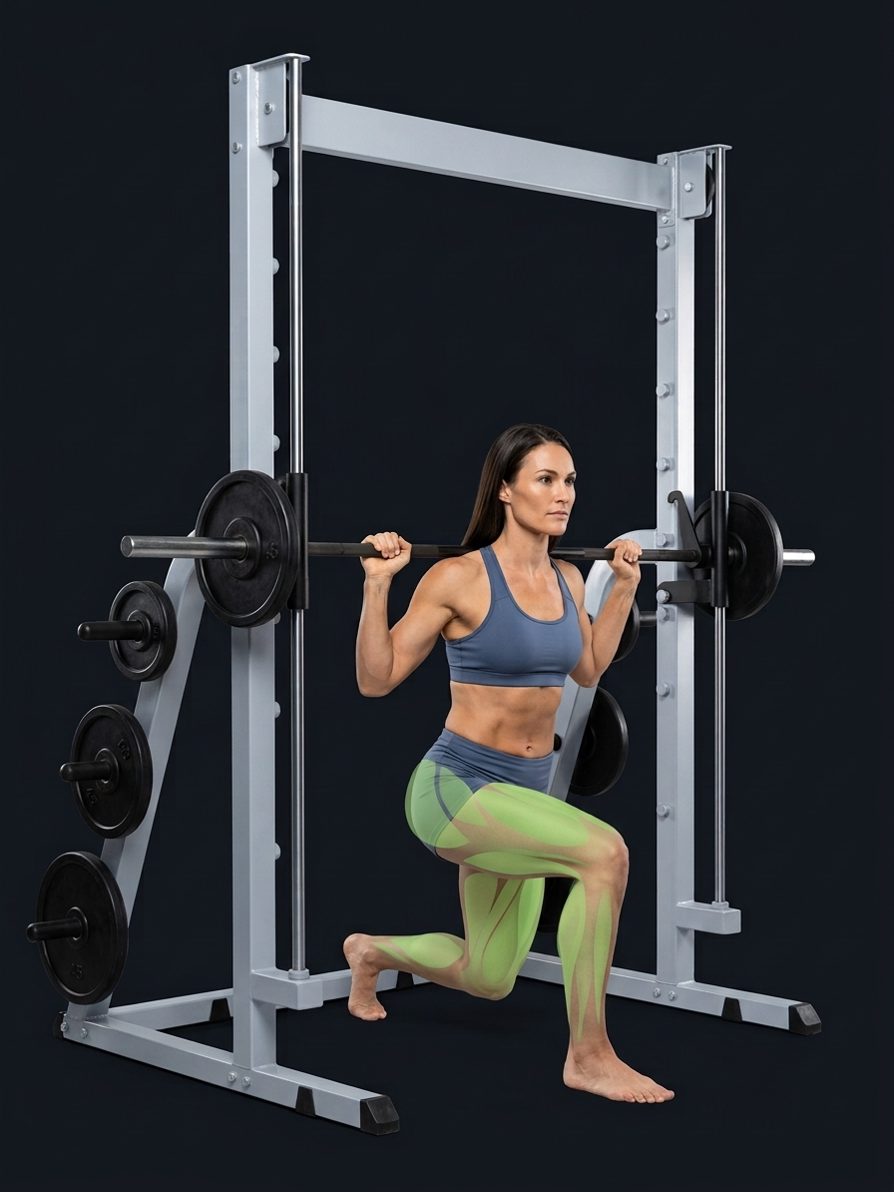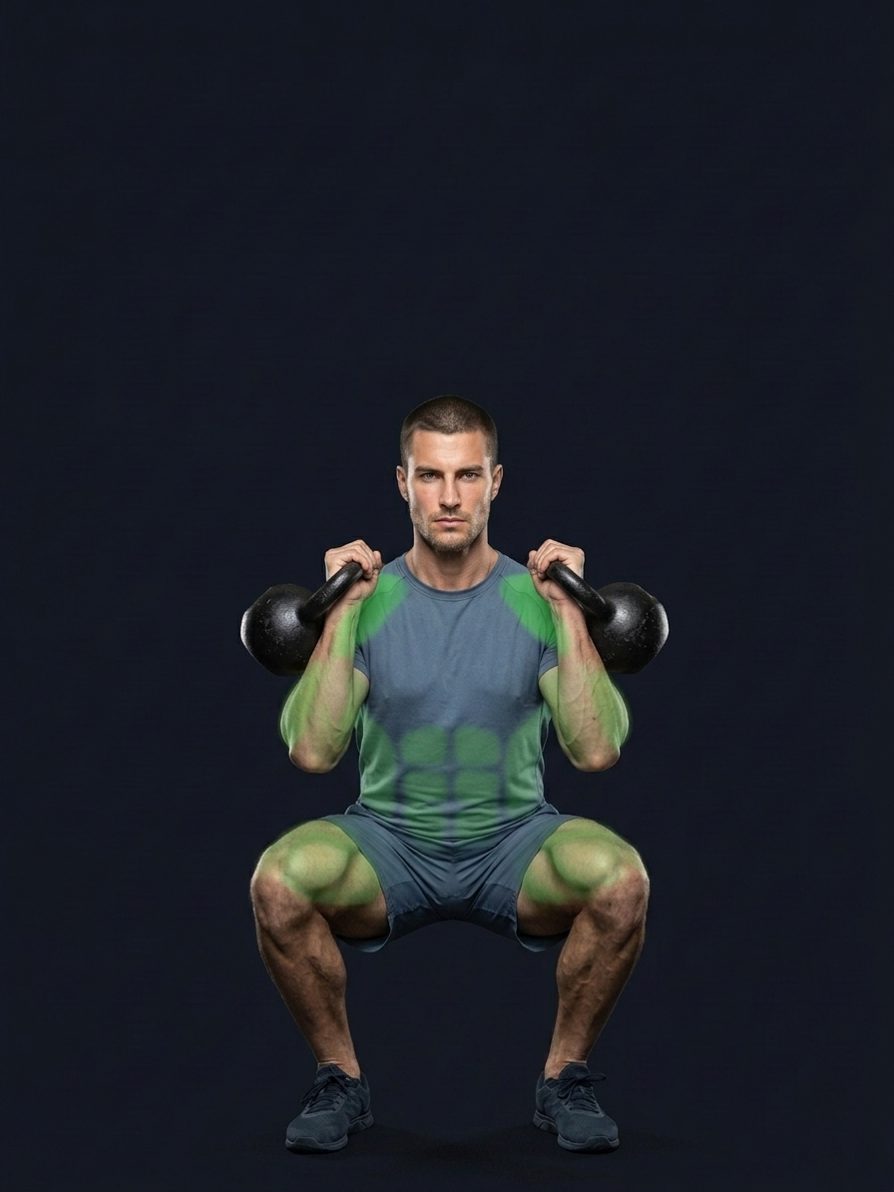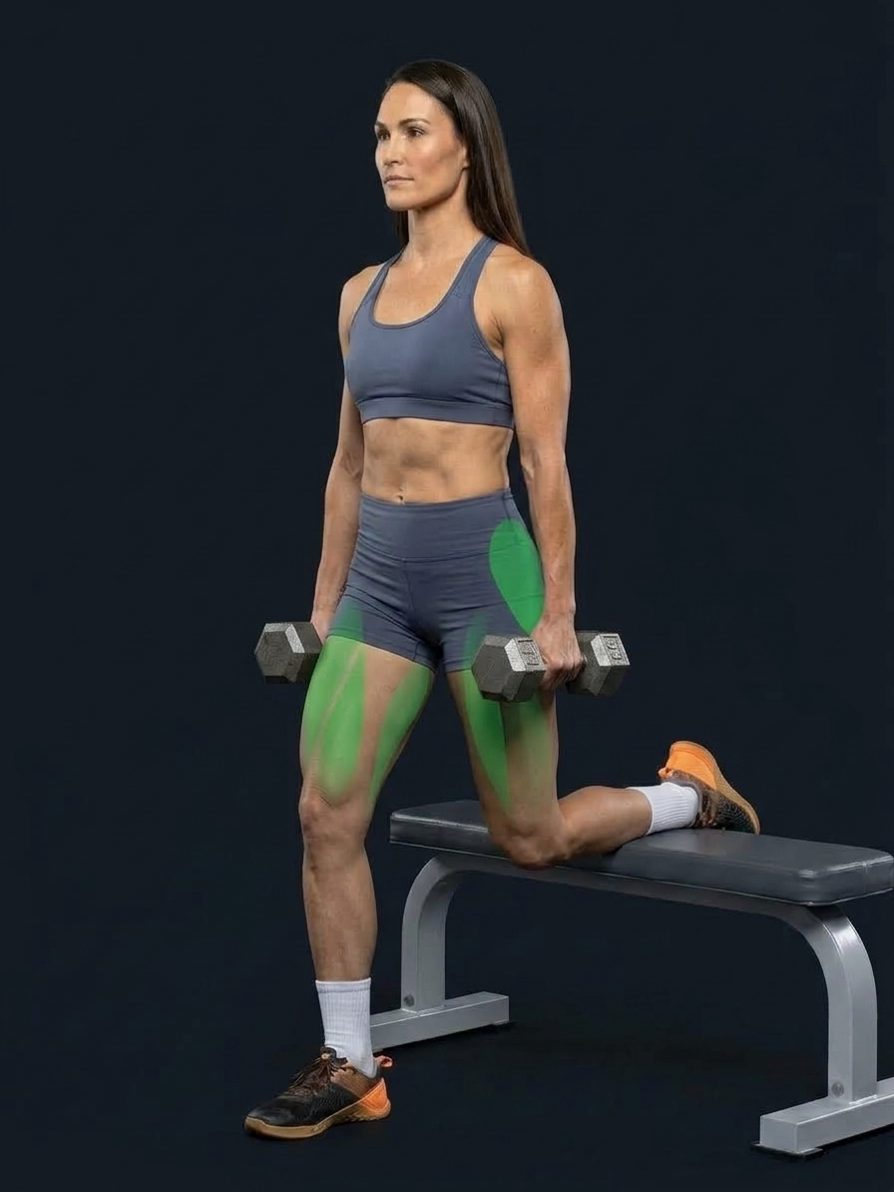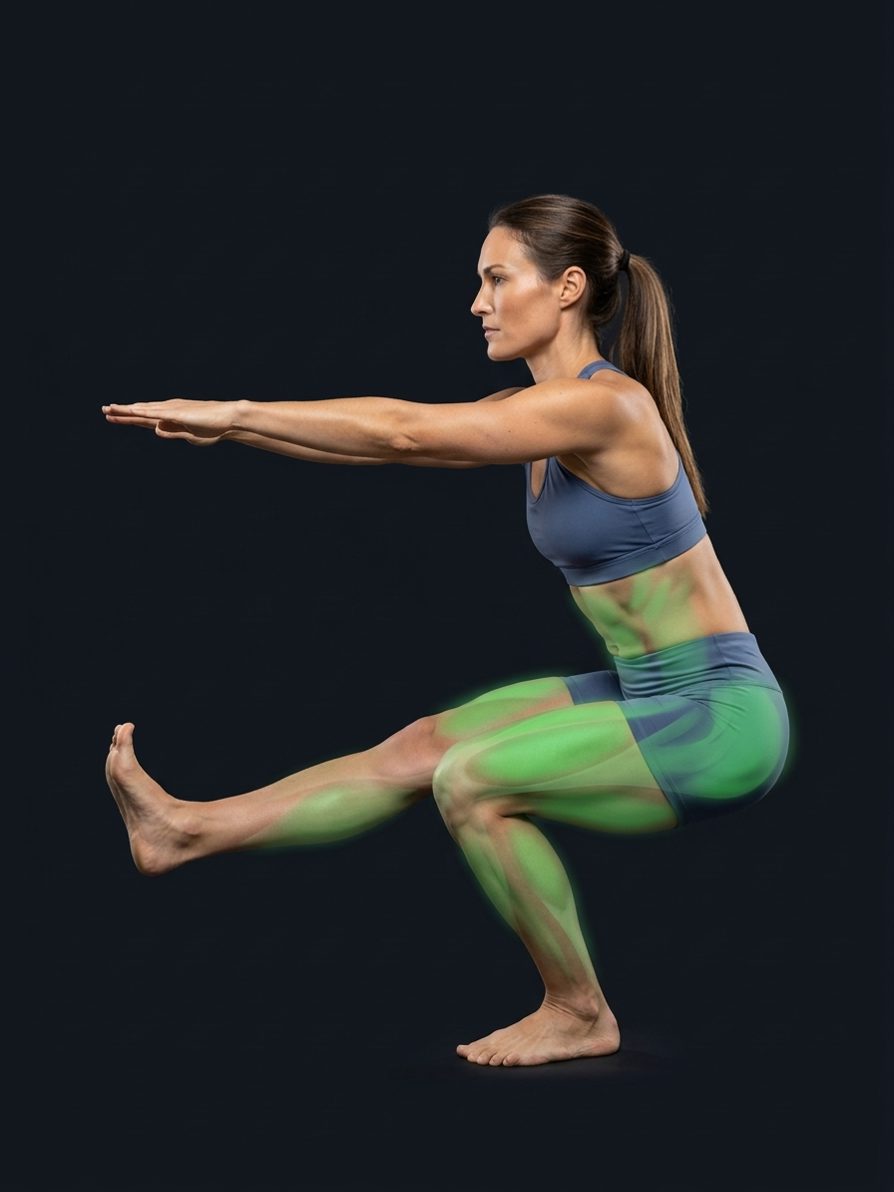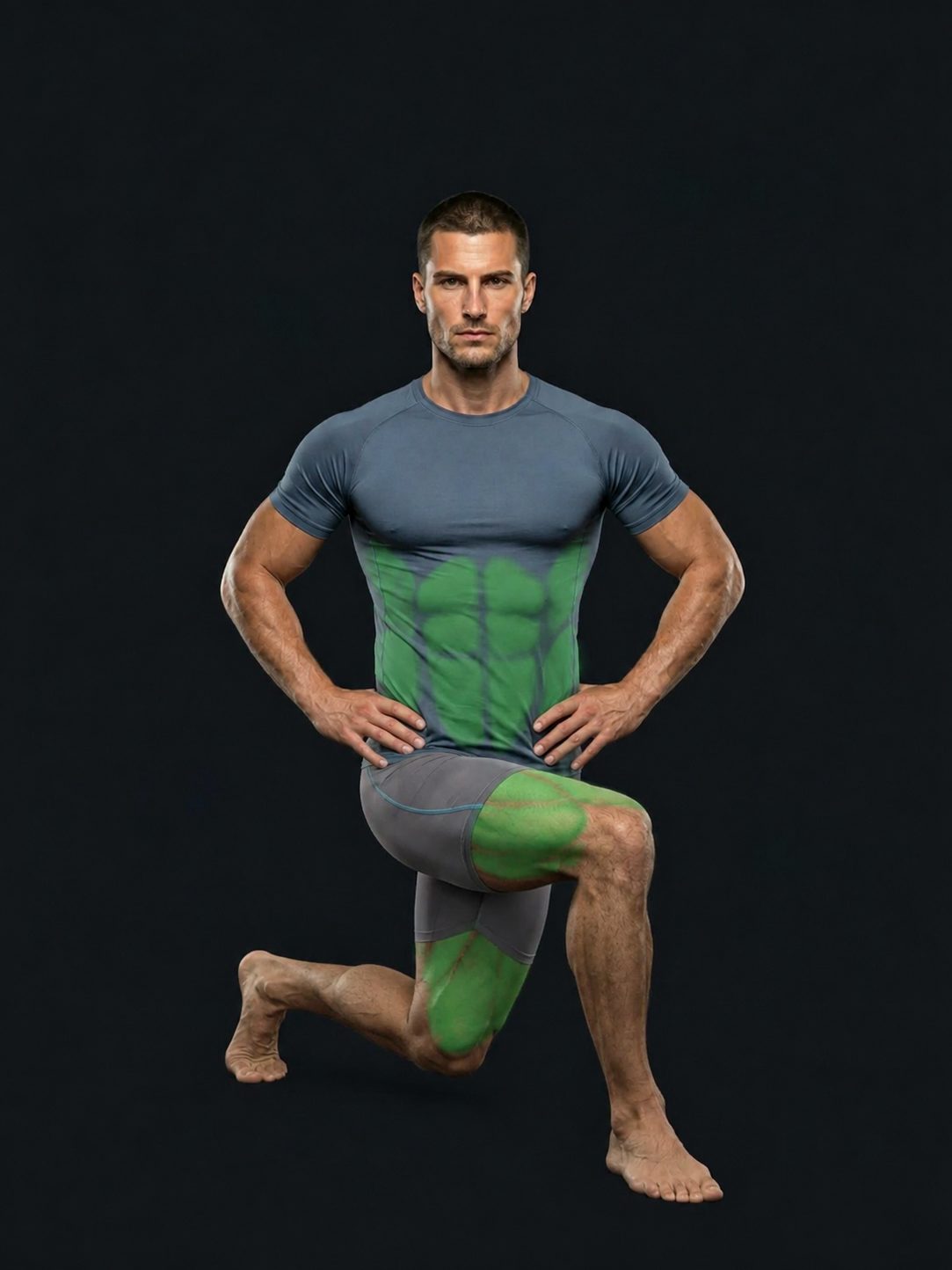
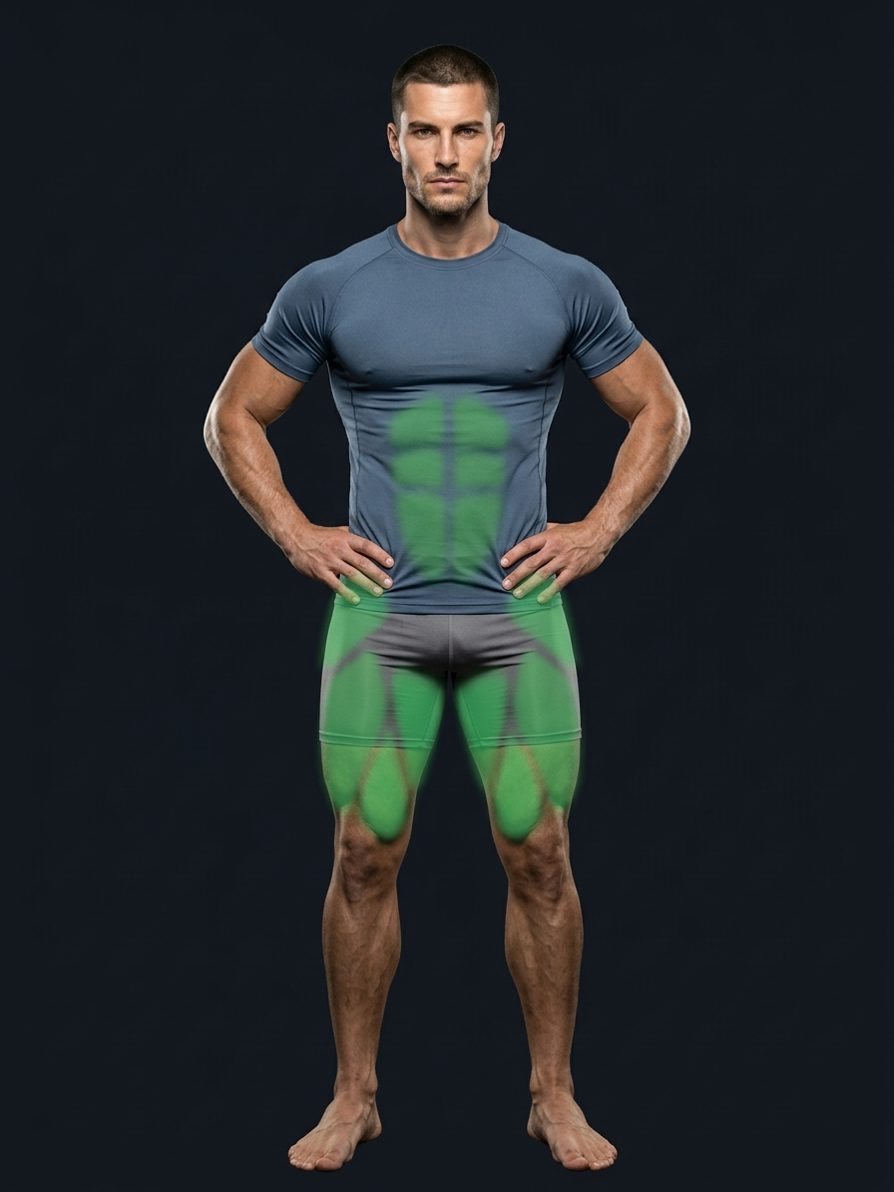
Alternating Cross Lunge
Steps diagonally behind the other leg alternating sides
- Level
- Intermediate
- Movement
- Lunge · Standing
- Tracks
- Reps only
Works
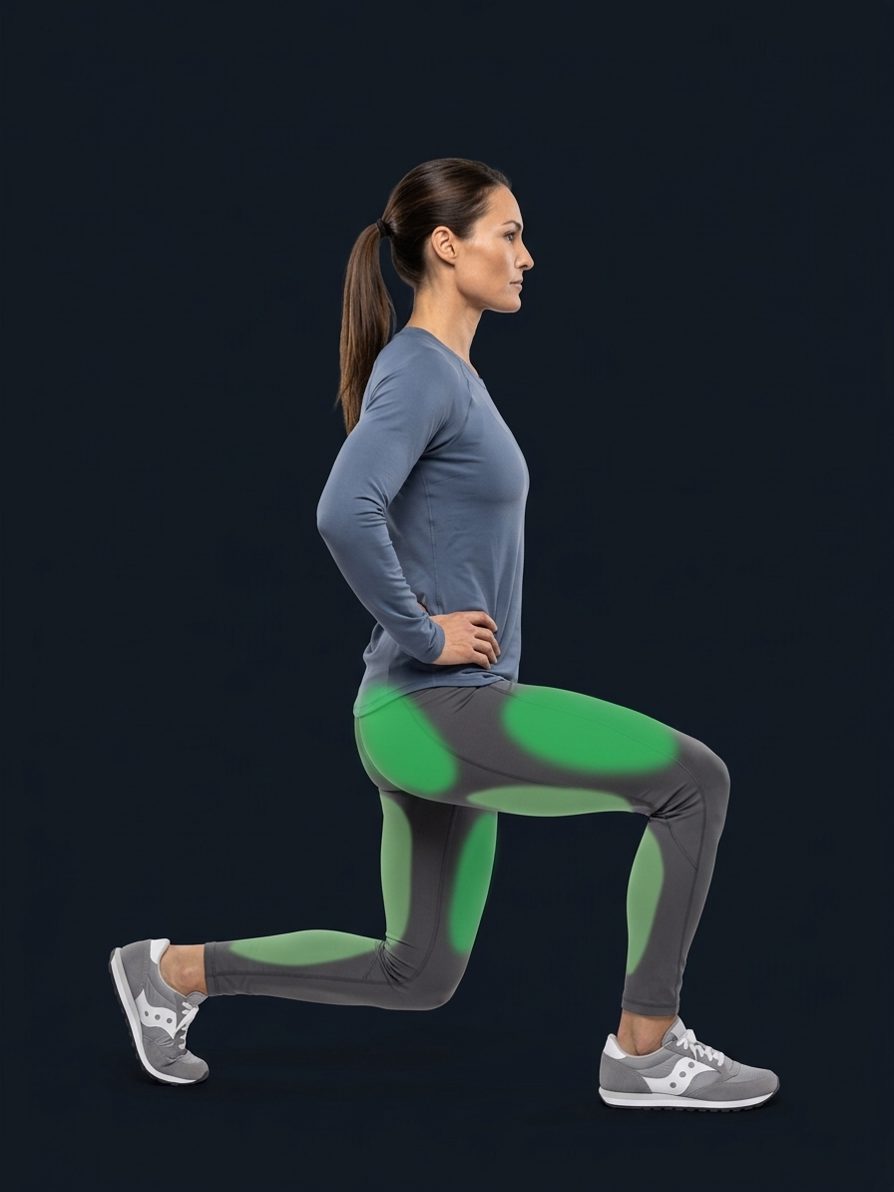
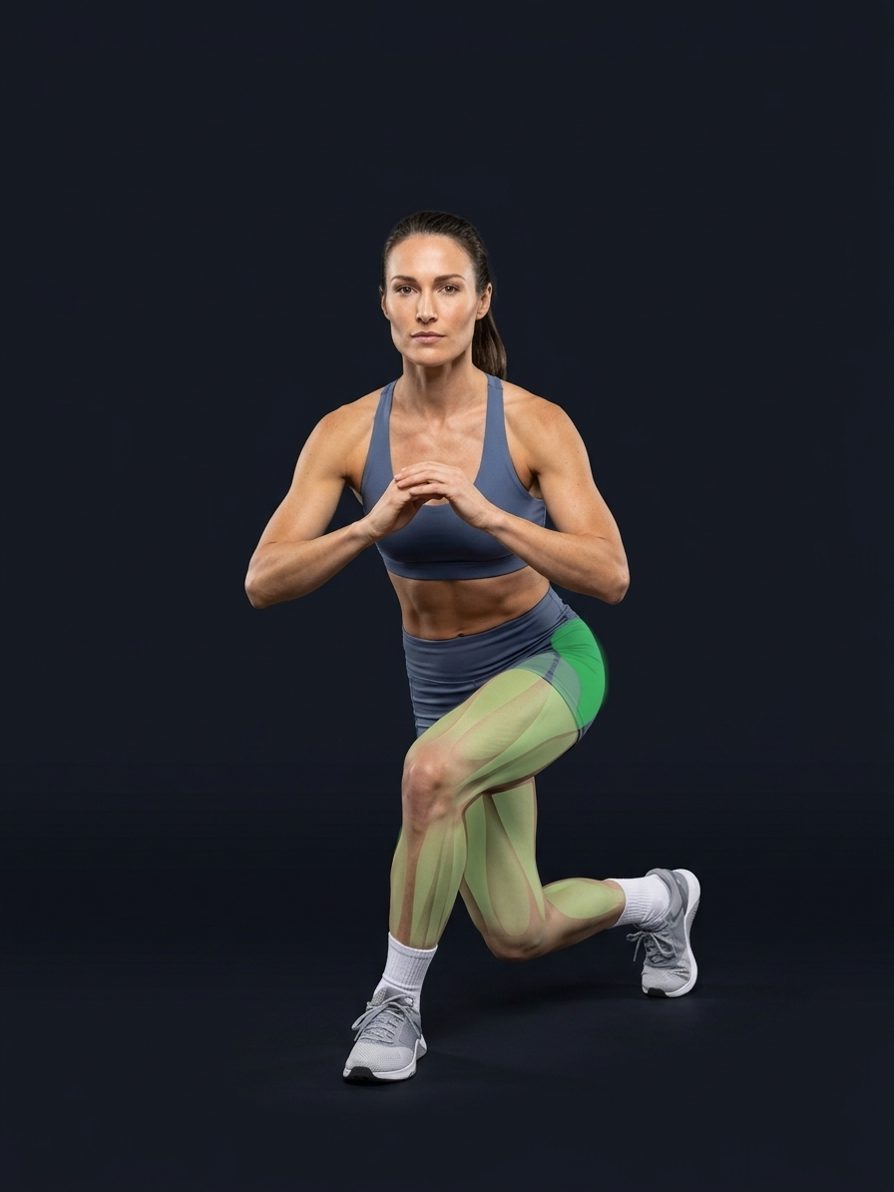
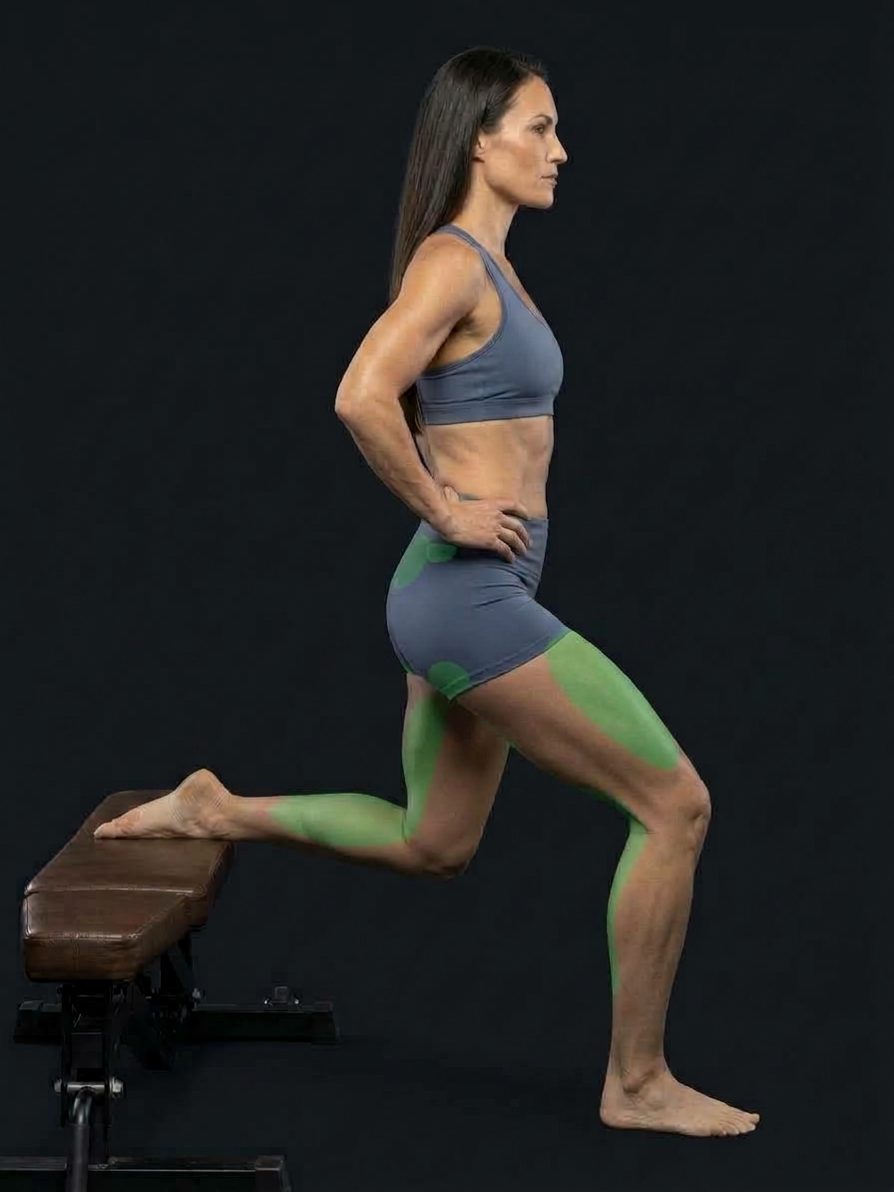
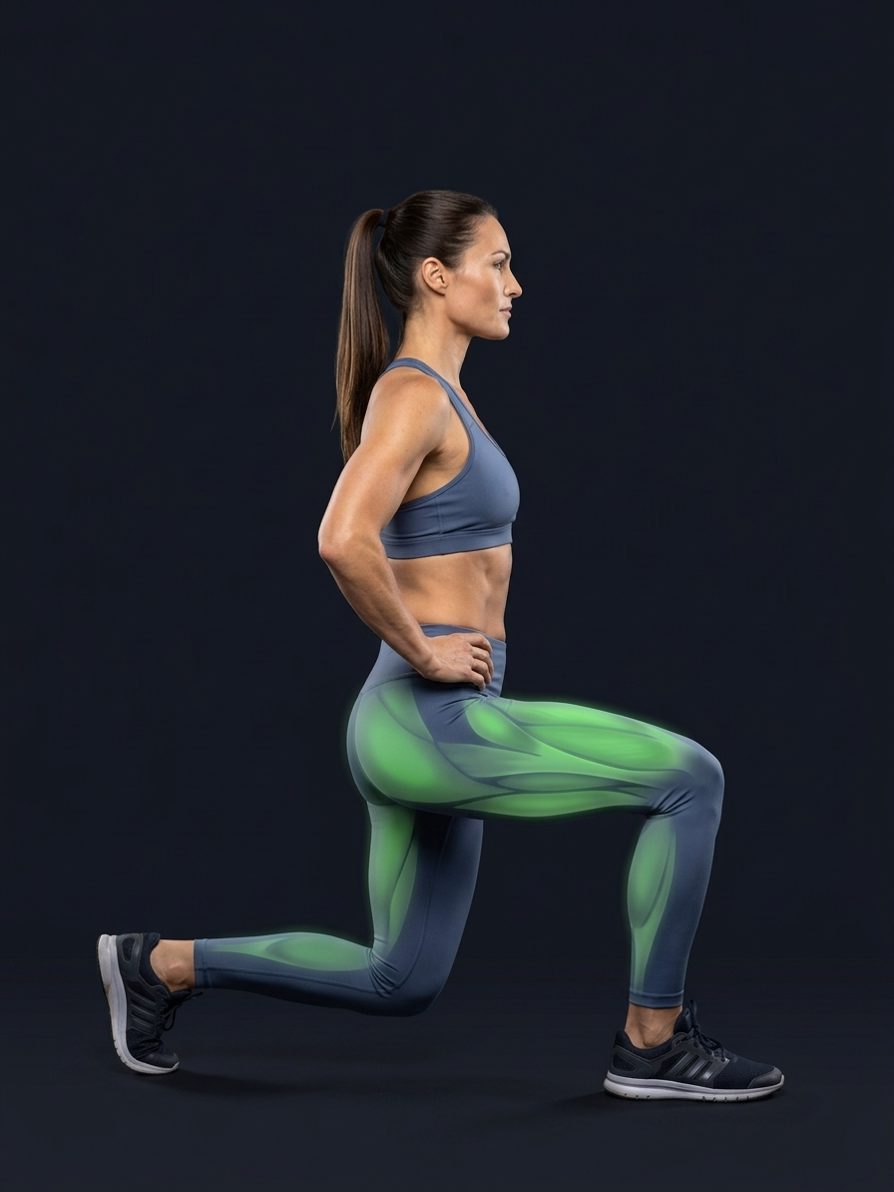
Glutes Quadriceps Abductors Adductors Hamstrings
How to do it
- Stand tall with feet hip-width apart and hands on hips.
- Step your right foot diagonally behind your left leg.
- Lower your hips until both knees bend to ninety degrees.
- Keep your front heel flat and torso slightly leaned forward.
- Push through the front foot to return to the starting stance.
- Repeat the movement immediately by stepping the left foot behind the right.
Setup
- Stand tall, feet hip-width, hands on your hips — or holding a single weight at your chest, which makes an upright torso easier rather than harder.
- A pad under the back knee — if you are going deep, so the descent is not governed by fear of the floor.
- Step diagonally behind and across — the standing leg — the diagonal is the exercise, and a step that is too narrow costs both depth and stability.
- Front heel flat, torso leaning only slightly forward
- Front knee tracking out over the foot — the crossed position actively invites it to fall inward, and holding it out is the work.
- Shorter step if the knee caves or the balance goes — position before range.
Common mistakes
- Letting the front knee collapse inward during the lunge.
- Leaning the torso too far forward and losing balance.
- Failing to lower the back knee close to the floor.
- Stepping too narrowly which compromises stability and depth.
Safety
Lower the back knee under control and never let it slam into the floor.
Tips
- Drive through the entire front foot to maximize hamstring engagement.
- Keep your hips square to the front throughout the descent.
- Maintain a long spine by looking at a fixed point ahead.
Choosing it
- To train frontal-plane hip control — which forward and reverse lunges do not.
- When your knees drift inward — under load — this exposes it at bodyweight.
- For glute medius work — that is not a band exercise lying on the floor.
- As a warm-up — before loaded single-leg work.
- Not as a loading exercise — reps only, and the position caps what is safe.
- Not as a first lunge — the Intermediate marking is right, and a reverse lunge teaches the pattern first.
- Skip if — knee pain. Particularly on the inside of the front knee, which the crossed position loads.
- Skip if — a current adductor or groin strain. The front leg's adductors are loaded at length.
- Skip if — if balance is a medical issue. ; a reverse lunge gives most of the benefit with far less demand.
- Skip if — on a slippery floor. The crossing step is where a foot slides.
Adapting it
- Shorter step — if the knee caves or balance goes. Range follows control.
- Hold a rail or doorframe — with one hand while learning the pattern.
- Hold a single weight at the chest — the counterweight makes an upright torso easier rather than harder.
- Pause at the bottom — for two seconds, which is where the hip control either holds or does not.
Details
- Base movement
- Lunge
- Legs
- Alternating
- Body position
- Standing
- Stance
- Shoulder-width
- Direction
- Crossover (curtsy)