VARIATIONS
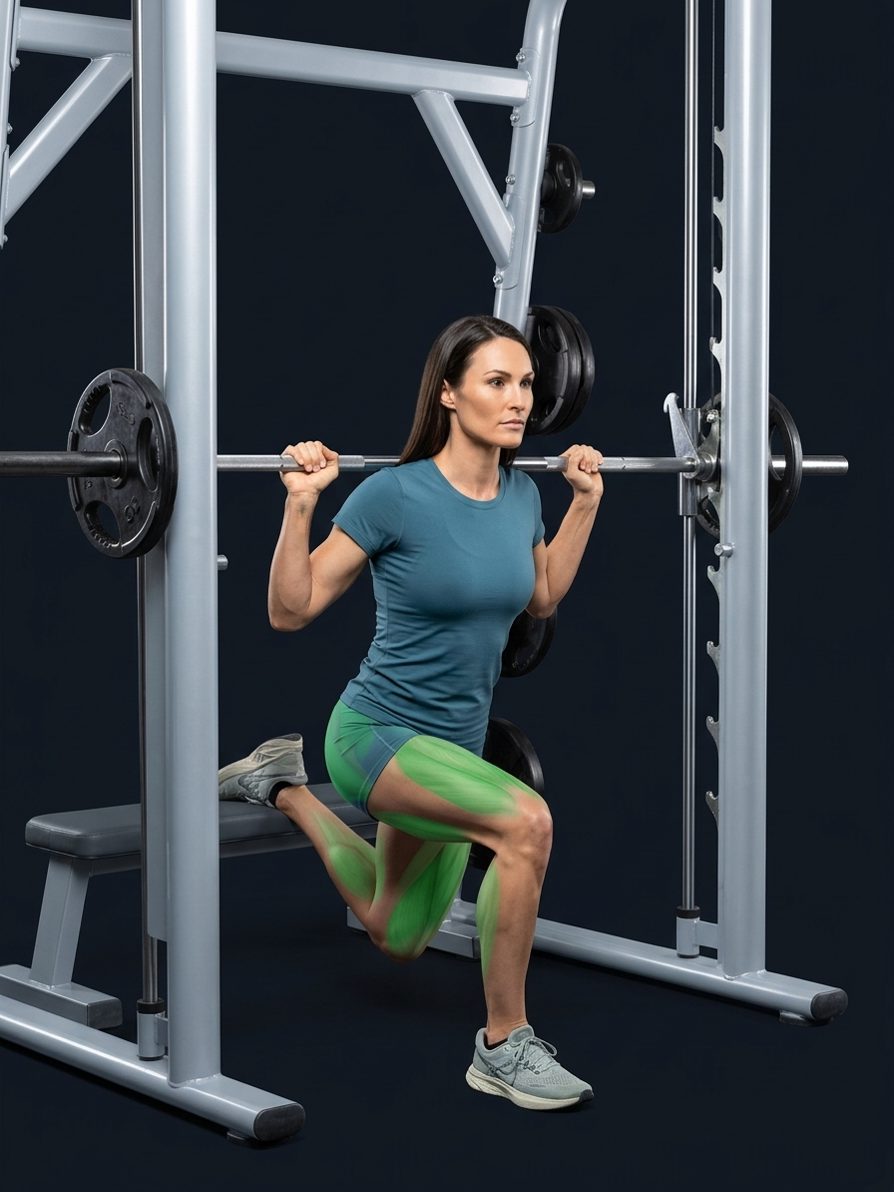
- Smith Machine Bulgarian Split SquatQuadriceps · Smith Machine · Bench
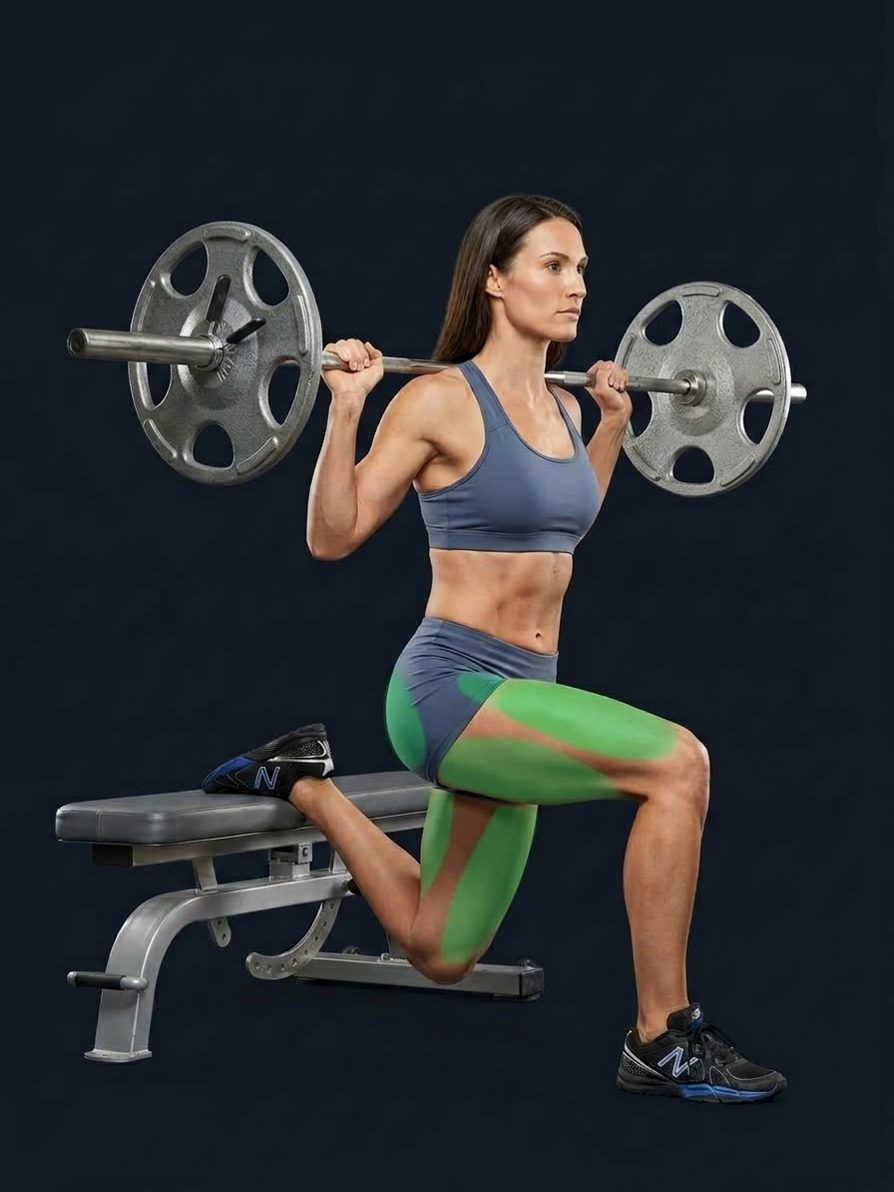
- Barbell Bulgarian Split SquatQuadriceps · Barbell · Bench
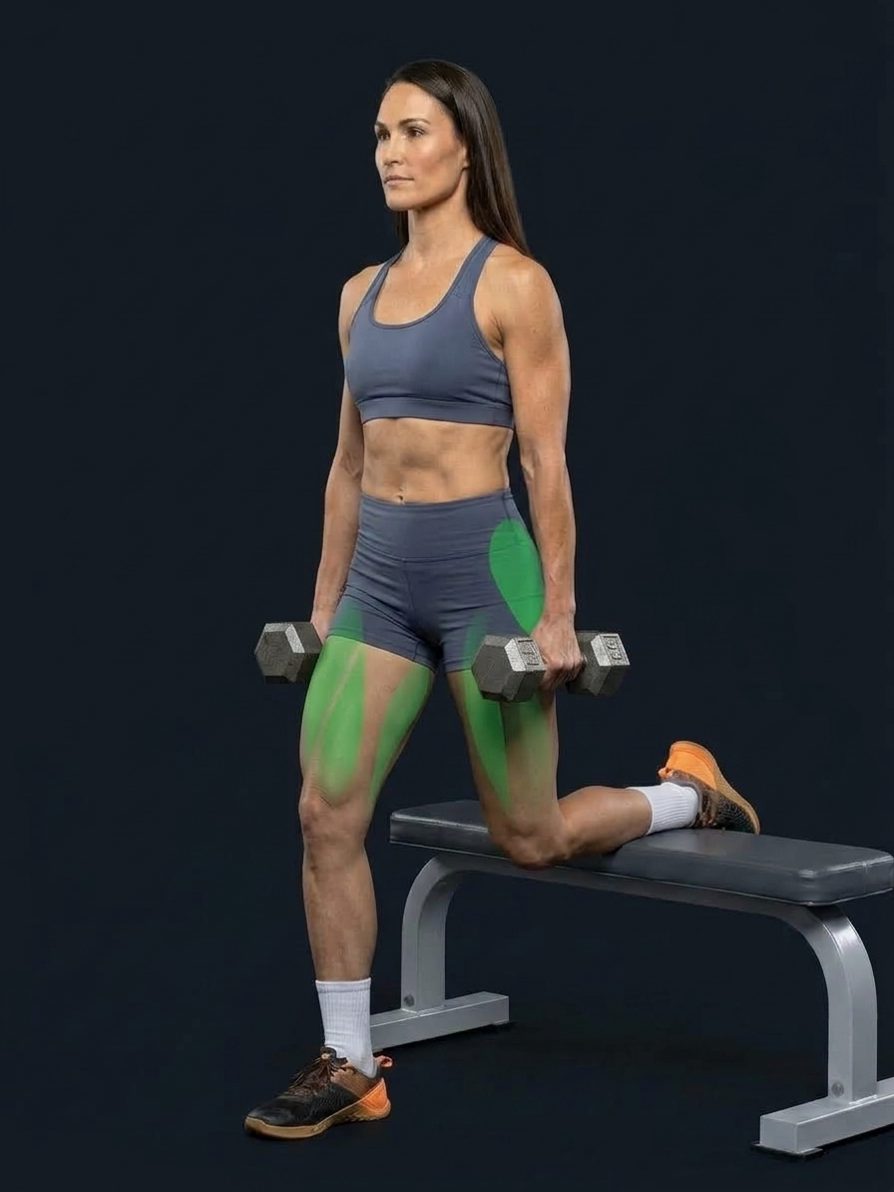
- Dumbbell Bulgarian Split SquatGlutes · Quadriceps · Dumbbell
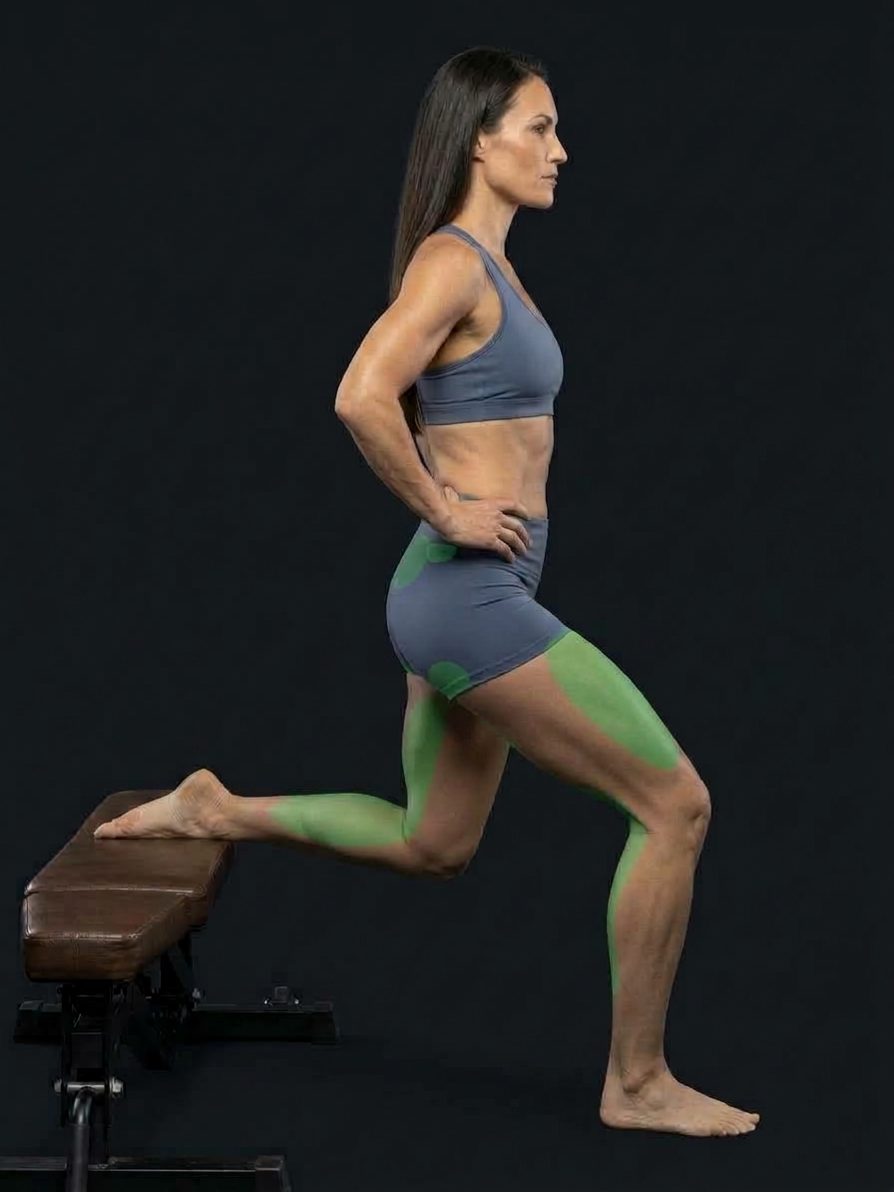
- Bulgarian Split SquatQuadriceps
- Barbell Split SquatQuadriceps · Barbell · Bench
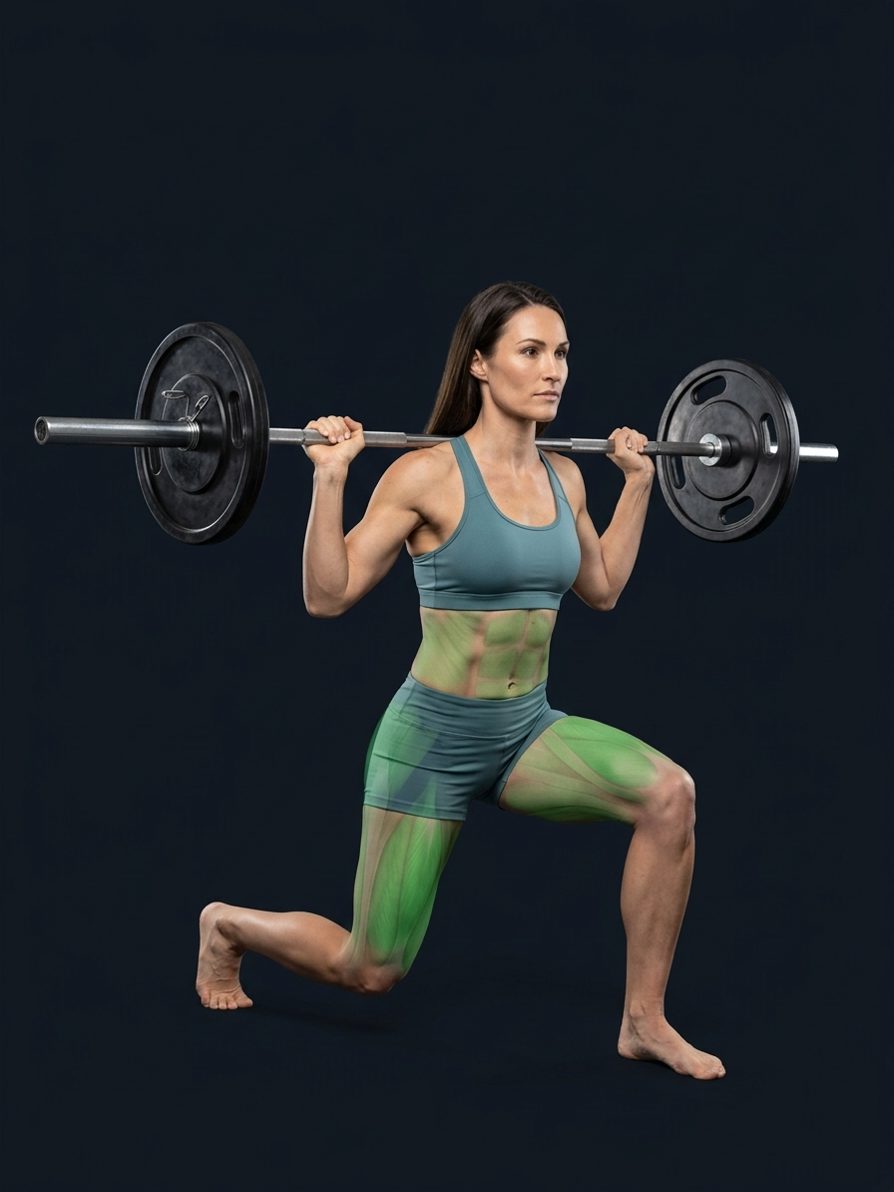
- Goblet Split SquatGlutes · Quadriceps · Dumbbell · Kettlebell
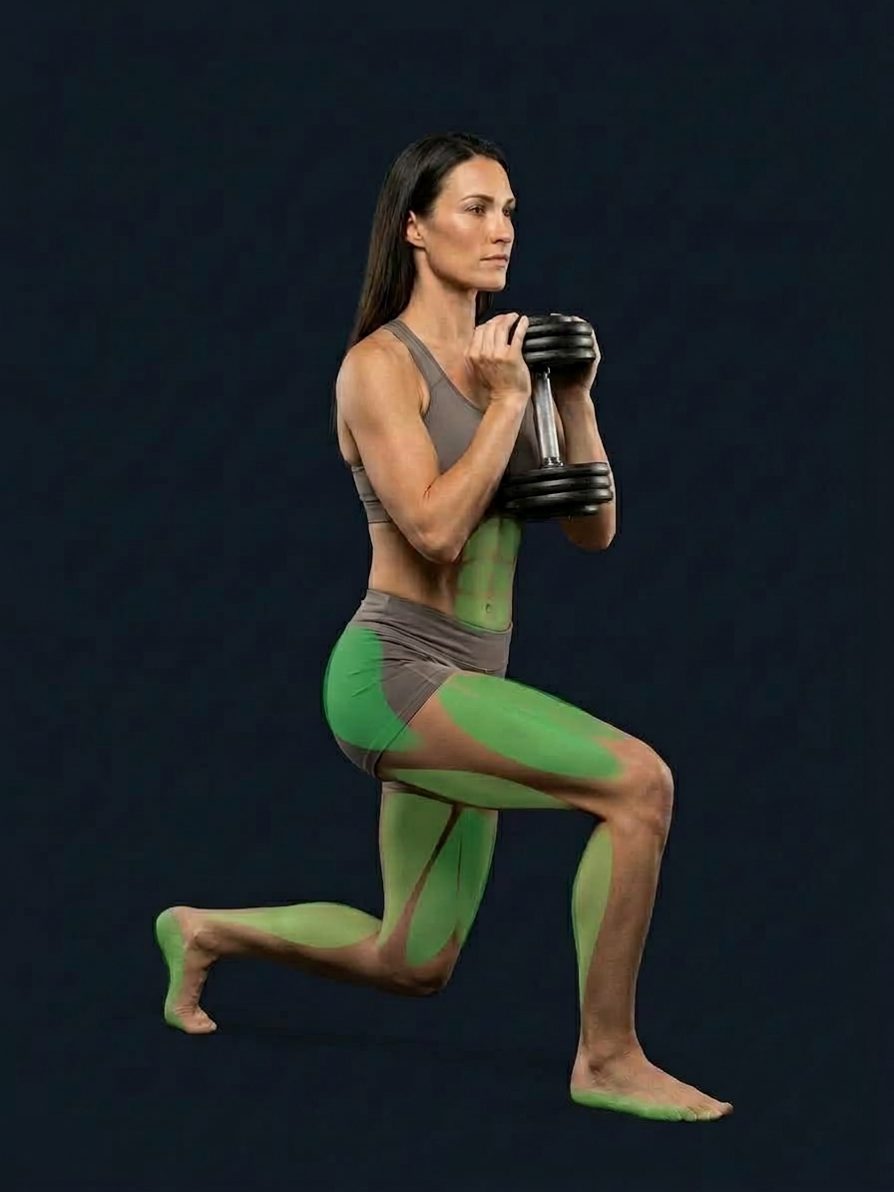
Front Rack Bulgarian Split Squat
This single-leg movement isolates the quadriceps while challenging stability and correcting muscle imbalances. Holding the load in a front rack shifts the centre of mass forward, demanding a more upright torso and greater core and upper-back work than a back-loaded version.
HOW TO DO IT
- Set up a bench behind you and load a barbell on a rack at roughly upper-chest height, or clean two dumbbells or kettlebells to your shoulders.
- Stand facing away from the bench and place the top of one foot on the bench behind you, with the front foot far enough forward that the front shin stays close to vertical at the bottom.
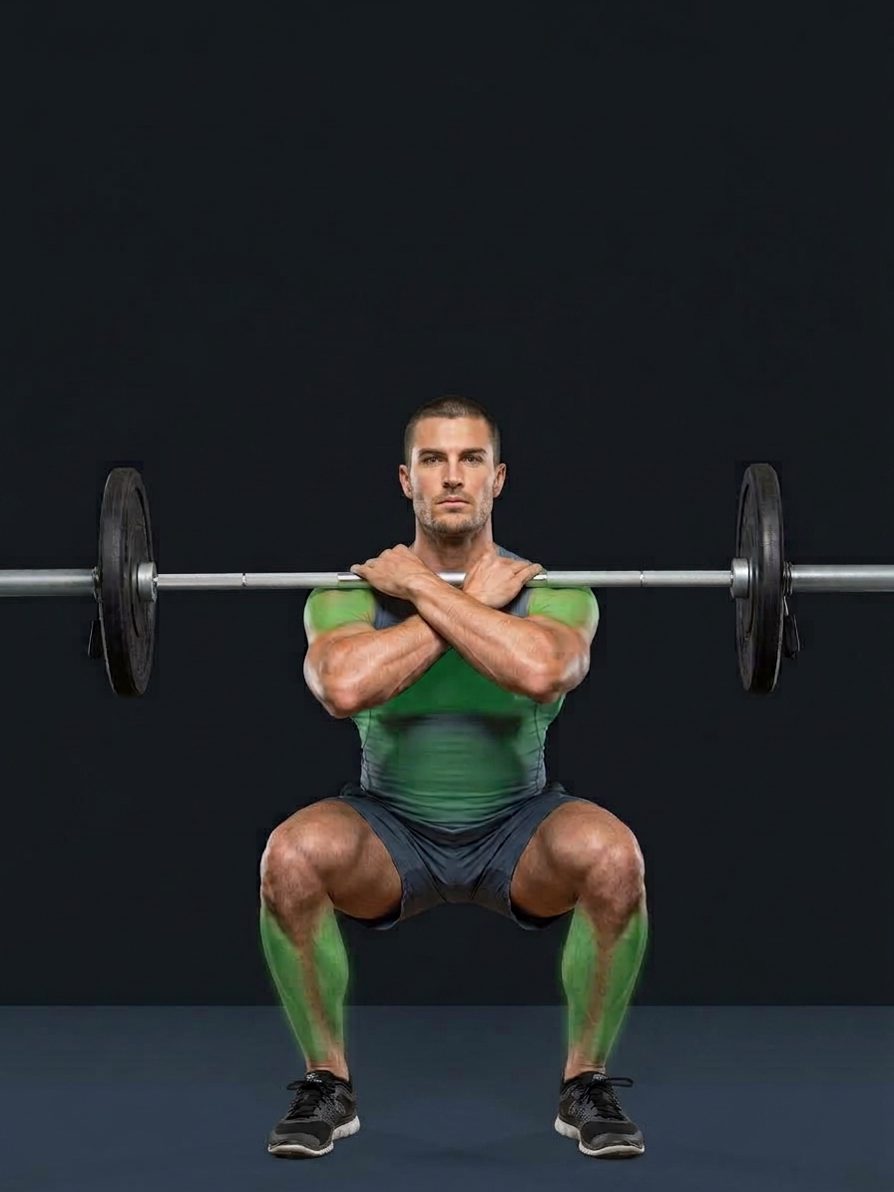
- Bring the bar or weights into a front rack: elbows high, upper arms roughly parallel to the floor, bar resting on the front deltoids and clavicles with the hands loosely supporting it, or dumbbells racked at shoulder height.
- Brace the core hard, keep the torso upright, and lower under control until the front thigh is roughly parallel to the floor.
- Drive through the mid-foot and heel of the front leg to stand back up without locking out aggressively.
- Complete all repetitions on one leg, then re-rack or set the weights down and switch sides.
COMMON MISTAKES
- Letting the elbows drop, which causes the bar to roll forward and the torso to fold.
- Leaning too far forward onto the front leg.
- Allowing the front knee to collapse inward.
- Placing the rear foot too high on the bench.
- Standing too close to the bench, forcing the front knee far past the toes.
- Bouncing out of the bottom, which is riskier here than in the guided Smith Machine version because there is no fixed track to catch a mistimed rep.
- Losing the brace at the bottom and rounding the upper back under the front rack.
TIPS
- Keep your torso upright to emphasize the quadriceps.
- Drive through the mid-foot of the front leg.
- Ensure your front knee tracks over your toes.
- Keep the elbows high throughout; dropping them lets the bar slide down the chest and pulls you forward.
- Brace the core before each rep as if preparing for a front squat.
- Use a controlled two-to-three-second descent to make the most of the reduced stability demand.
- Keep the rear foot relaxed on the bench; it is a kickstand, not a driver.
SAFETY
- The front rack position places the bar against the throat and clavicles, so a failed rep can trap the bar against the neck; practise bailing by pushing the bar forward and stepping back, and use a rack with safeties or a spotter when going heavy.
- Maintain a tight core to protect the spine under the anterior load.
- Step out carefully after finishing with one foot still elevated.
- If wrist, shoulder or elbow mobility limits the front rack, use straps or switch to dumbbells.
DETAILS
- Muscles
- QuadricepsGlutes
- Equipment
- BarbellBench
- Type
- Strength Training
- Difficulty
- Intermediate
- Tracked as
- Weight & Reps
TECHNIQUE
- Load position
- Front rack
- Stance
- Staggered / split
- What is raised
- Rear foot elevated
SIMILAR EXERCISES


Train this in GYMMER
Put it in a plan, log every set, and learn 3,000+ exercises with demos and coaching notes.
Ratings
Not rated