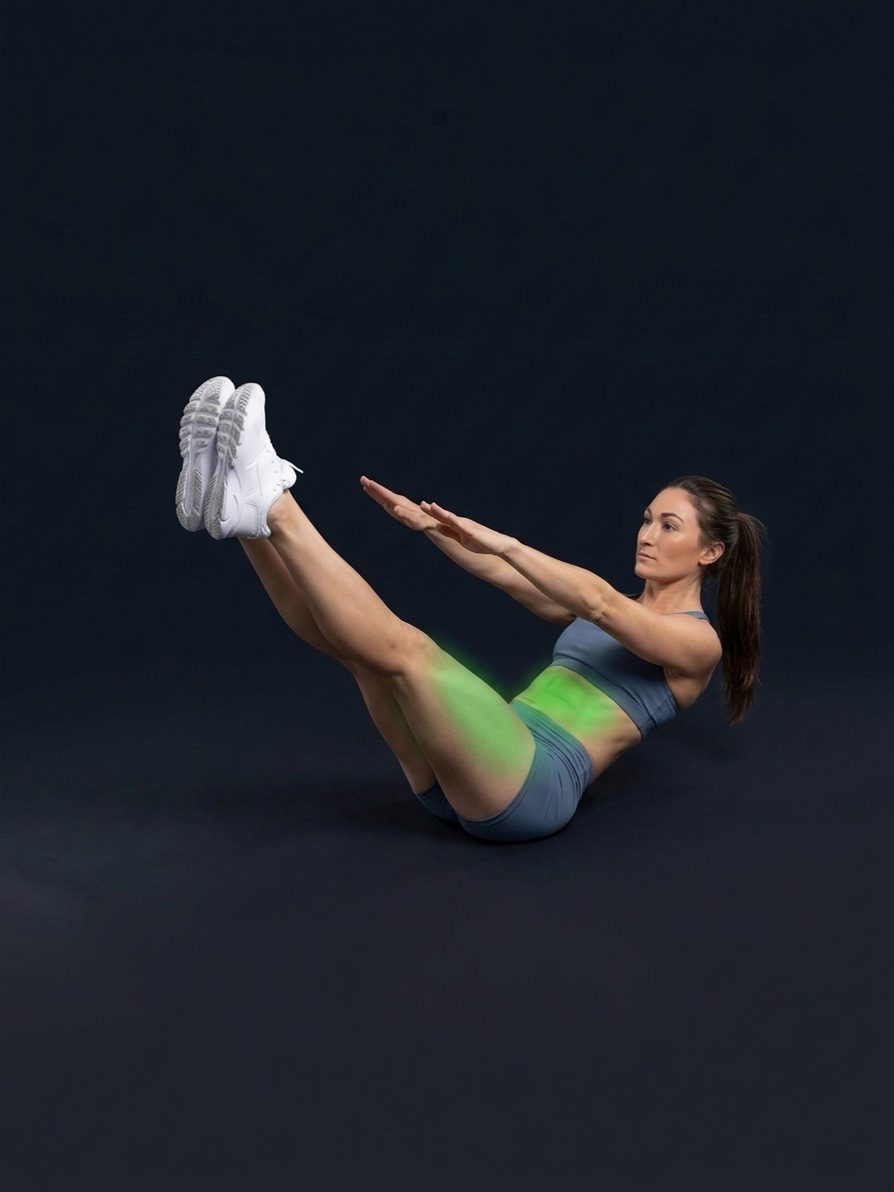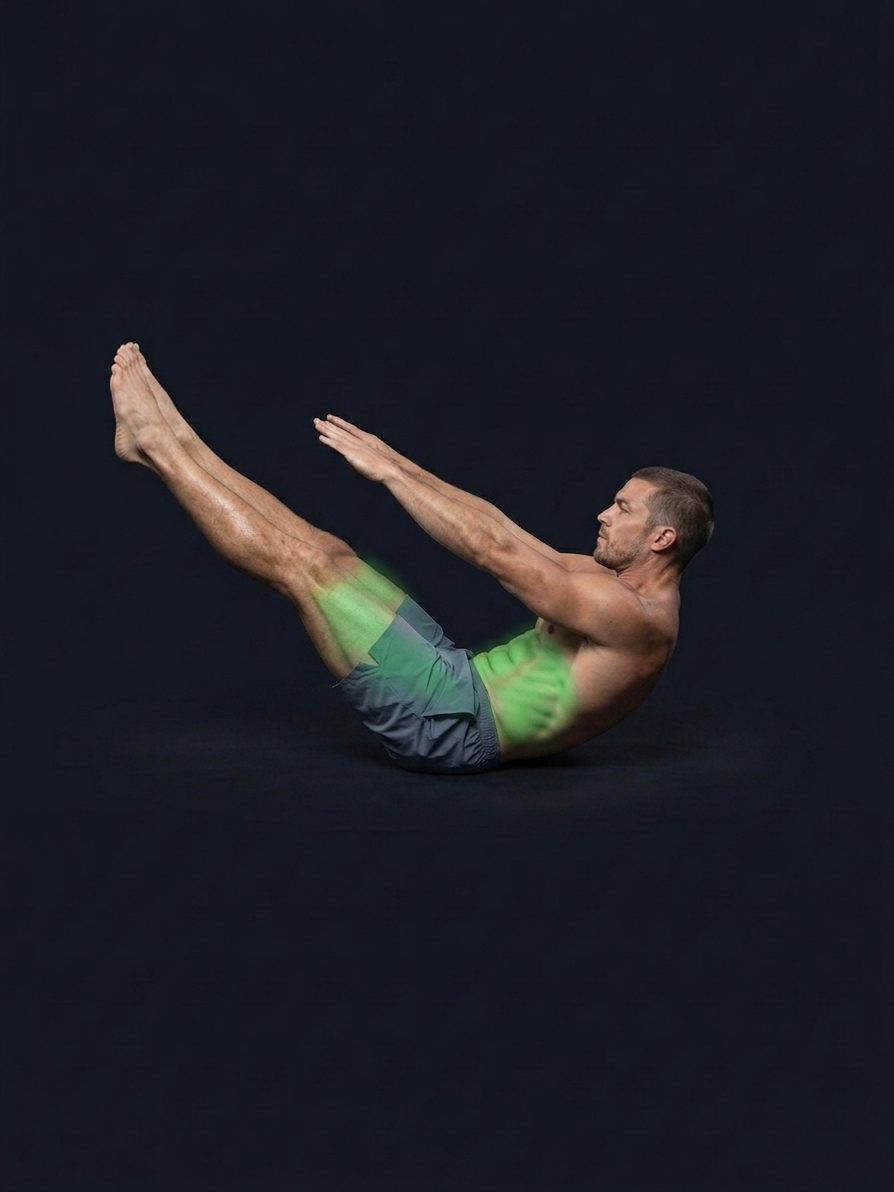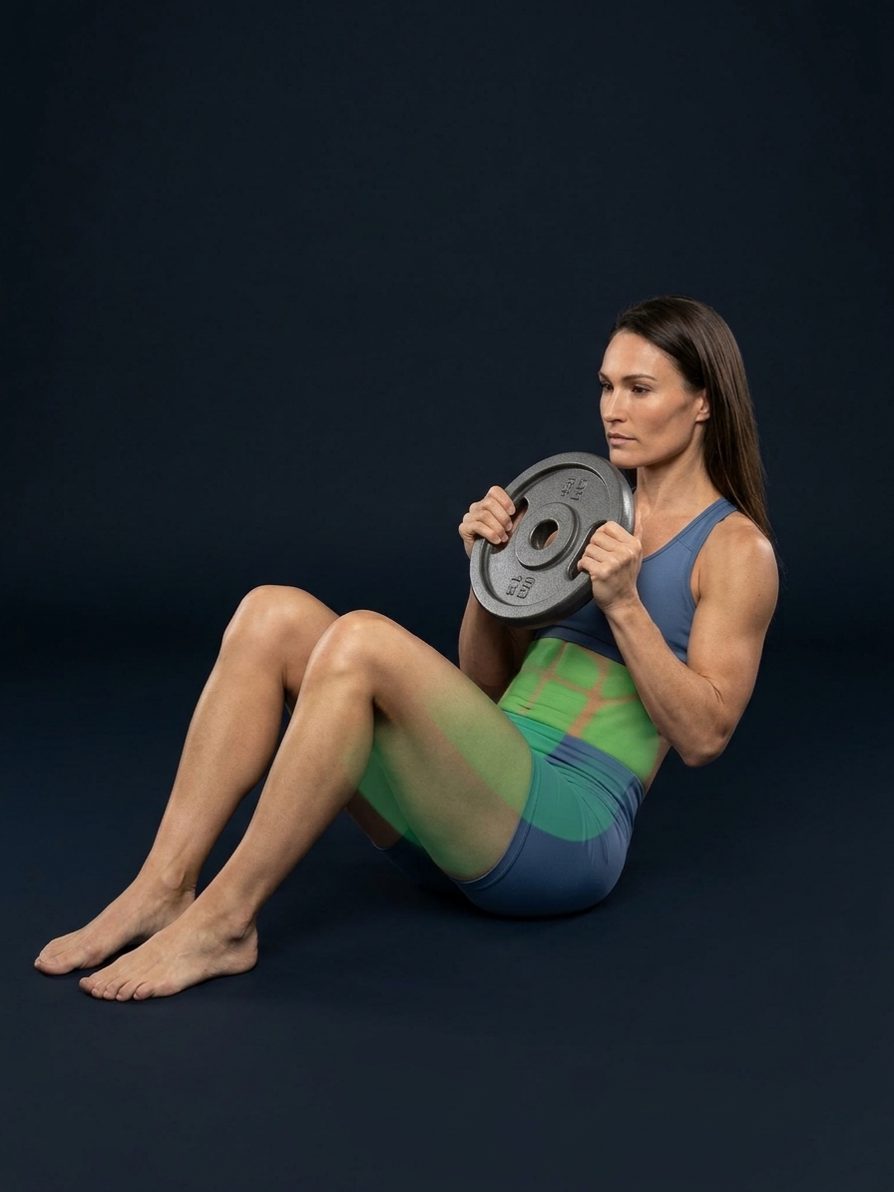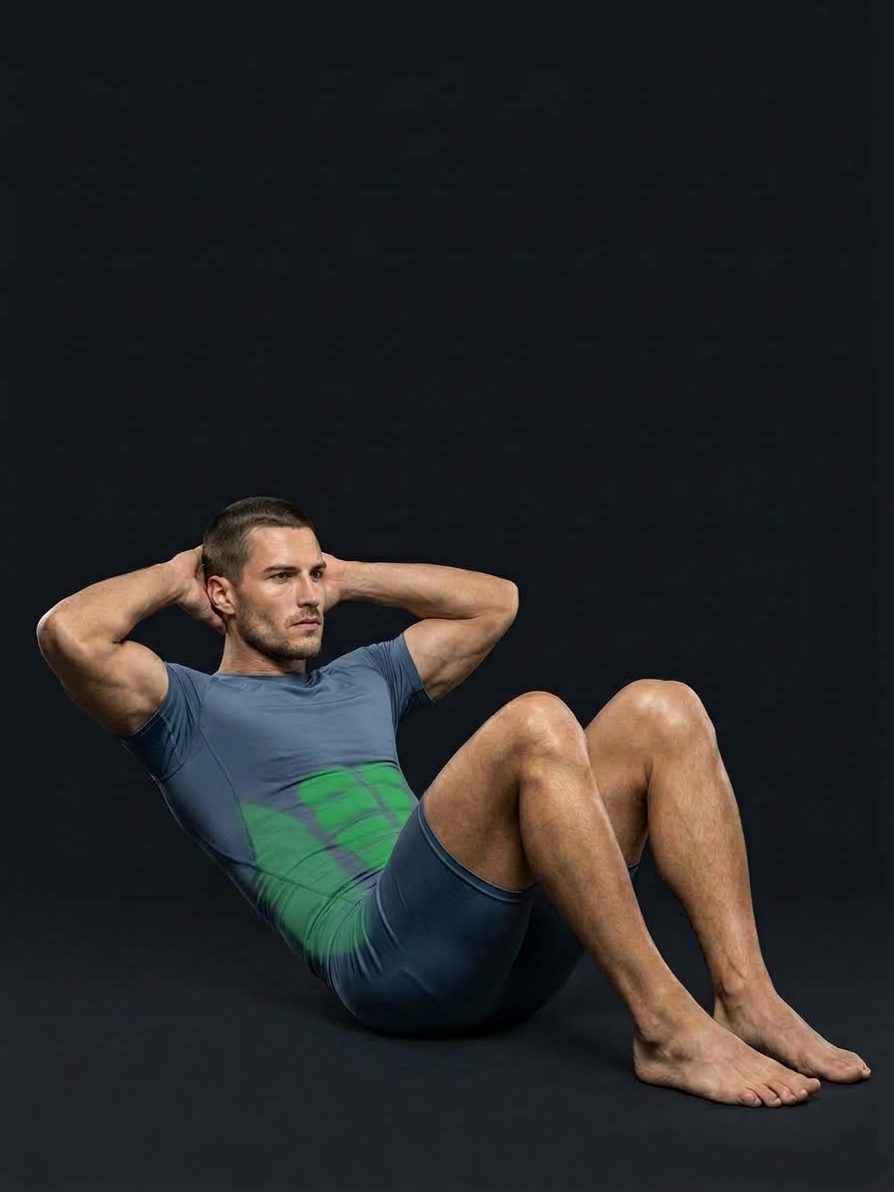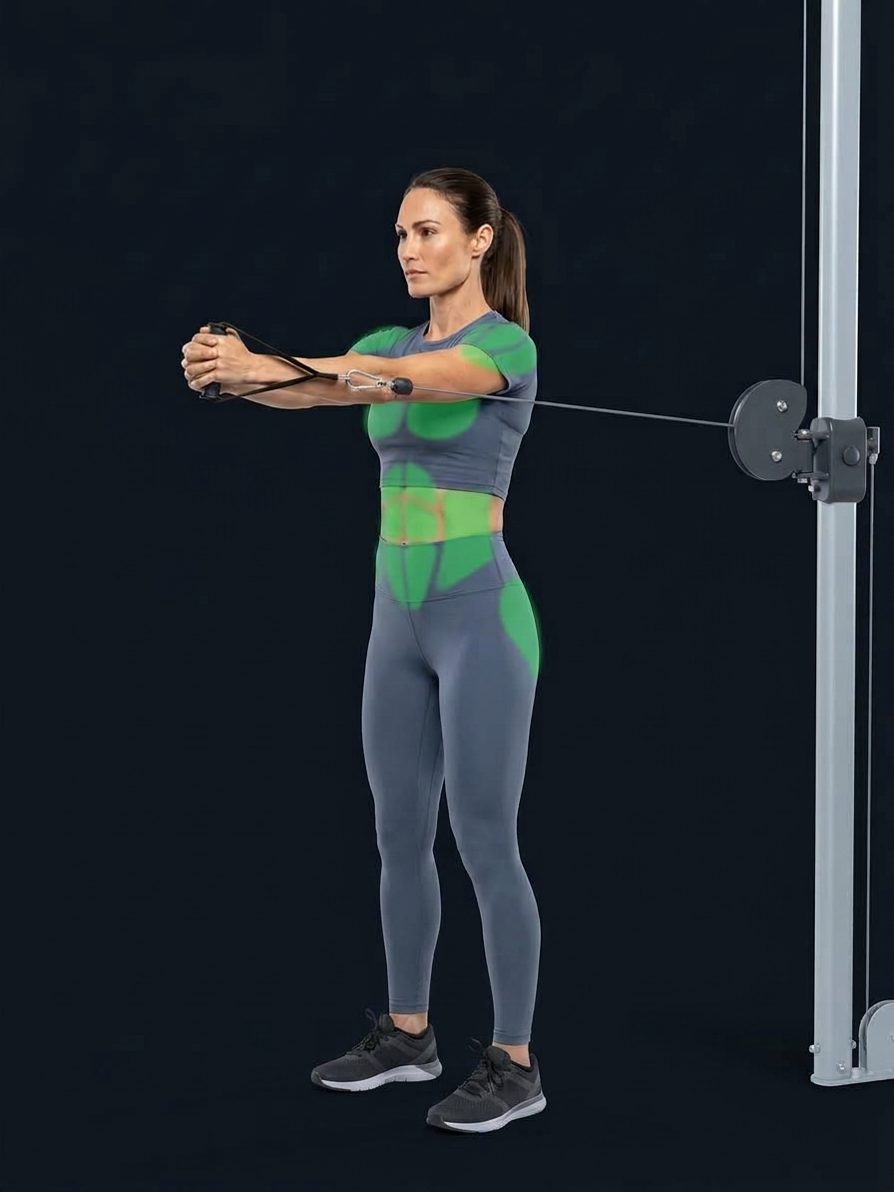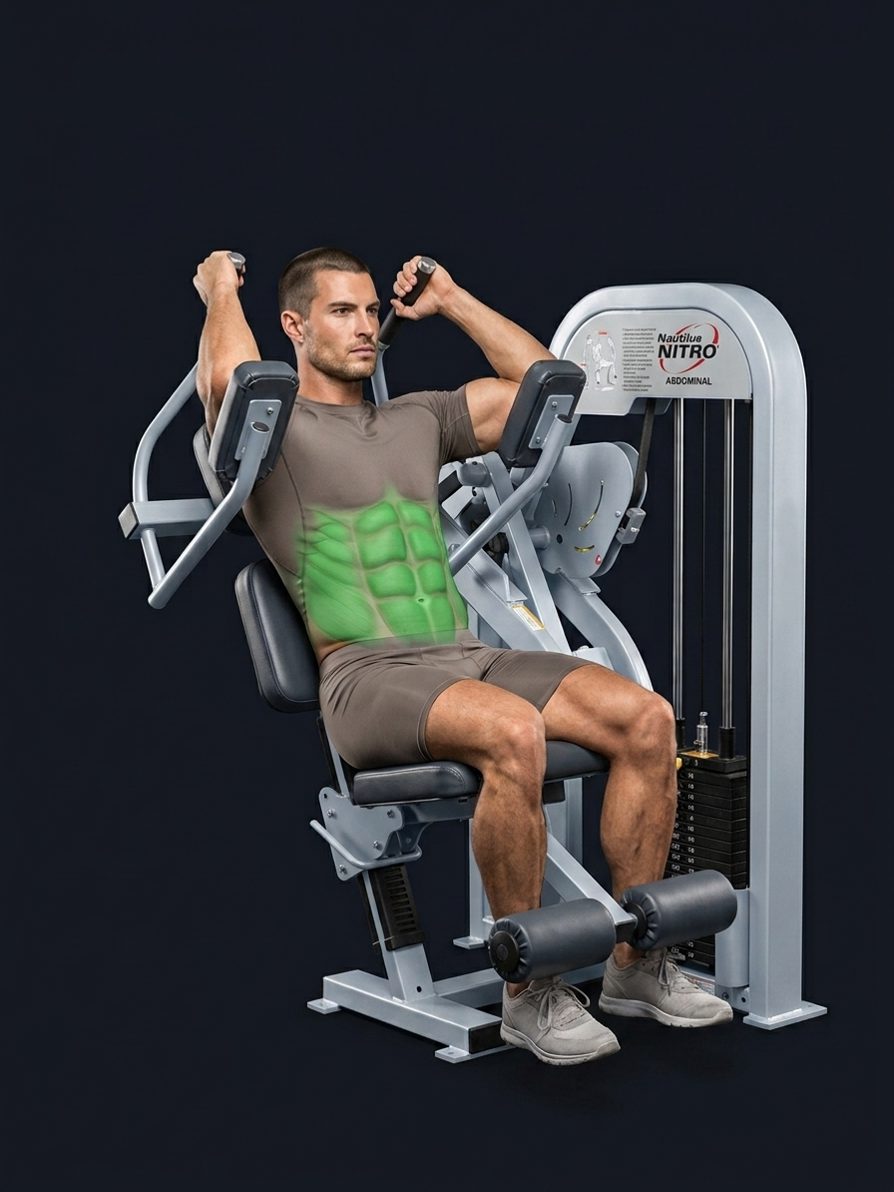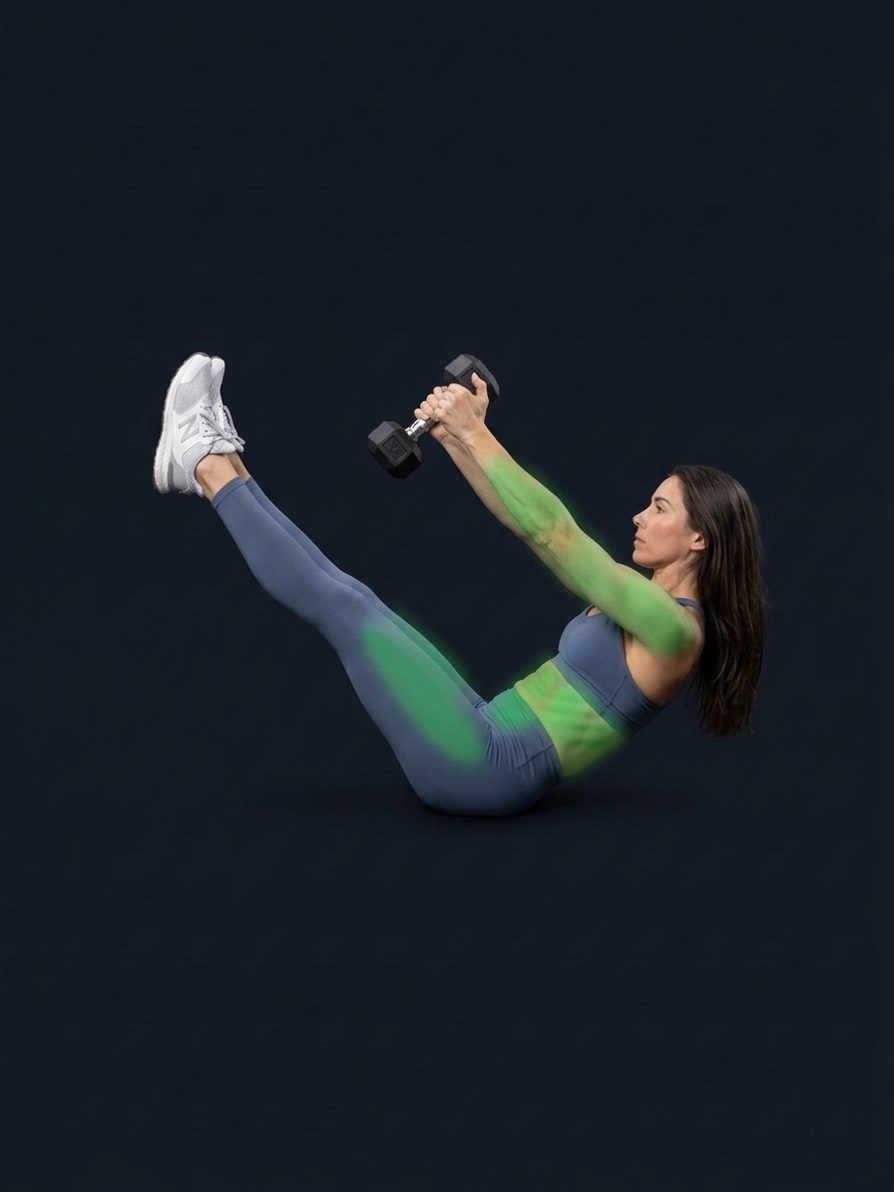
Weighted V-Up
- Level
- Advanced
- Equipment
- Weight Plate, Dumbbell, Medicine Ball
- Movement
- V up · Lying on the back
- Tracks
- Weight & Reps
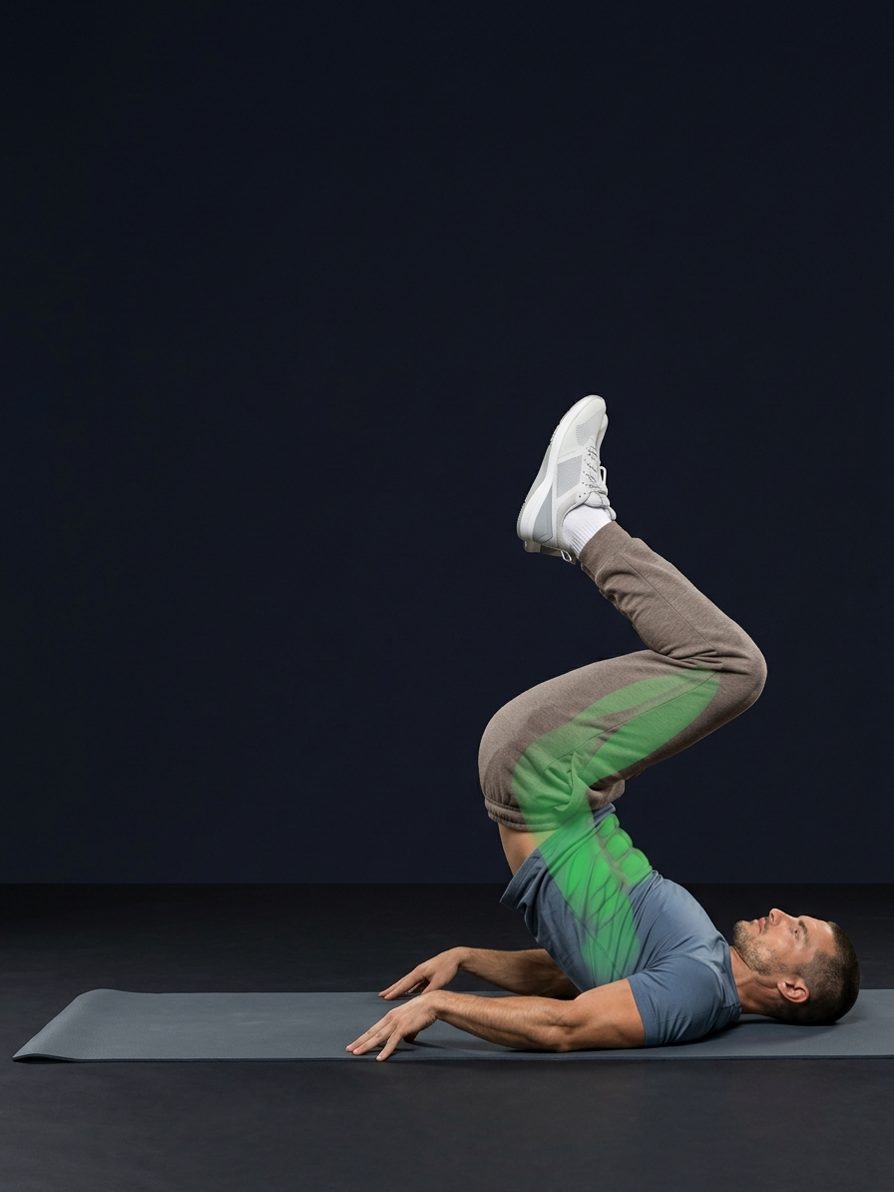
Works
Abdominals Obliques
How to do it
- Lie flat on your back with legs straight and together, holding a weight plate, dumbbell or medicine ball with both hands.
- Hold the weight against your chest for the easier version, or extend the arms overhead for the harder version.
- Brace the core and press the lower back gently toward the floor.
- Exhale and lift the torso and legs simultaneously, keeping the weight close to the body or reaching it toward the toes.
- Reach the top position in a V shape with the weight near or above the toes, and pause briefly while balancing on the glutes.
- Lower the torso and legs back to the floor under control, keeping the weight steady, and repeat.
Common mistakes
- Choosing too heavy a weight and using momentum to swing up instead of the abs.
- Bending the knees to make the reach easier, which shortens the lever and reduces the work.
- Letting the weight drift toward the face or away from the body, throwing off balance at the top.
- Rushing the descent and dropping the back and the weight hard to the floor.
- Arching the lower back off the floor at the bottom under the load.
Safety
Avoid this movement if you have acute lower back issues or disc herniation.
The added load increases spinal flexion stress, so keep the weight moderate and stop if the lower back complains.
Make sure the weight is secure in the hands so it cannot slip and strike the face or chest at the top.
Tips
- Start light — a 2 to 5 kg plate or ball is enough to change the movement noticeably.
- Keep the weight pinned to the chest or held steady overhead; do not let it drift away from the body's line.
- Exhale sharply as you lift to maximize the abdominal contraction.
- Lower with control; the added load makes the descent the most important part to slow down.
- Keep the legs locked out to maintain leverage, and lift from the hips rather than just the shoulders.
Details
- Base movement
- V up
- Arms
- Both
- Legs
- Both
- Body position
- Lying on the back
- Load type
- Weighted