VARIATIONS
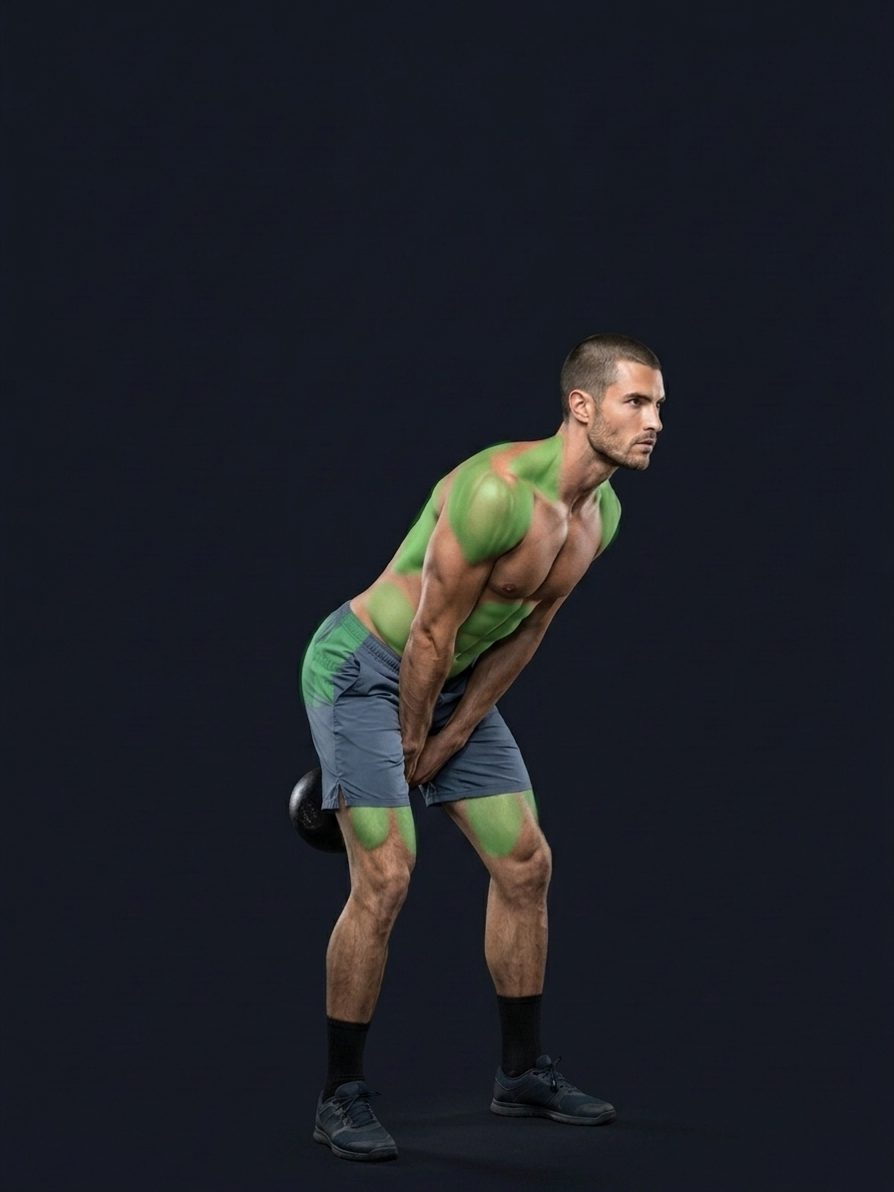
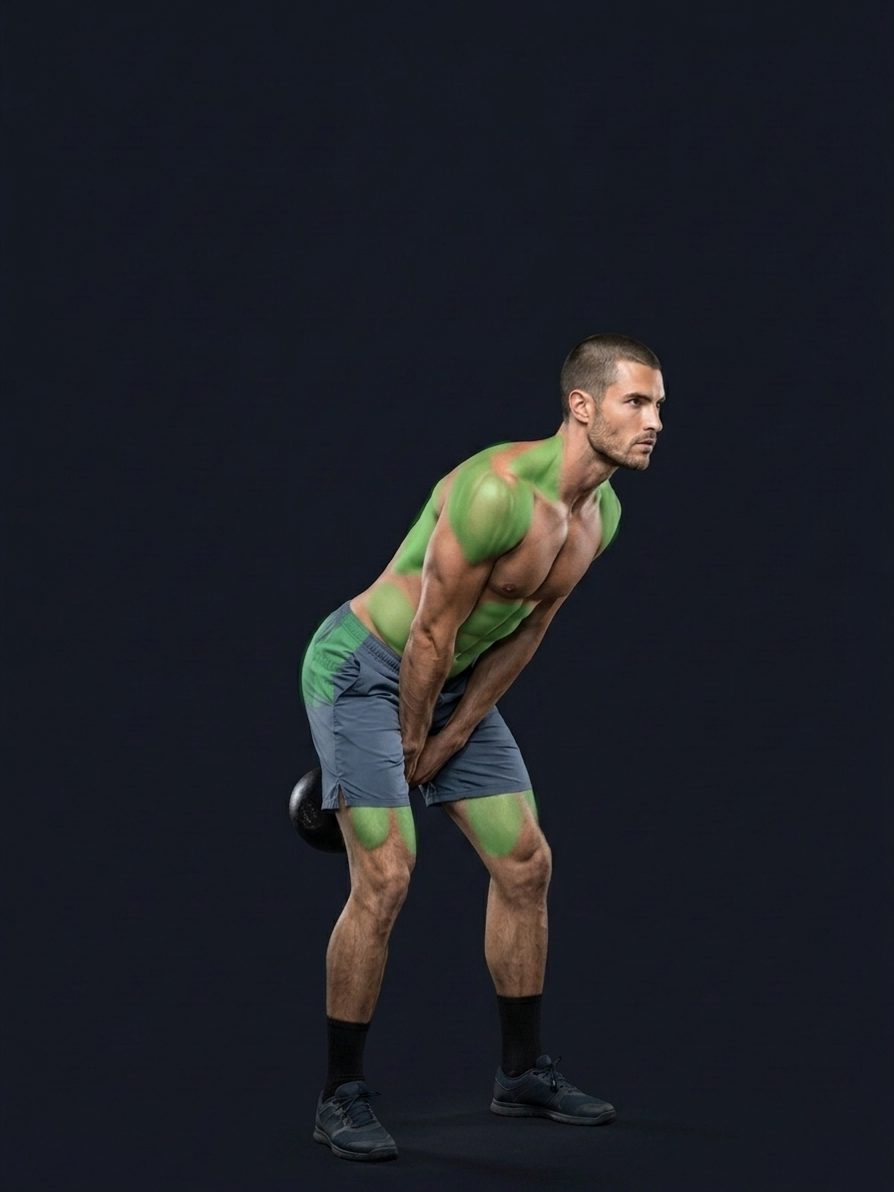
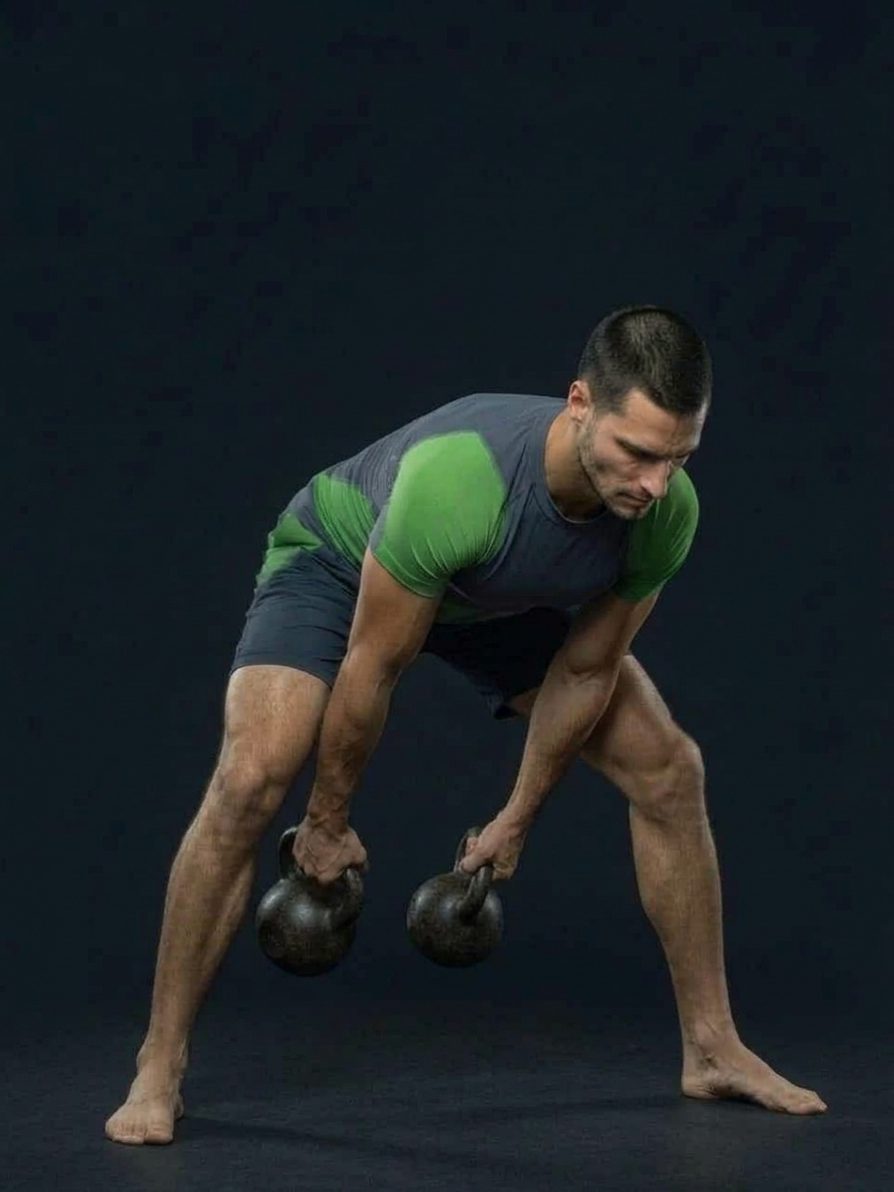
Single-Arm American Kettlebell Swing
This explosive hip-hinge movement develops power in the posterior chain and builds endurance in the lats by driving the kettlebell overhead to arm's length with one hand.
HOW TO DO IT
- Stand with feet shoulder-width apart and the kettlebell on the floor slightly in front of you, handle angled forward.
- Hinge at the hips, push the hips back, and grip the handle with one hand, keeping your spine neutral and shins near vertical.
- Hike the bell back between your legs, above knee height, with the working arm relaxed and the hips loaded.
- Snap the hips forward violently and squeeze the glutes to drive the bell up and out.
- Let the bell float past chest height and continue overhead, finishing with the arm straight and the bell locked out above the shoulder, bicep near the ear.
- As the bell falls, hinge at the hips and guide it back between the legs, then immediately repeat for the next rep.
- Complete all reps on one side, then switch hands and repeat.
COMMON MISTAKES
- Squatting instead of hinging at the hips.
- Pulling the bell up with the arm or shoulder instead of driving with the hips.
- Letting the bell drift too far from the body, which strains the lower back.
- Hyperextending the lower back at the top of the swing.
- Allowing the knees to cave inward during the hinge.
- Rotating or leaning the torso toward the working arm instead of staying square.
- Shrugging the working shoulder or bending the elbow at lockout.
- Losing the bell forward because the grip fails before the set is finished.
TIPS
- Treat the swing as a hip hinge, not a lift; the arm is a rope and the hips are the engine.
- Keep the working shoulder packed at the bottom and let the bell rotate naturally so it does not wrench the wrist at the top.
- Brace the abs and squeeze the glutes to stop the bell overhead rather than muscling it with the shoulder.
- Keep the shoulders square to the front and resist the urge to twist toward the working side.
- Breathe sharply out at the top of each rep and inhale as the bell descends.
- Keep the neck neutral and the gaze forward, not up at the bell.
SAFETY
- Overhead lockout requires adequate shoulder flexion and thoracic mobility; if you cannot reach a straight-arm overhead position without arching the lower back, use the two-handed chest-height swing instead.
- Keep the lower back neutral throughout the hinge and do not let the bell pull you into lumbar flexion at the bottom.
- Use a load you can decelerate under control, keep the area around you clear in case of a lost grip, and set the bell down rather than fighting a failing grip.
DETAILS
- Muscles
- GlutesHamstrings
- Equipment
- Kettlebell
- Type
- Strength Training
- Difficulty
- Advanced
- Tracked as
- Weight & Reps
TECHNIQUE
- Arms
- One
SIMILAR EXERCISES
Train this in GYMMER
Put it in a plan, log every set, and learn 3,000+ exercises with demos and coaching notes.
Ratings
Not rated