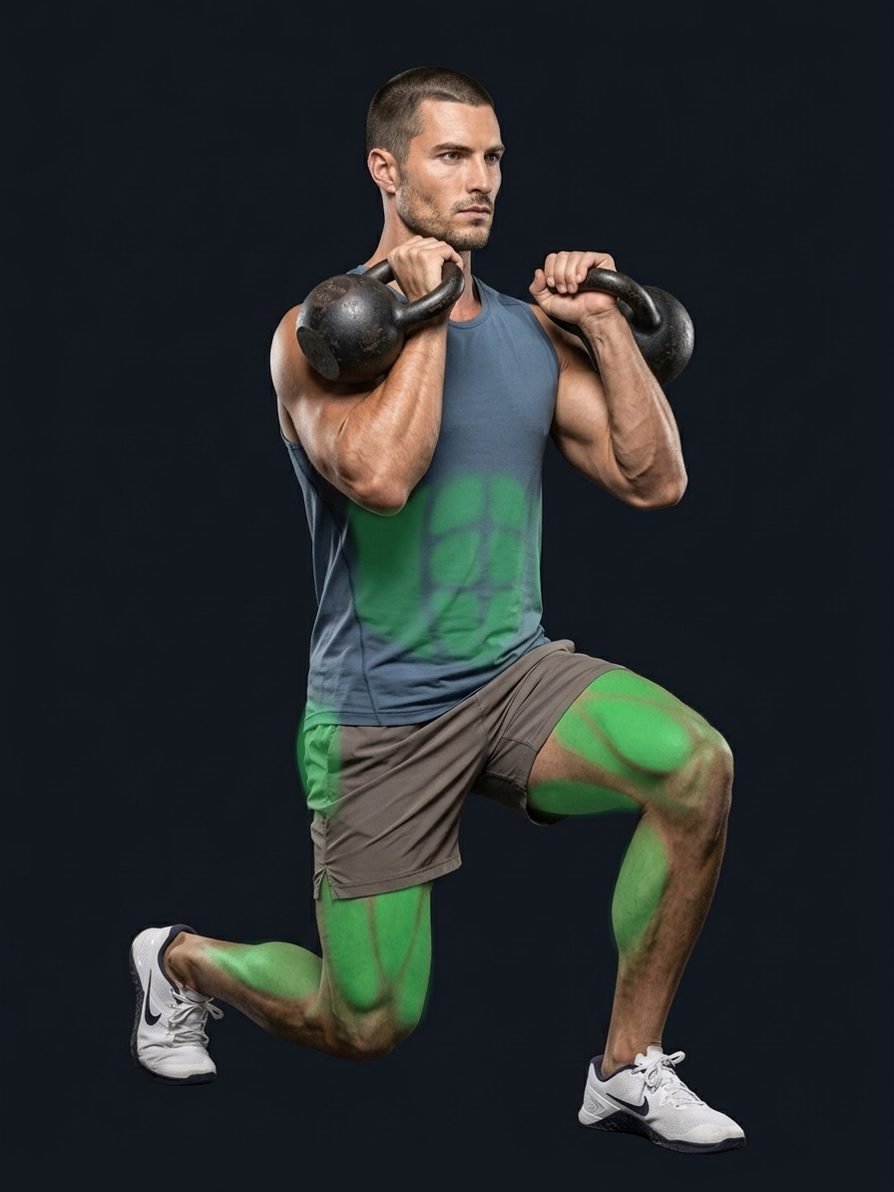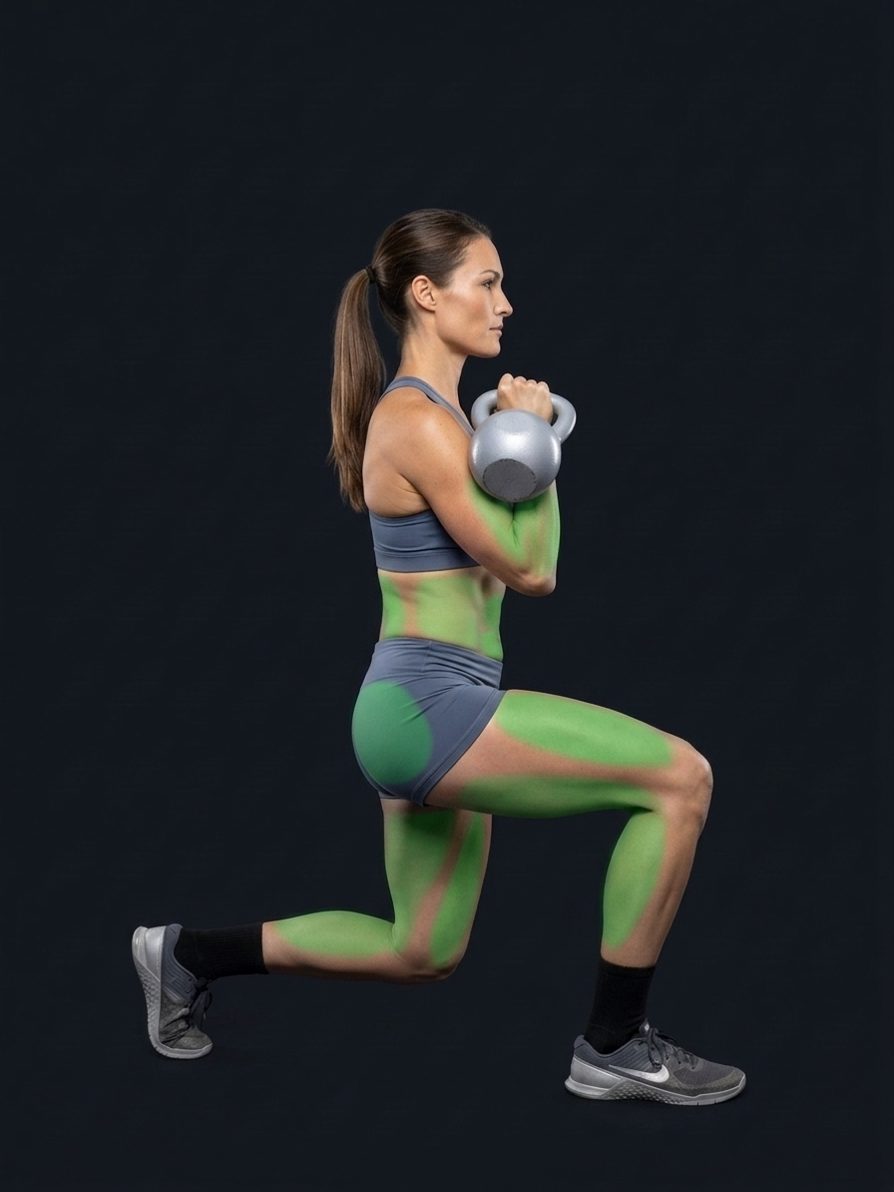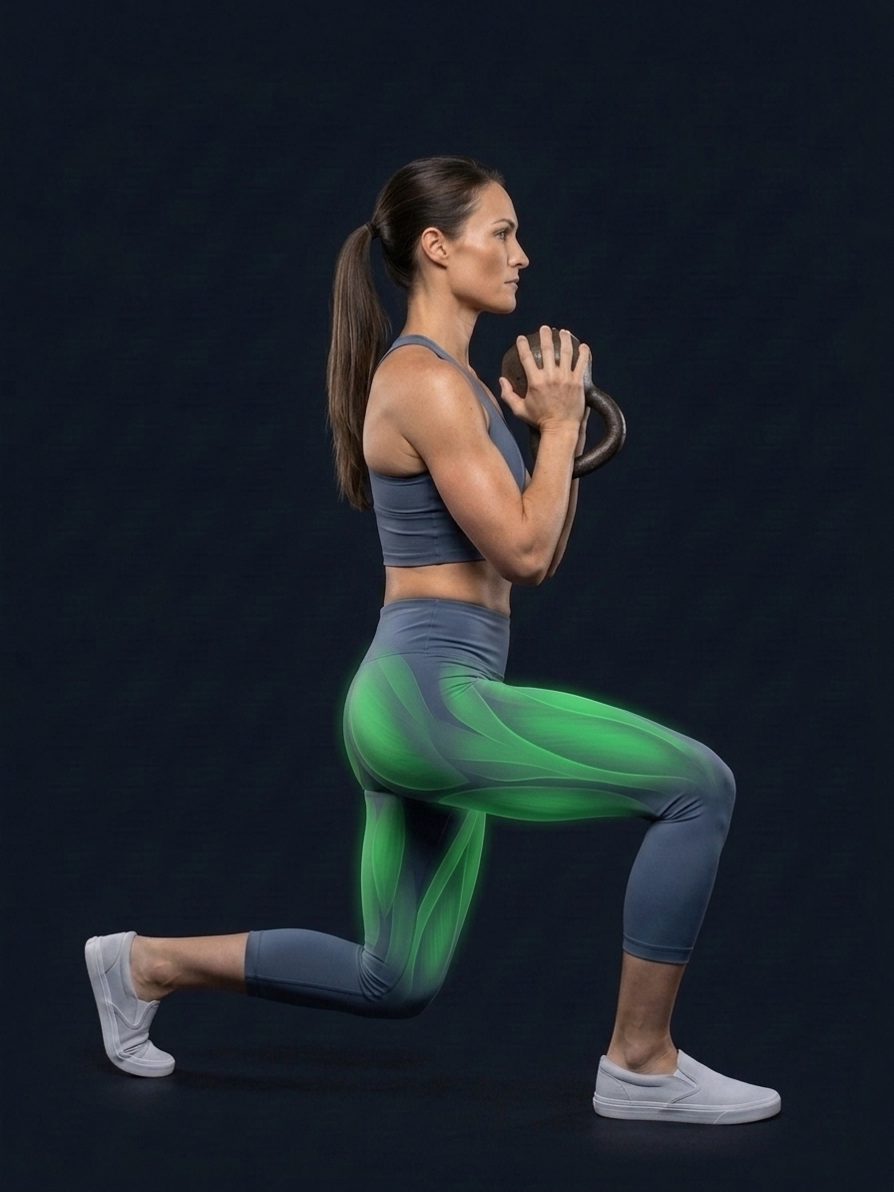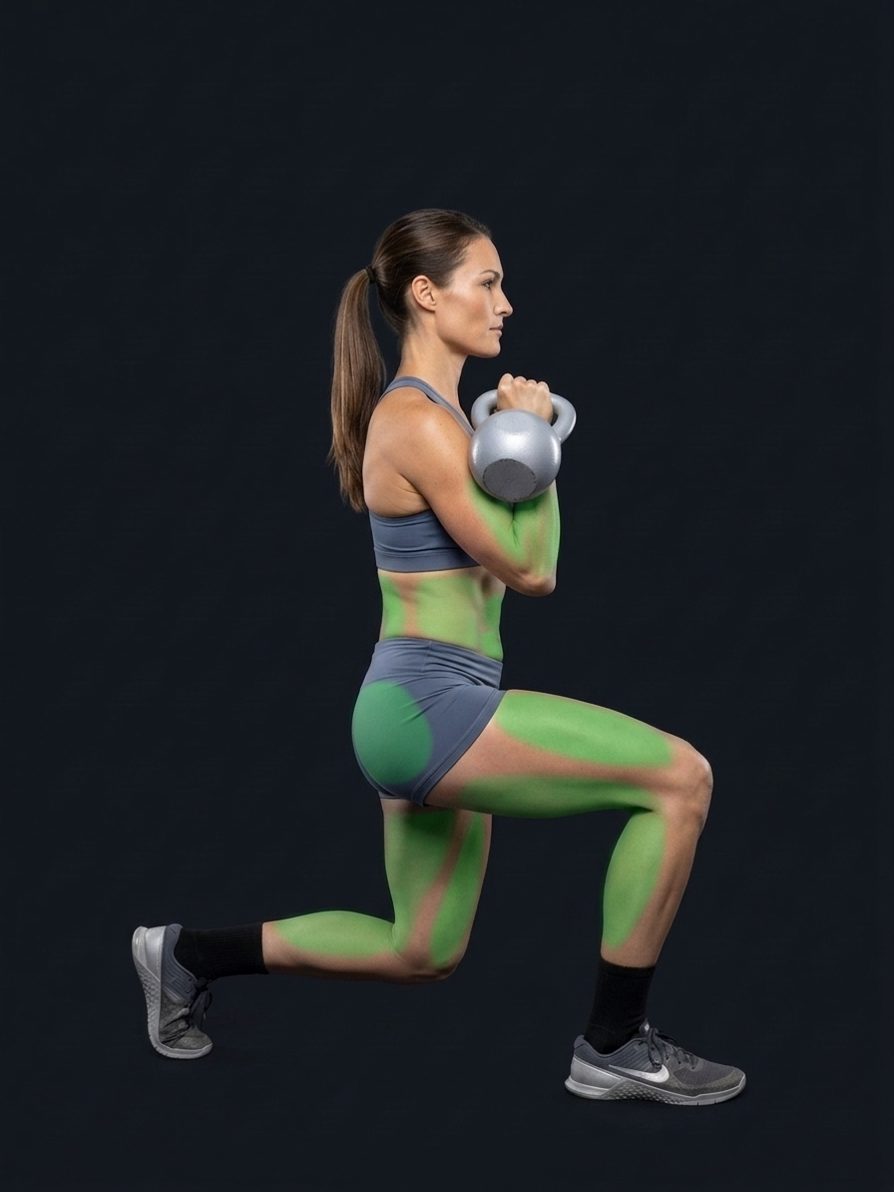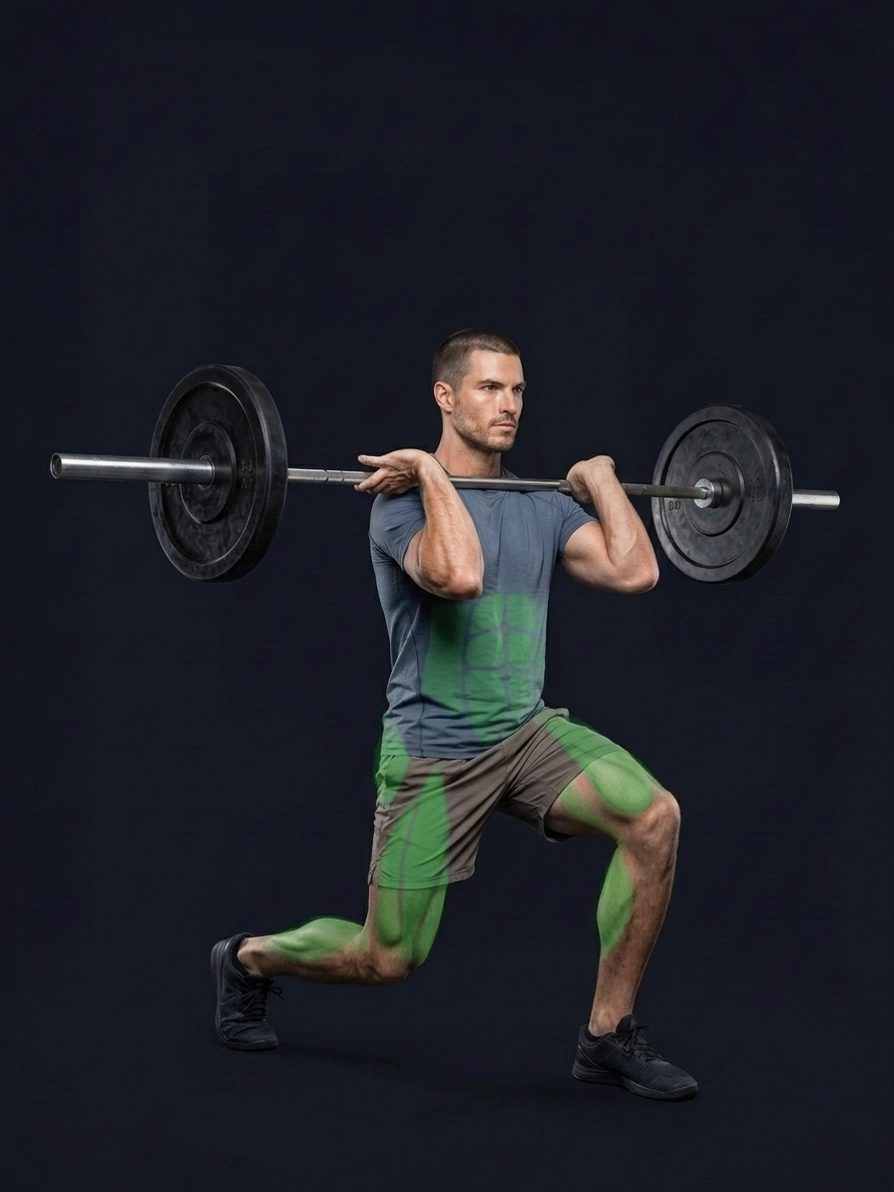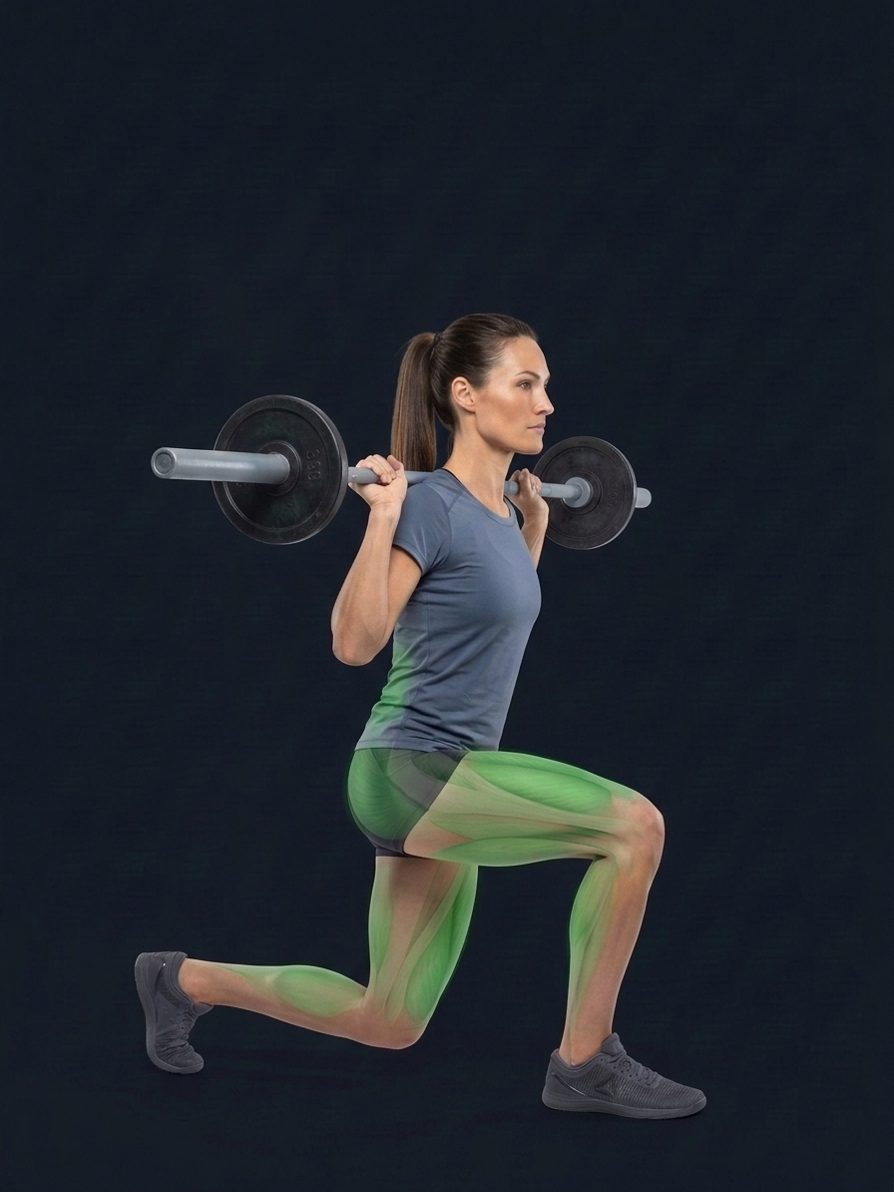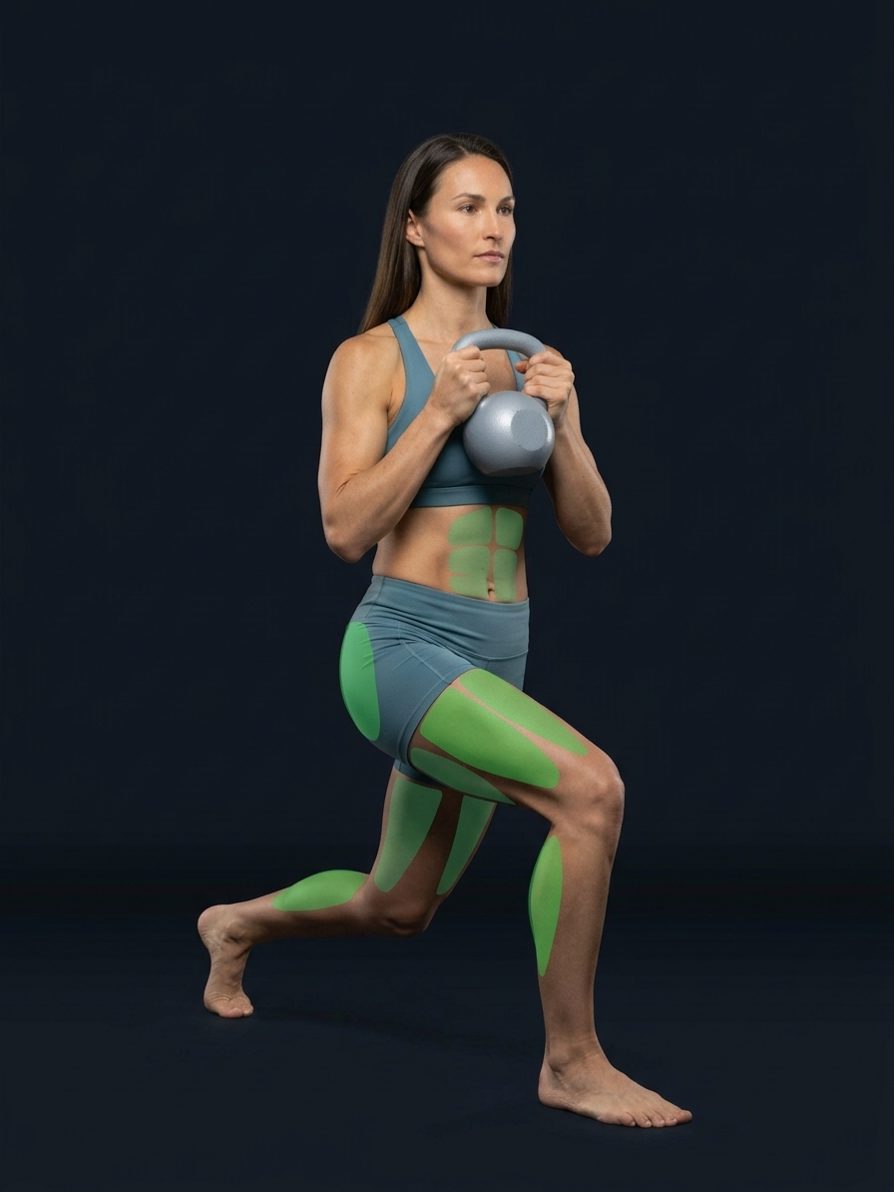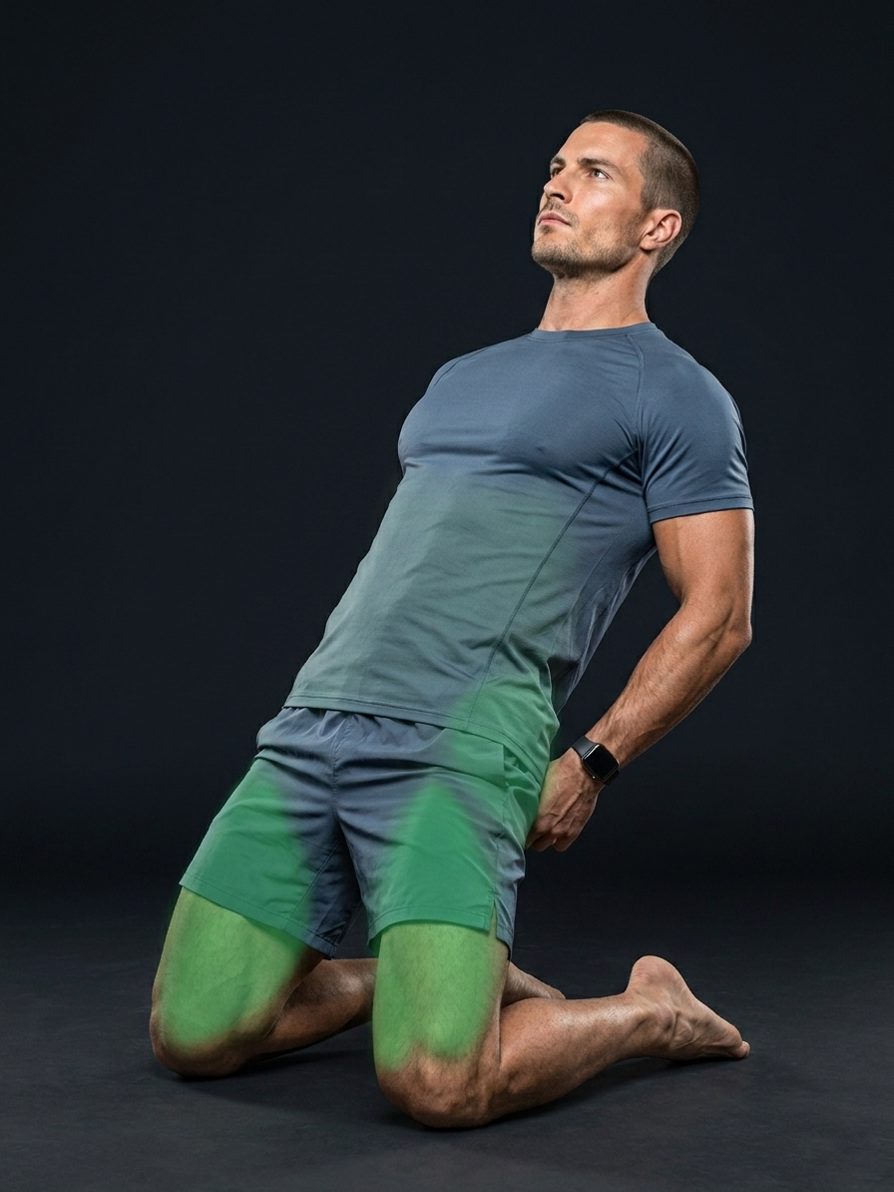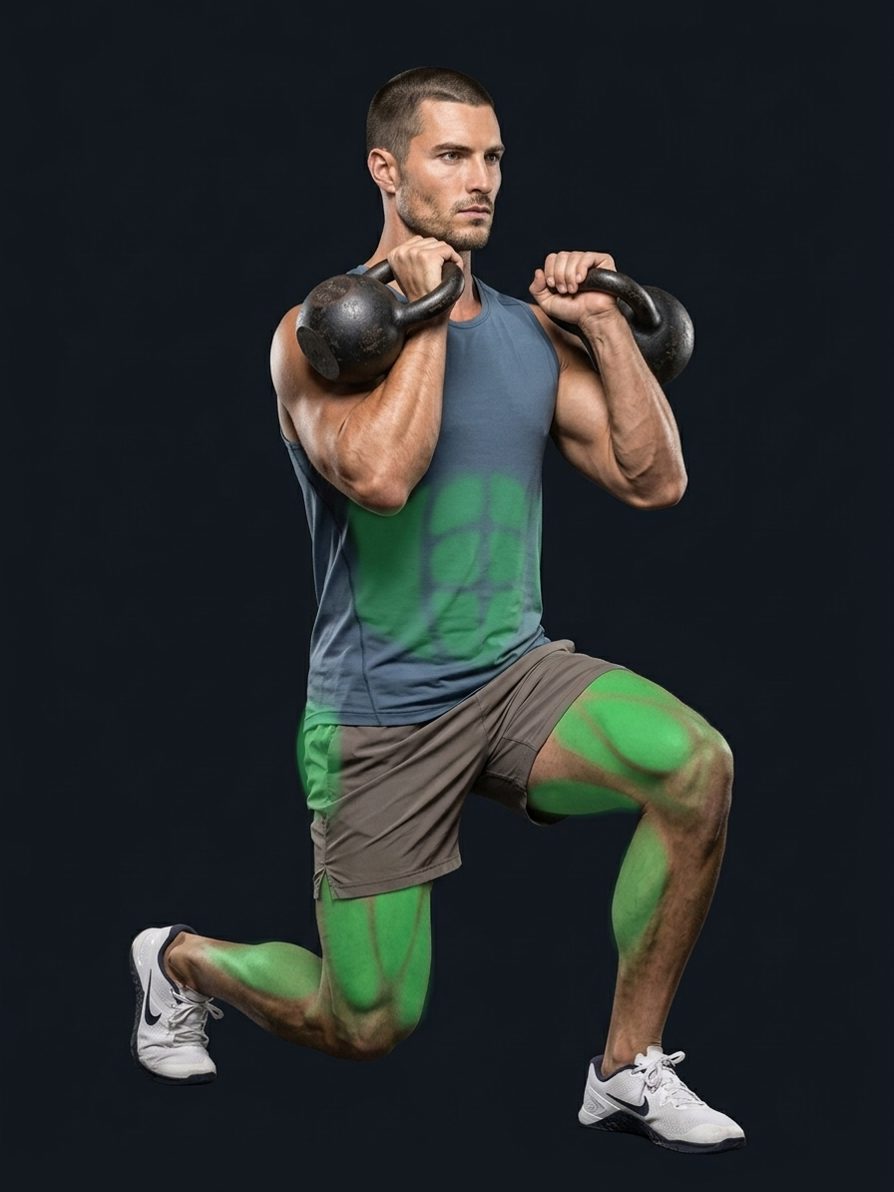
Walking Double Kettlebell Lunge
- Level
- Advanced
- Equipment
- Kettlebell
- Movement
- Lunge · Standing
- Tracks
- Weight & Reps
Works
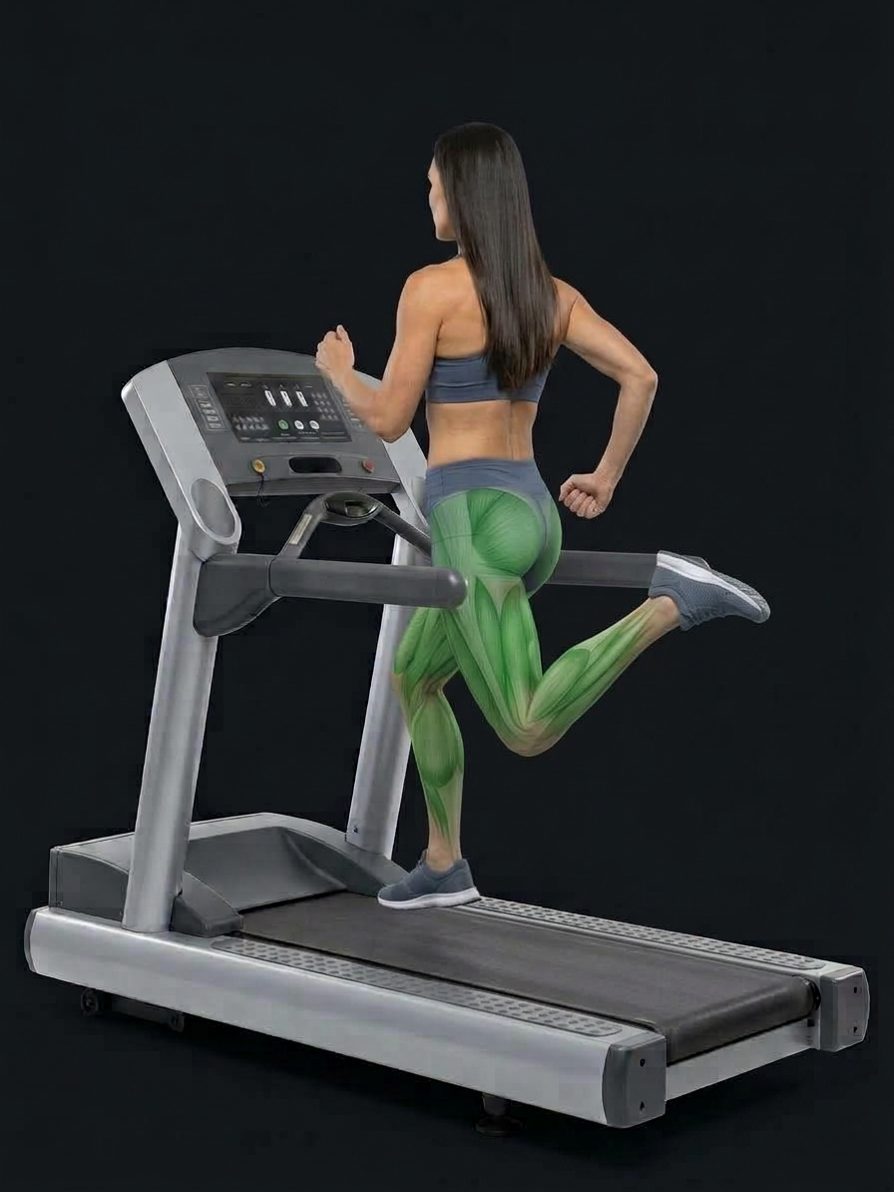
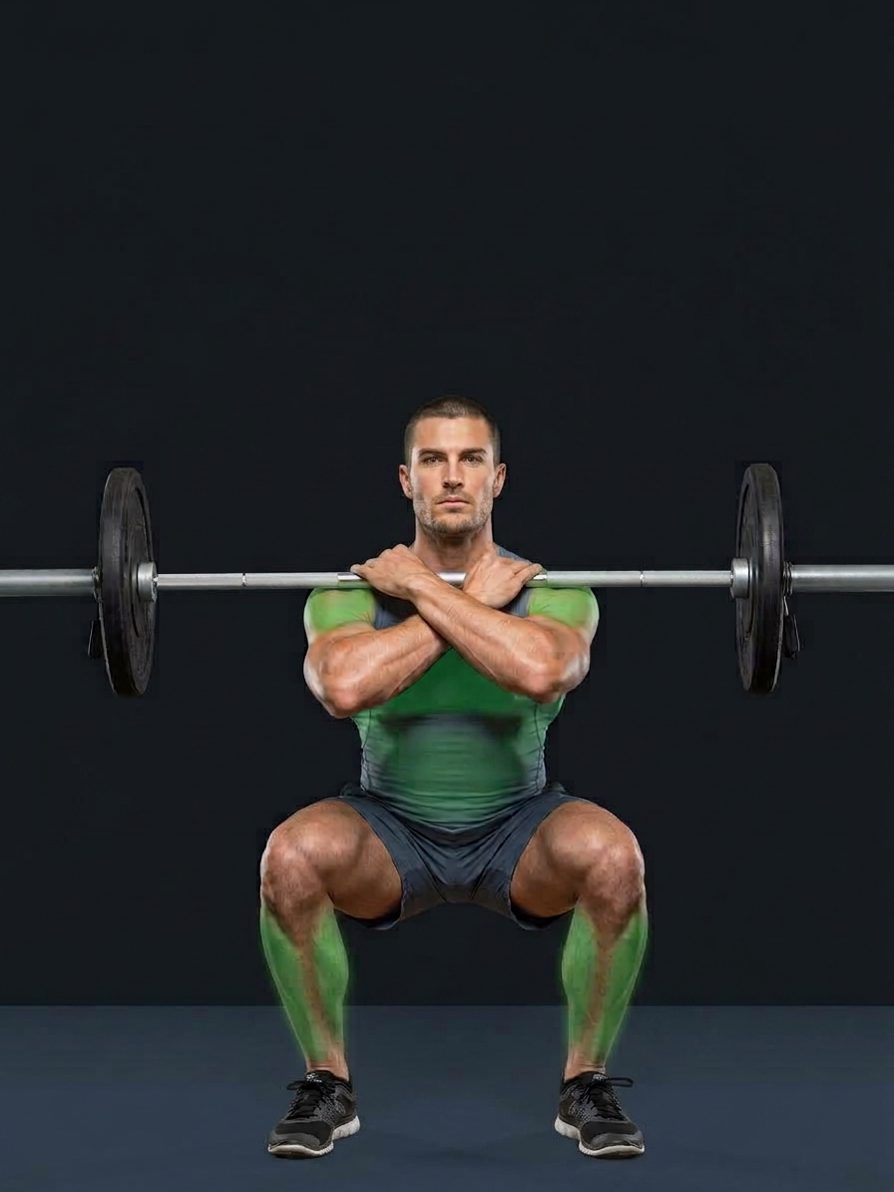
Quadriceps Glutes Abdominals Hamstrings Calves
How to do it
- Hold two kettlebells at shoulder height with palms facing inward.
- Step forward with one leg and lower your hips until both knees bend to 90 degrees.
- Keep your chest up and core tight throughout the descent.
- Push through the front heel and mid-foot to drive up, bringing the back foot forward past the front foot.
- Immediately lower into the next lunge on the opposite leg, keeping the kettlebells locked in place.
- Continue alternating legs for the desired distance or number of steps, then set the kettlebells down safely.
Common mistakes
- Letting the front knee cave inward during the lunge.
- Leaning the torso forward instead of staying upright.
- Allowing the kettlebells to drift away from the body.
- Taking steps that are too long, causing the back knee to slam down or the front heel to lift.
- Rushing the steps and losing the tall, braced posture.
- Rotating or twisting the torso as the legs alternate.
Safety
Ensure the front knee tracks over the toes to avoid joint shear.
Do not hyperextend the lower back when holding heavy loads at the chest.
Keep the walking path clear of obstacles, and set the kettlebells down under control rather than dropping them from the rack position.
Tips
- Drive through the mid-foot of the front leg to stand up.
- Keep the kettlebells locked against your ribs to protect the lower back.
- Imagine sliding your back knee straight down into the floor.
- Take a slightly shorter step than in the stationary version so you can control the transition.
- Look ahead, not down, to help keep the torso upright and balanced.
Details
- Base movement
- Lunge
- Load position
- Front rack
- Arms
- Both
- Legs
- Alternating
- Hand orientation
- Neutral (palms facing each other)
- Torso lean
- Upright
- Body position
- Standing
- Direction
- Forward