Single-Arm Dumbbell Thruster
- Level
- Intermediate
- Equipment
- Dumbbell
- Movement
- Thruster · Standing
- Tracks
- Weight & Reps
Works
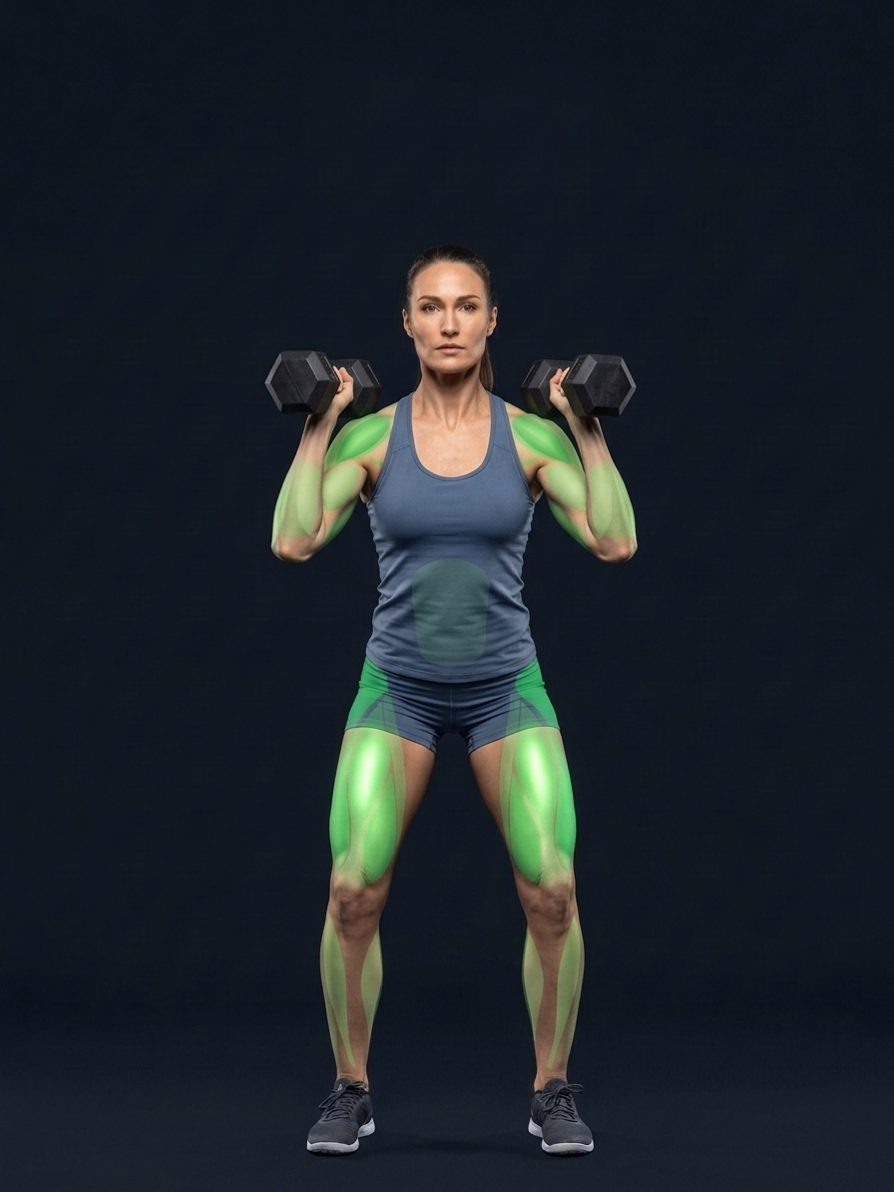
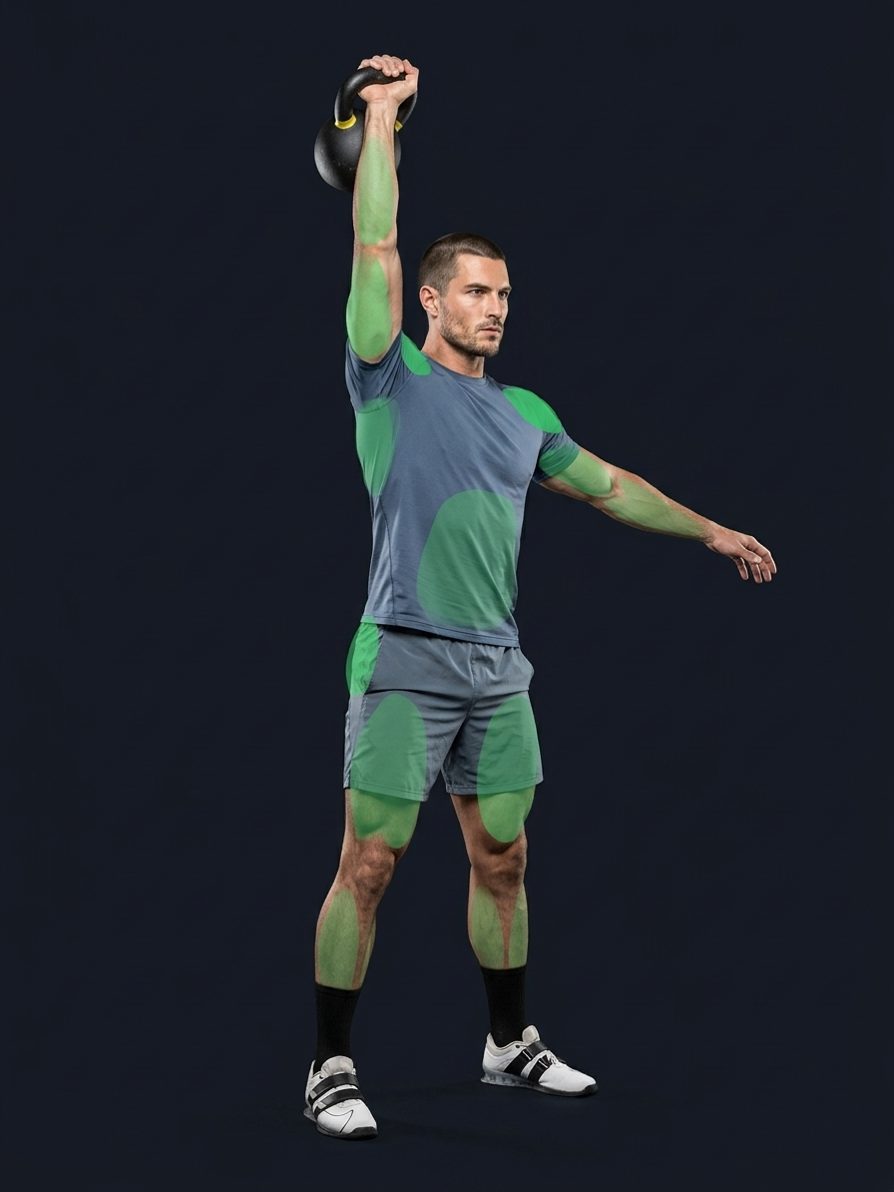
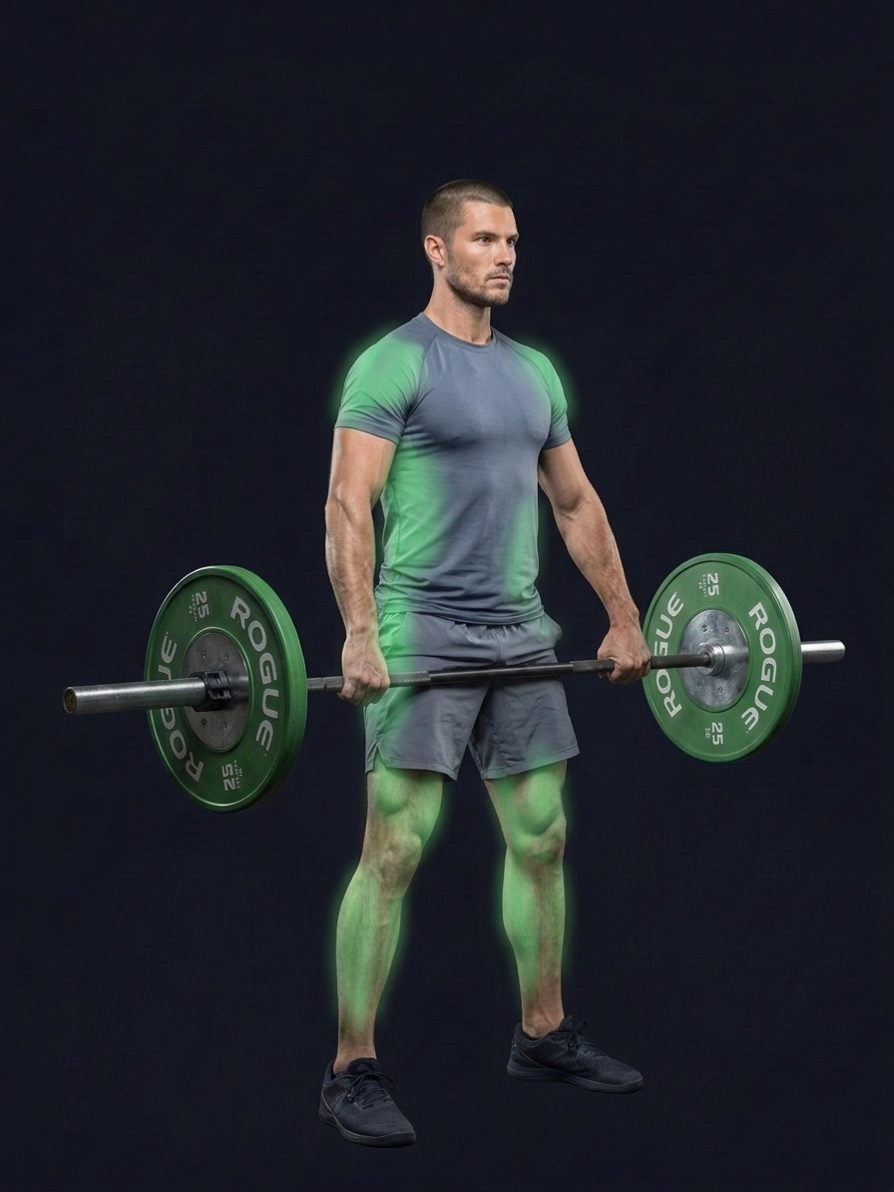
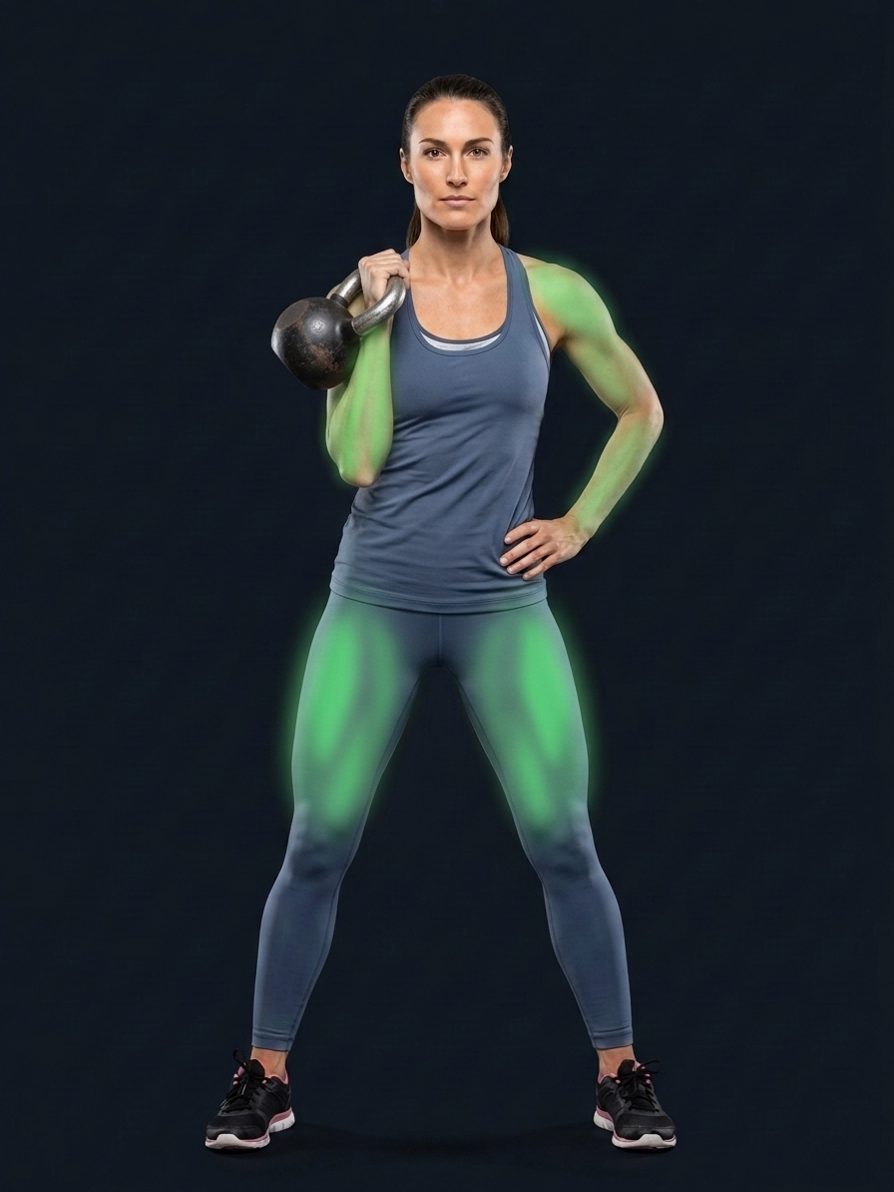
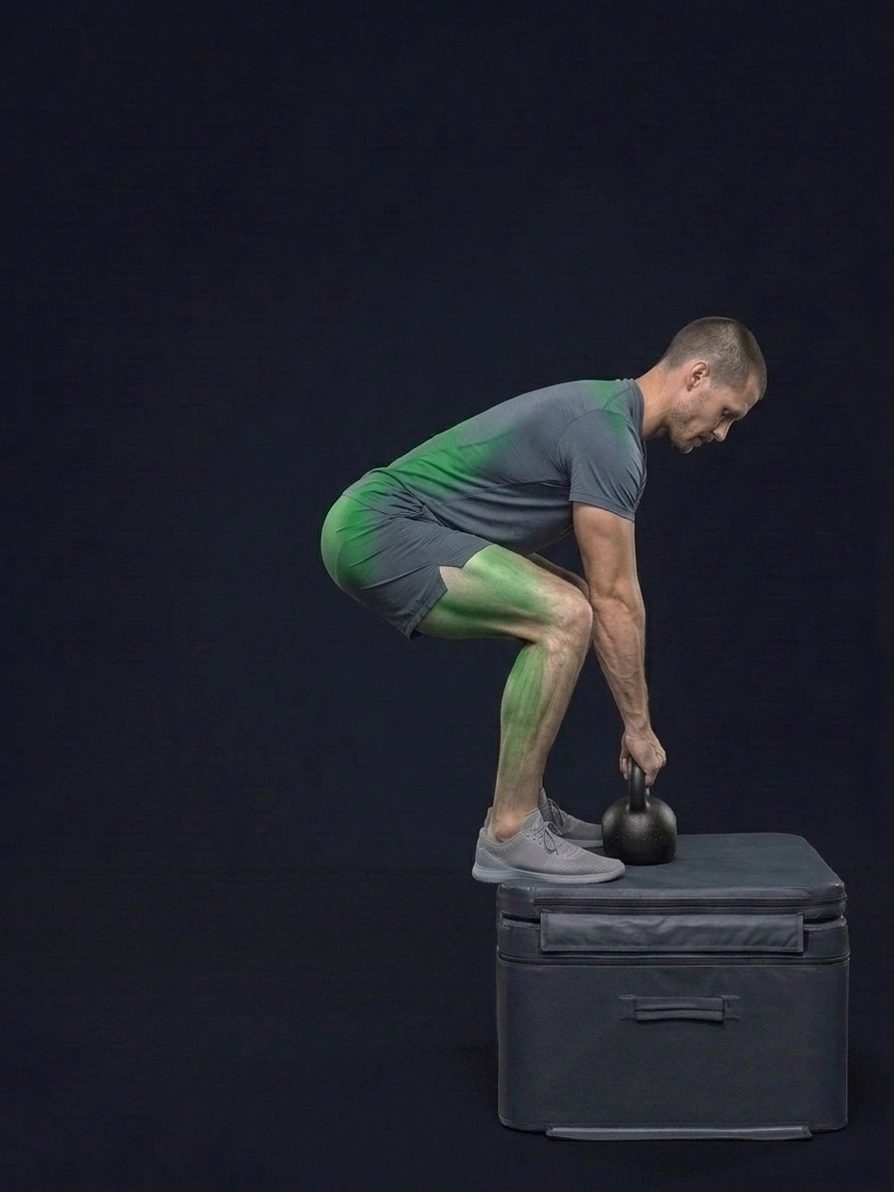
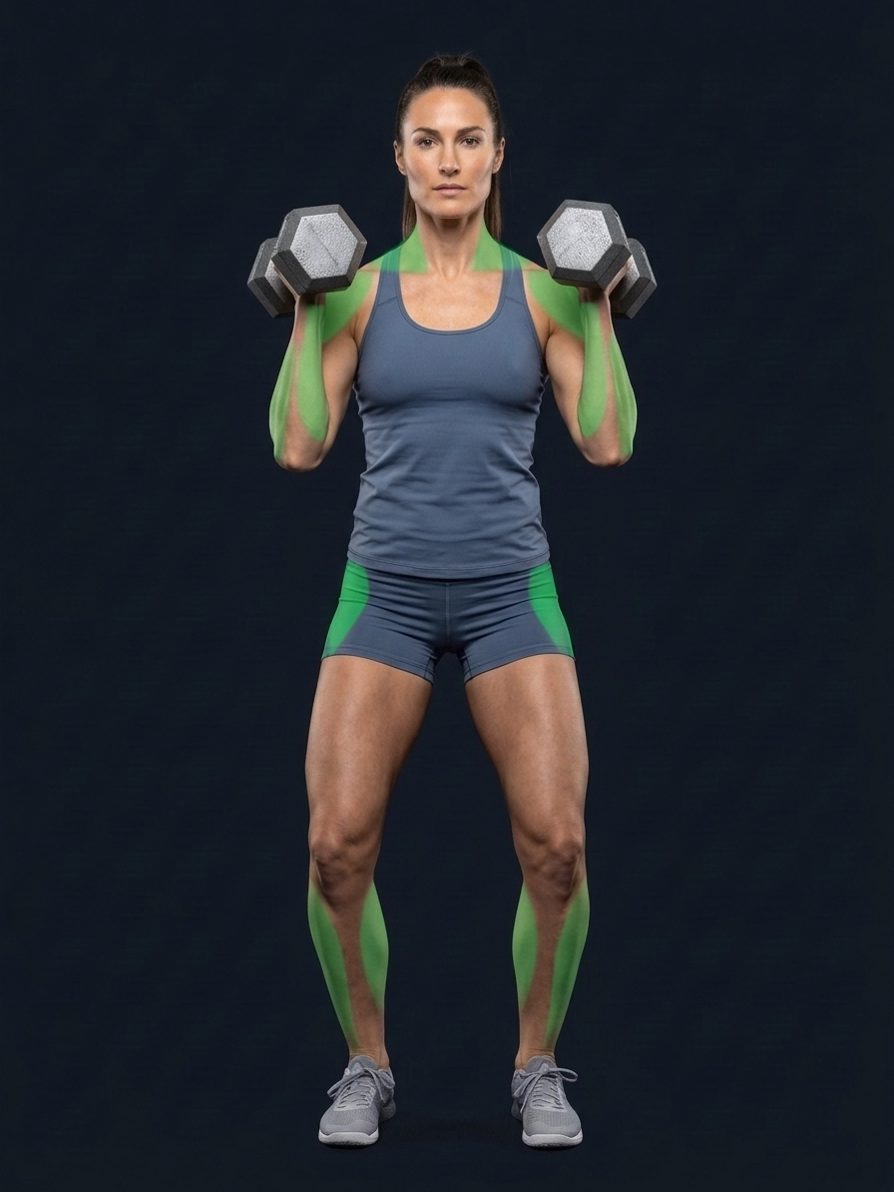
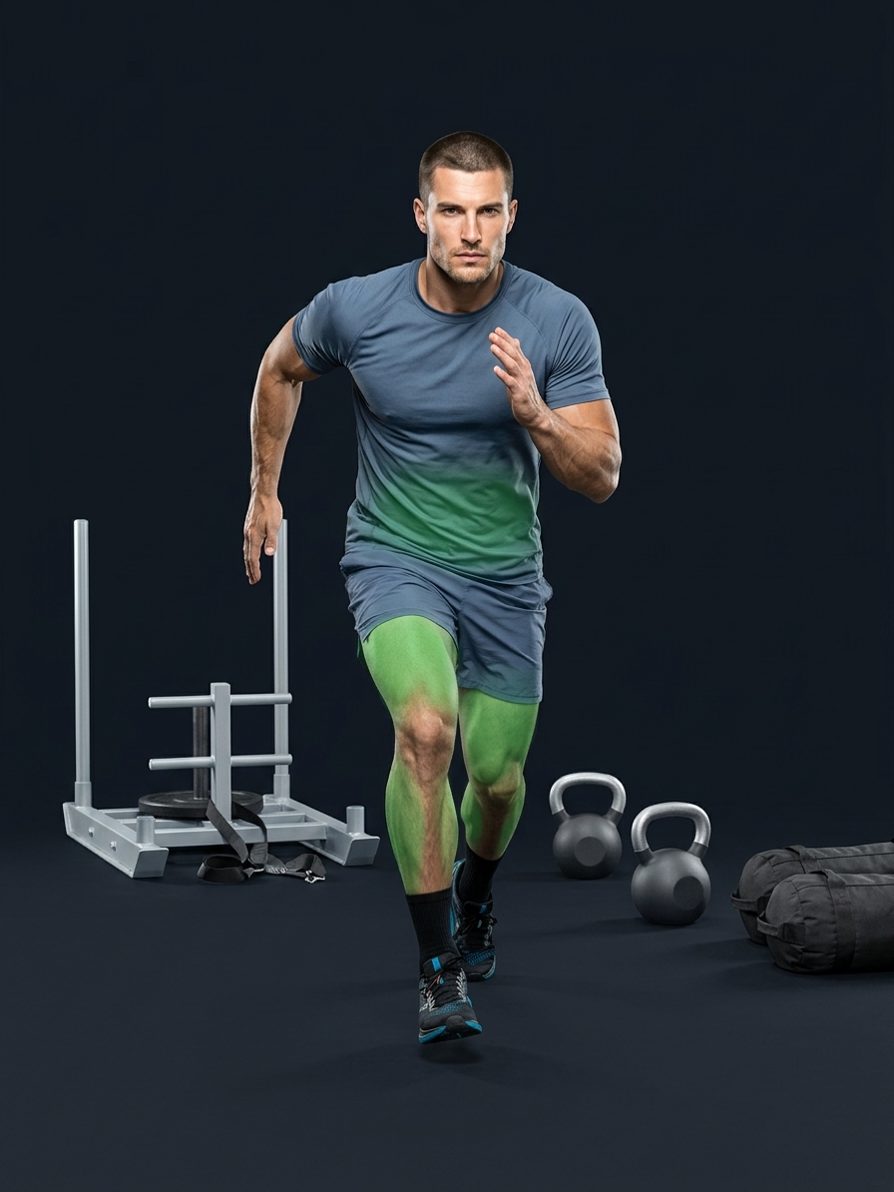
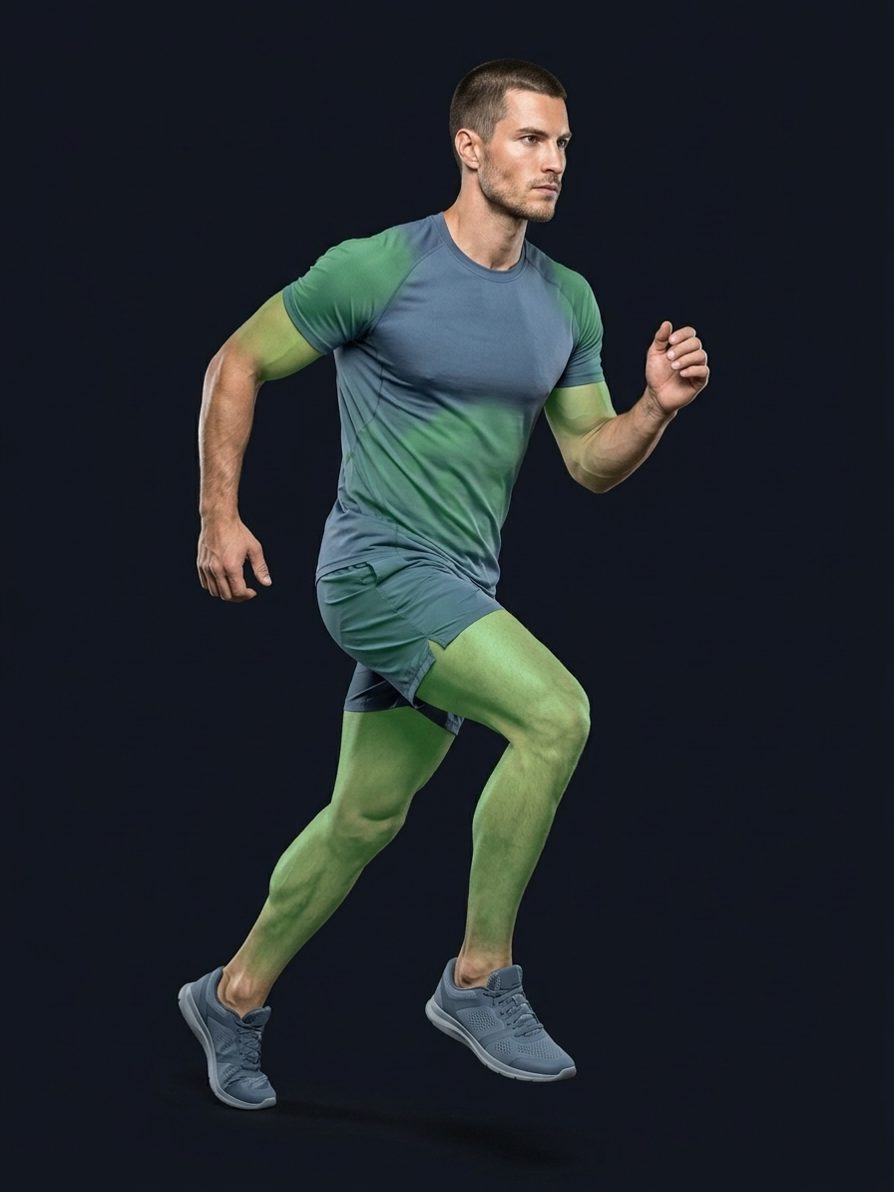
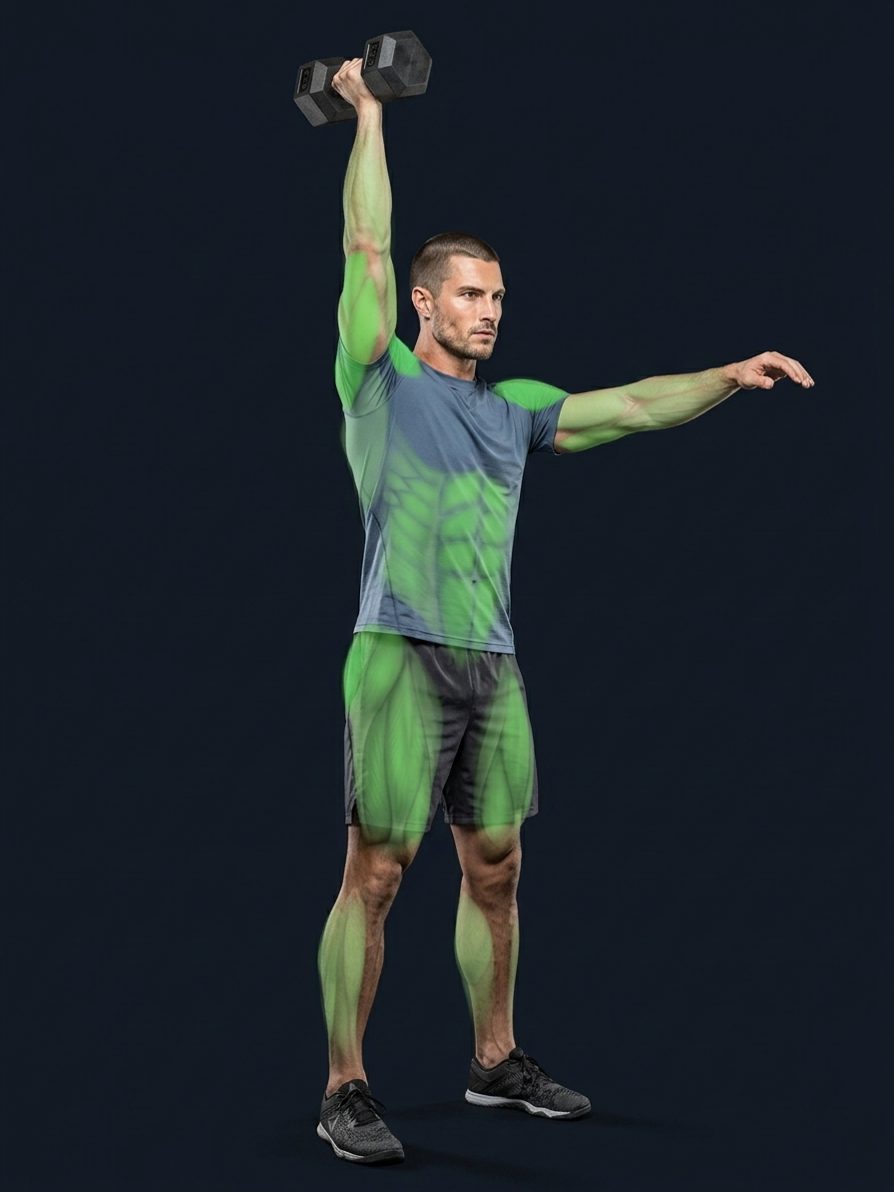
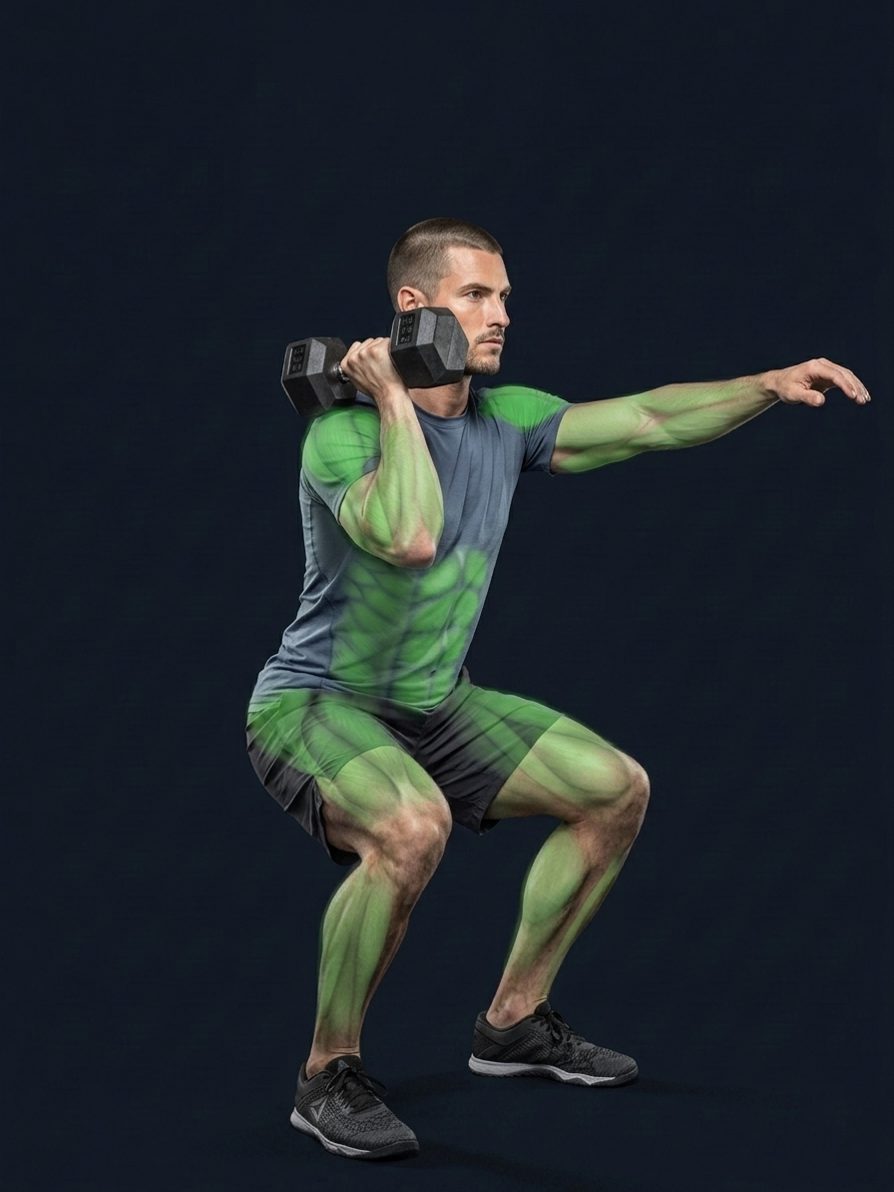
Full Body Quadriceps Glutes Shoulders Triceps Abdominals Obliques
How to do it
- Stand with feet shoulder-width apart holding one dumbbell at shoulder height, palm facing inward.
- Extend the non-working arm out to the side or across your chest for balance.
- Brace your core and descend into a deep squat, keeping your chest up and the dumbbell racked.
- Drive forcefully through your heels to stand, keeping your torso square and resisting any sideways lean.
- As your hips fully extend, press the dumbbell straight overhead until the arm is locked out.
- Lower the dumbbell back to the shoulder rack position under control, then reset and repeat before switching sides.
Common mistakes
- Letting the torso twist or lean toward the loaded side during the squat or press.
- Pressing before the hips have fully extended, losing the momentum transfer.
- Dropping the elbow and letting the dumbbell drift off the shoulder in the rack position.
- Using a much heavier dumbbell than the working arm can control, causing a slow, grinding press.
Safety
Avoid aggressive elbow lockout at the top, especially with the single-arm press where the shoulder has less support.
Keep the wrist stacked over the forearm and stop the set if the torso rotation becomes uncontrolled, as this stresses the lower back.
Tips
- Keep the dumbbell-side shoulder stacked directly over the hip at the bottom of the squat.
- Press the dumbbell slightly inward so it finishes over the midline of the body, not out to the side.
- Brace hard on the non-working side to stop the torso from rotating toward the loaded arm.
- Match squat depth and tempo on both sides so the weaker arm sets the pace.
Details
- Base movement
- Thruster
- Combined with
- Overhead press
- Load position
- Front rack
- Arms
- One
- Legs
- Both
- Hand orientation
- Neutral (palms facing each other)
- Body position
- Standing
- Stance
- Shoulder-width