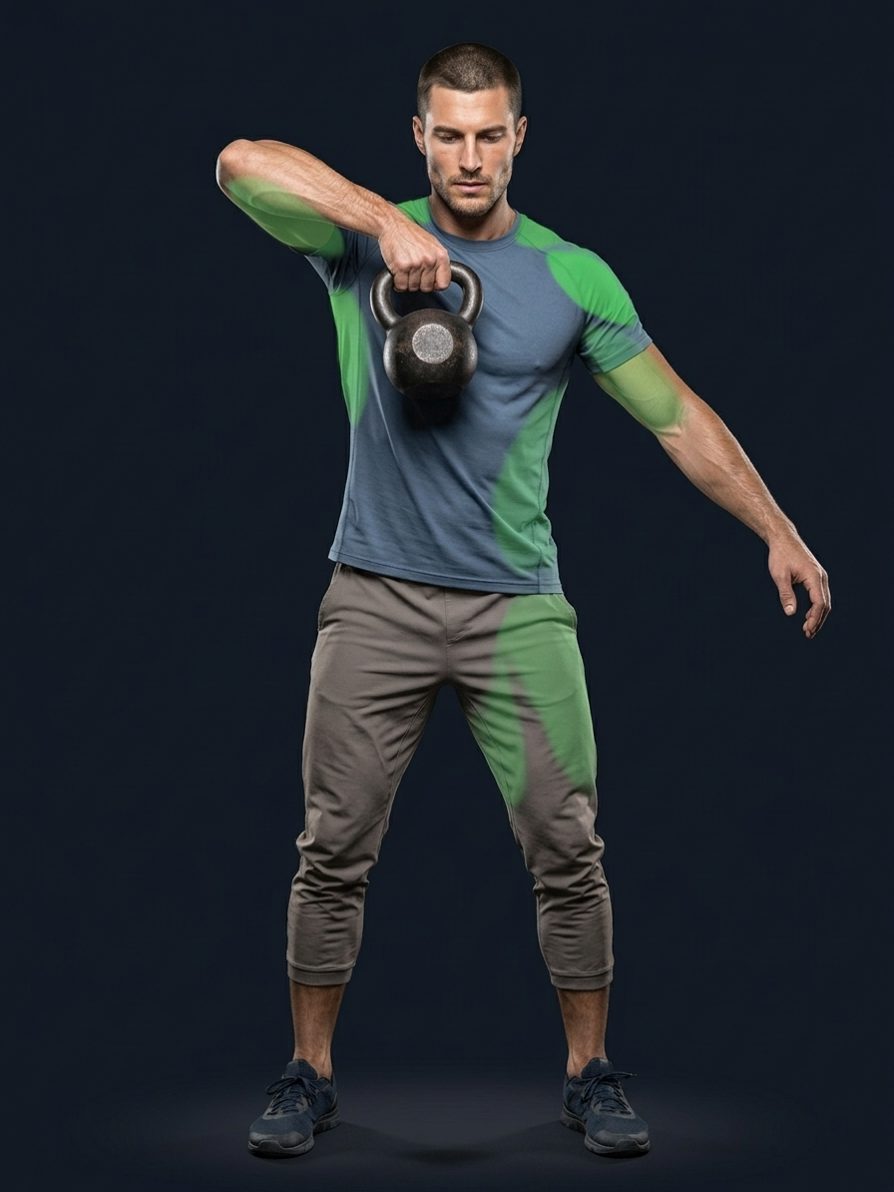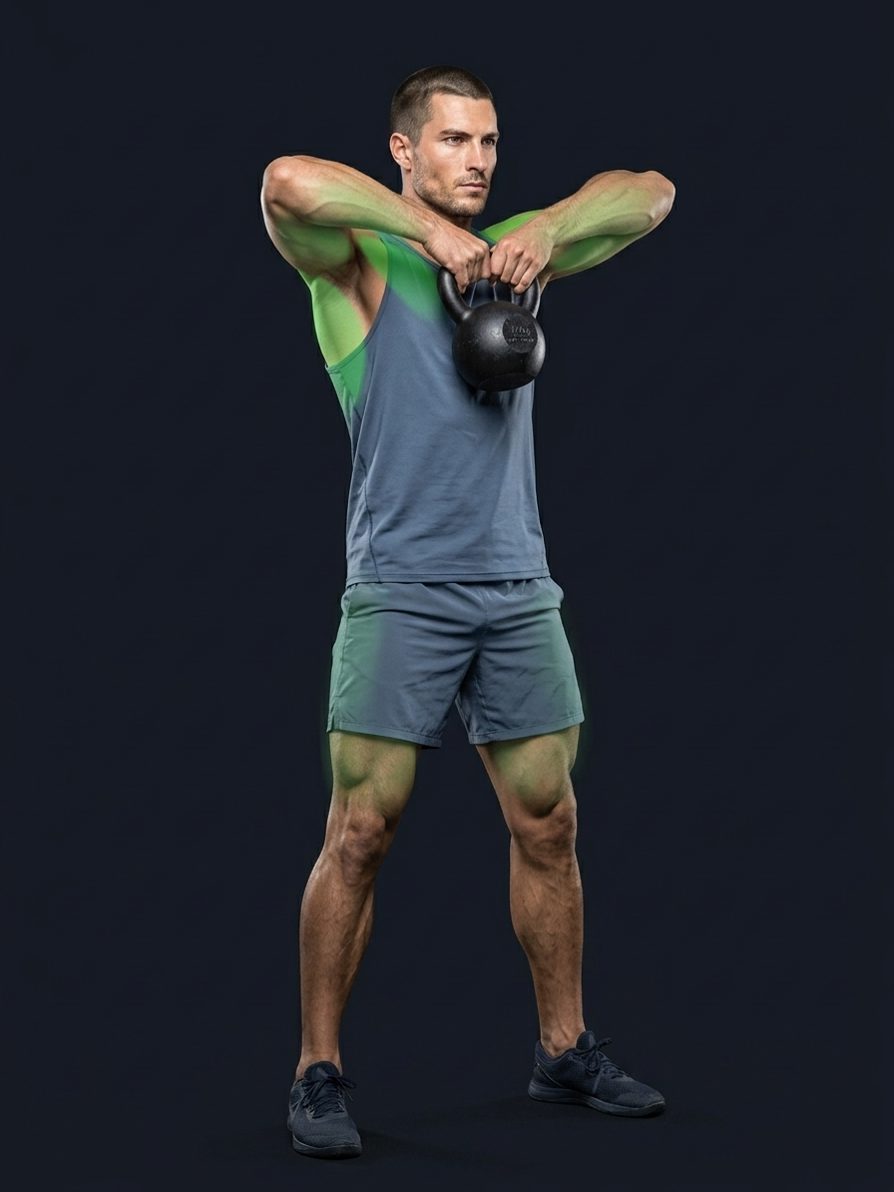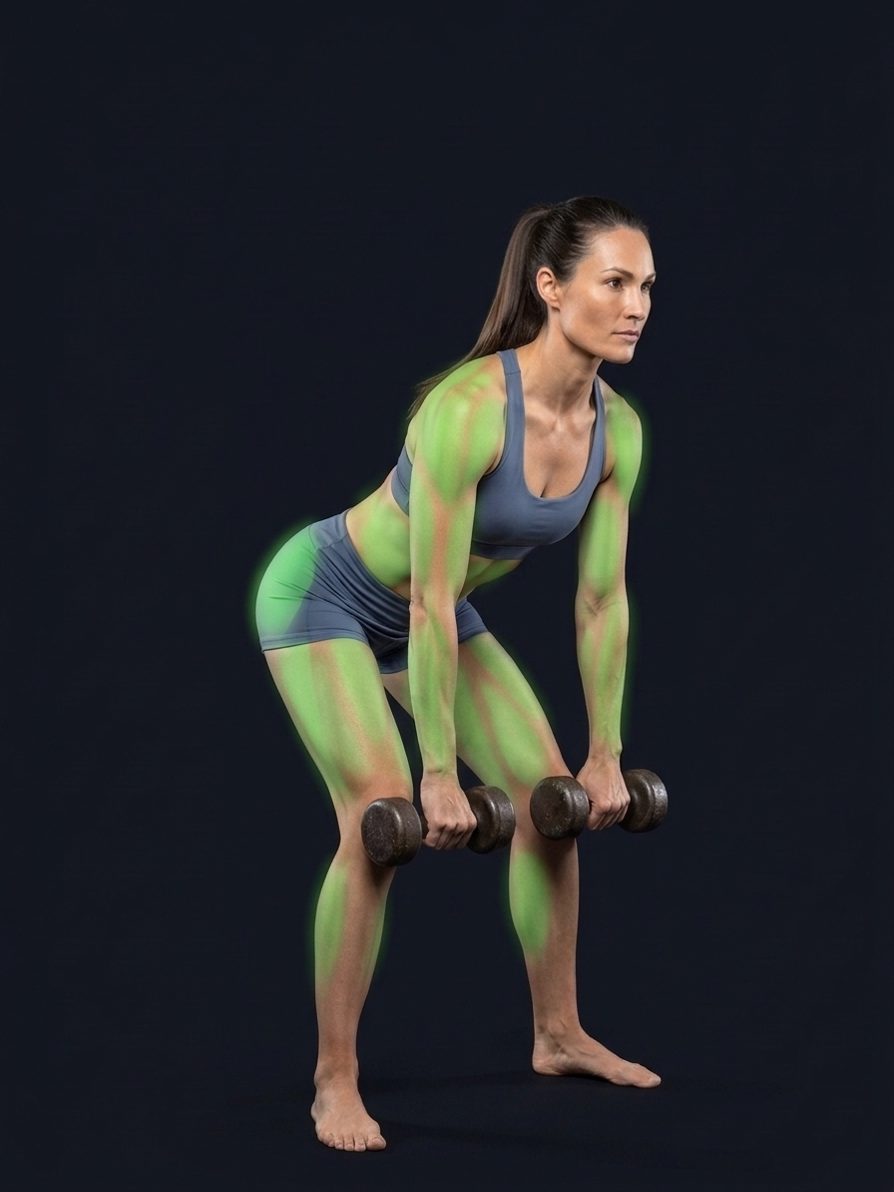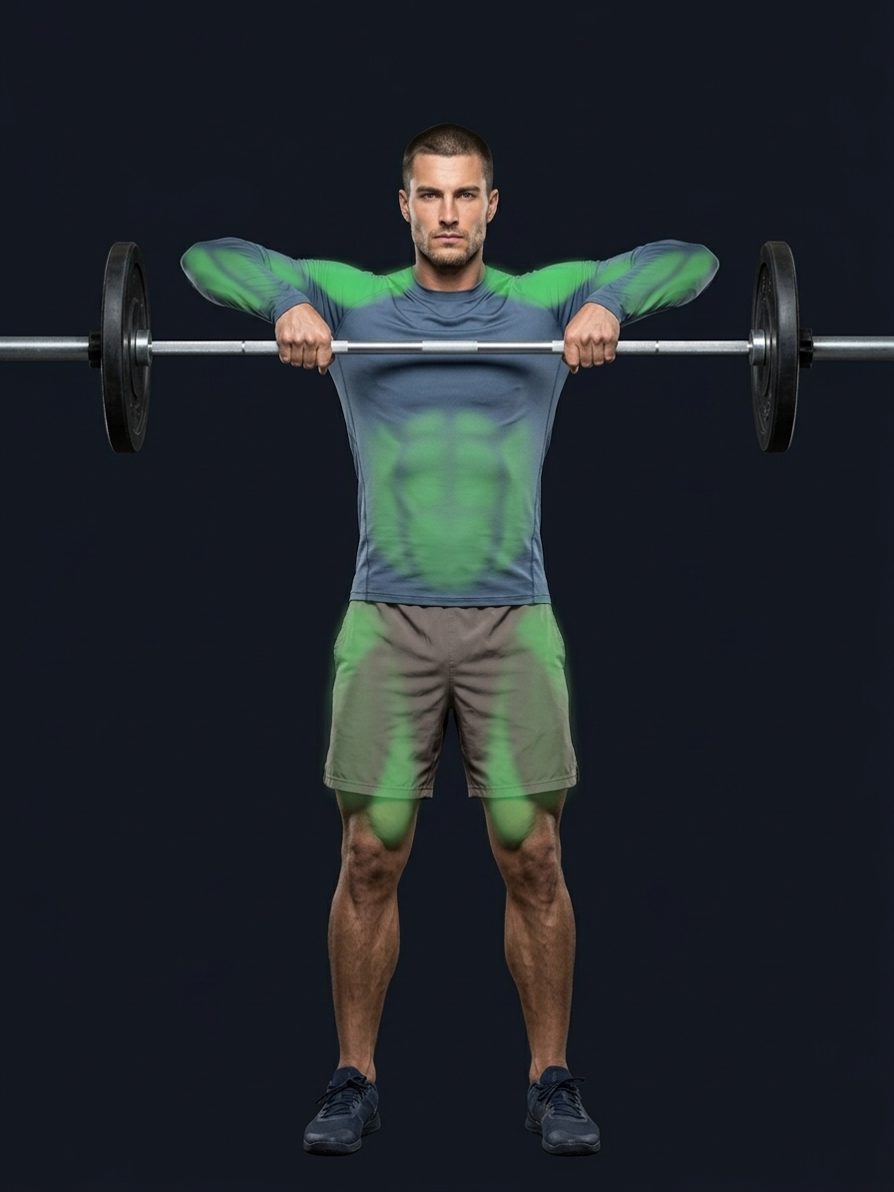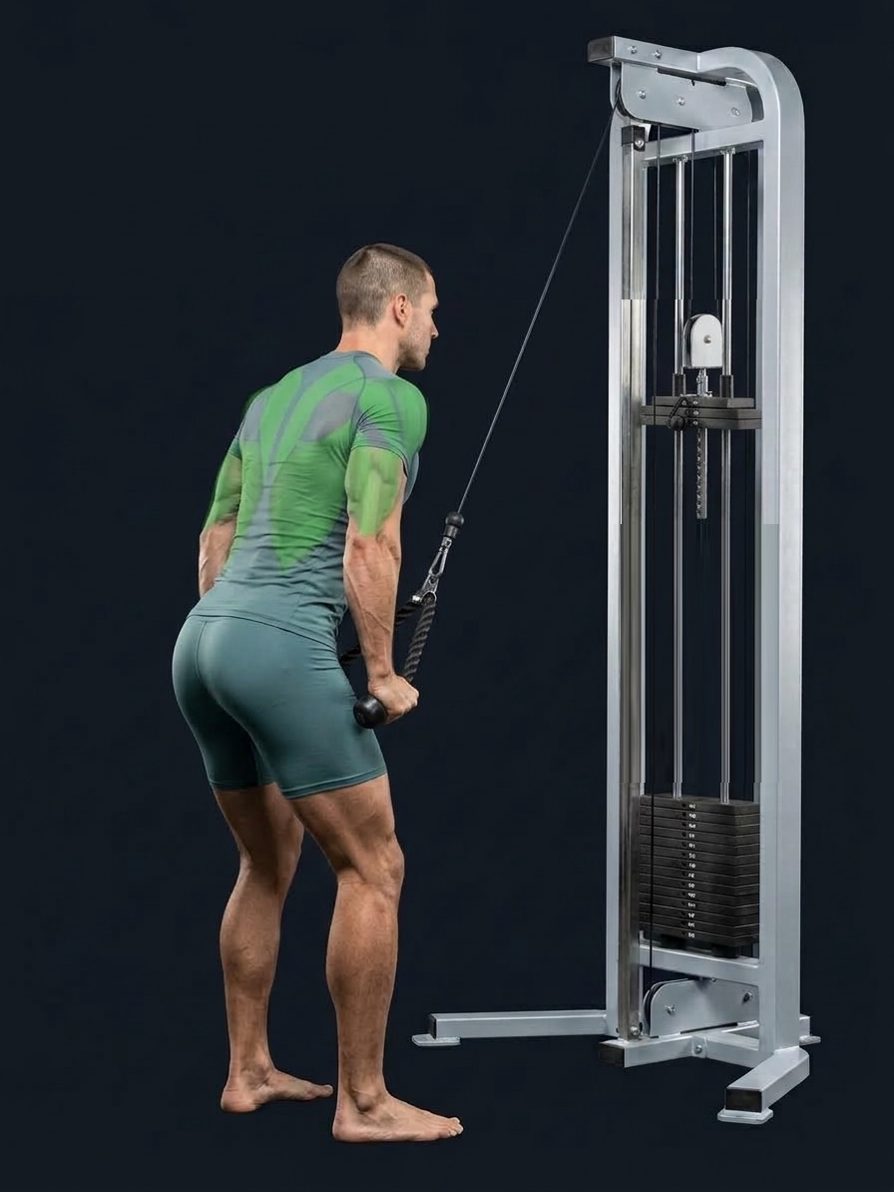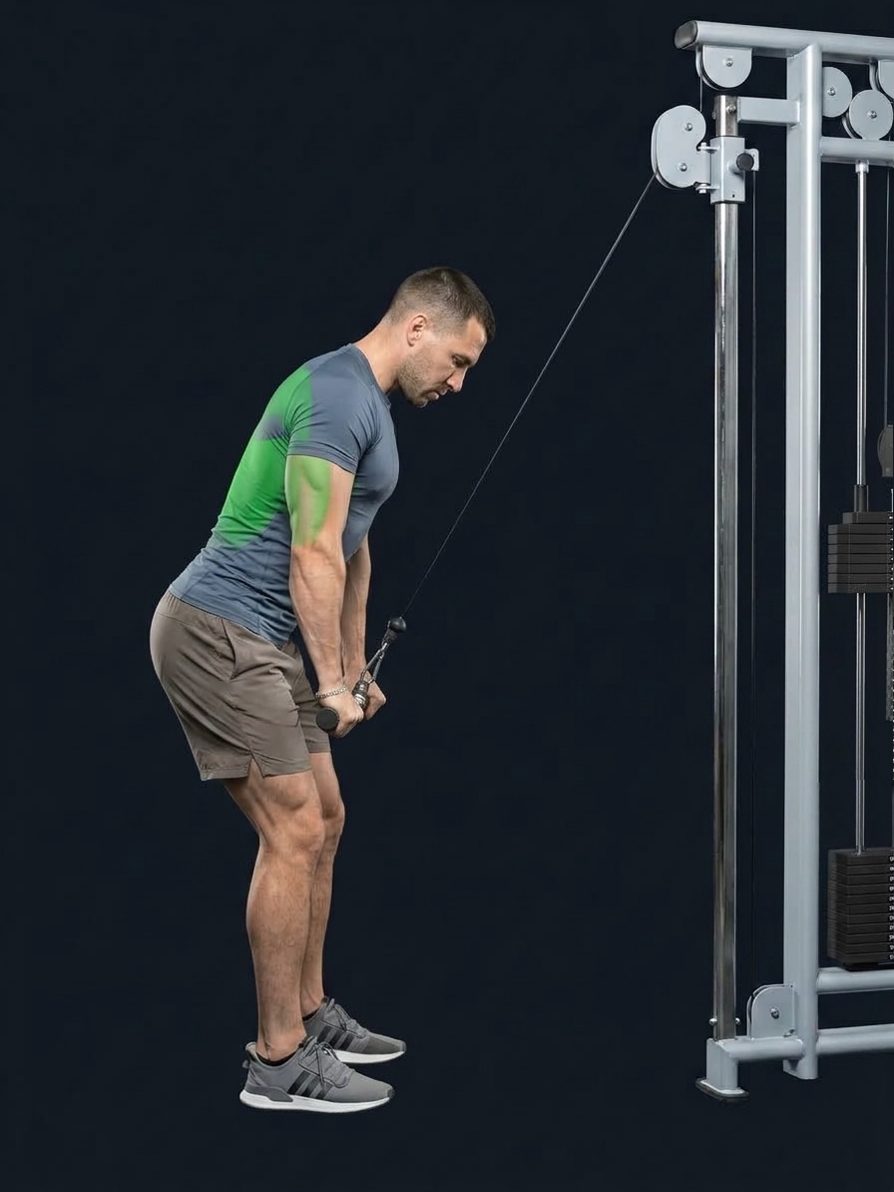
Cable High Pull
- Level
- Intermediate
- Equipment
- Cable Machine
- Movement
- High pull · Standing
- Tracks
- Weight & Reps
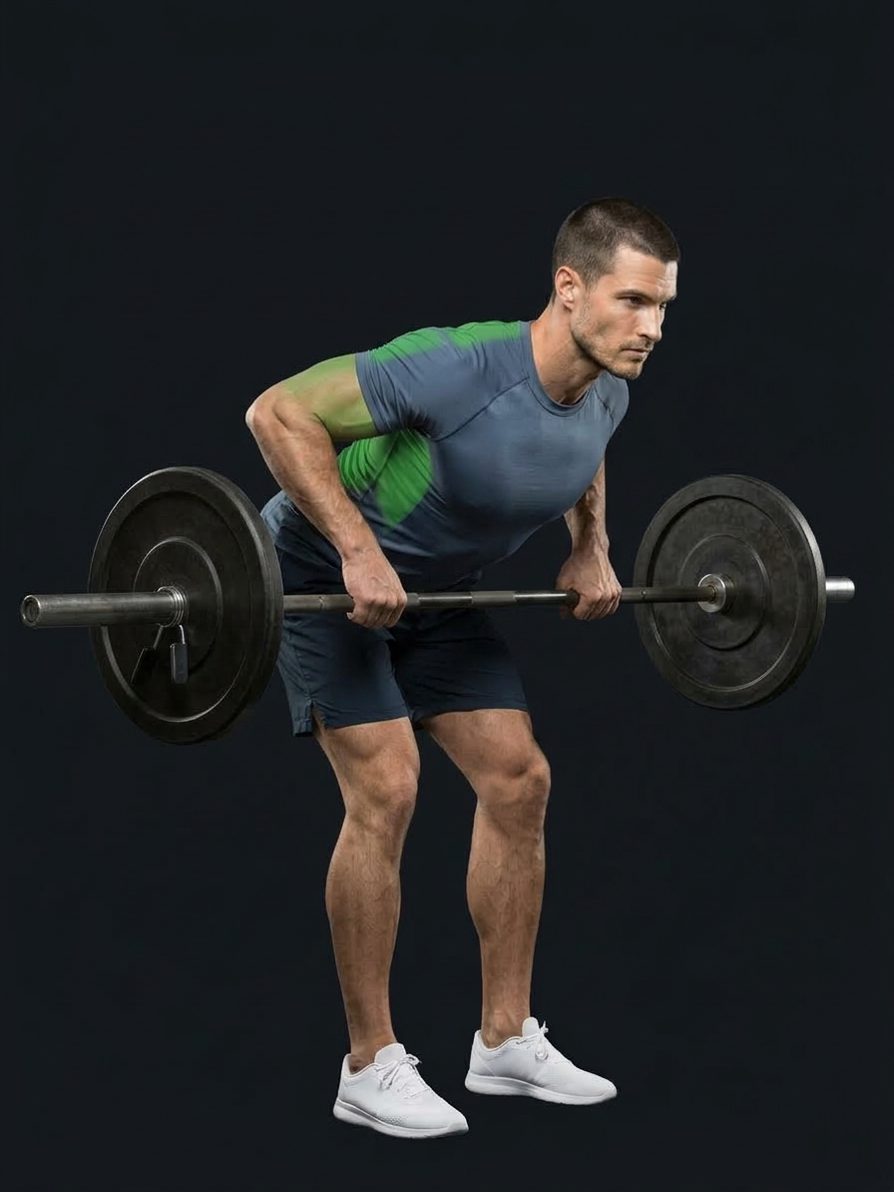
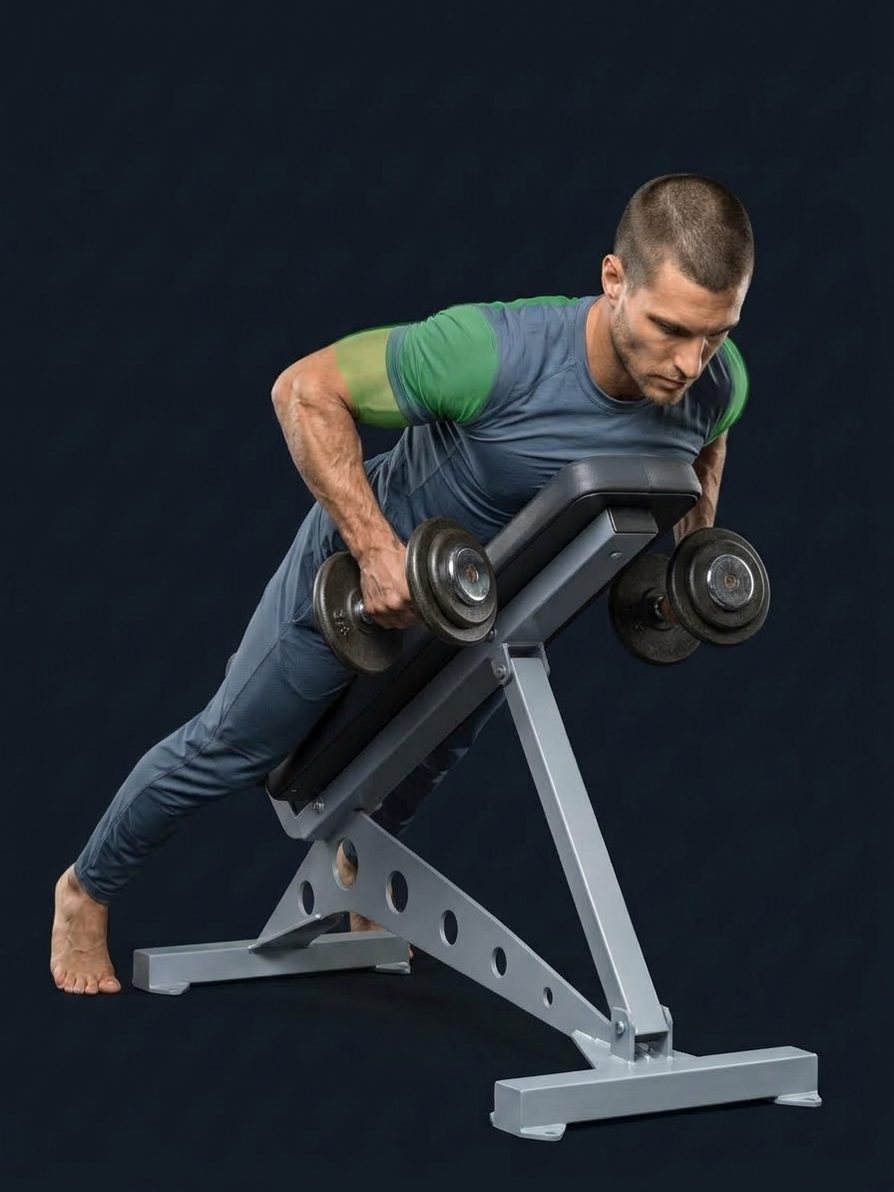
Works
Back Shoulders Traps Rear Delts Biceps Forearms Glutes Abdominals
How to do it
- Set a low pulley with a rope or straight bar.
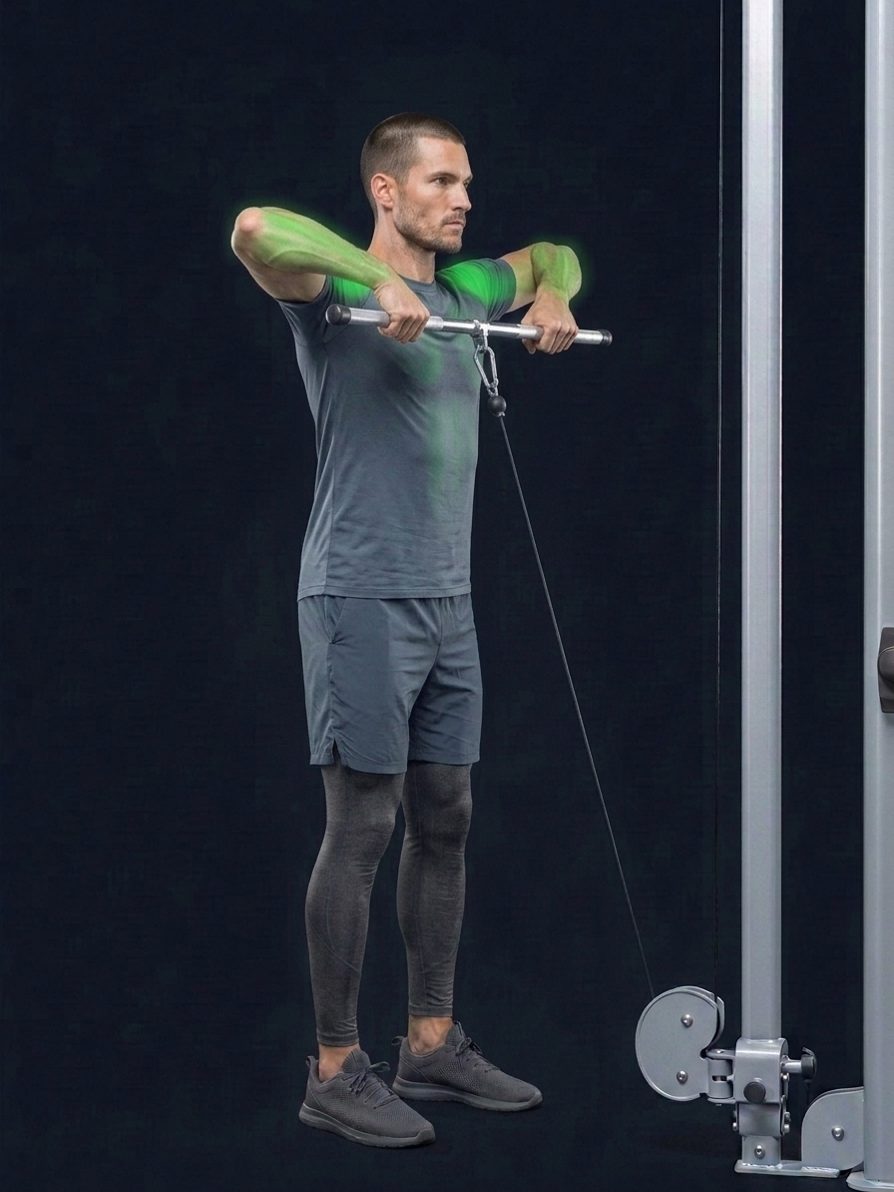
- Stand tall with a slight knee bend and braced torso, and take an overhand grip slightly wider than shoulder width.
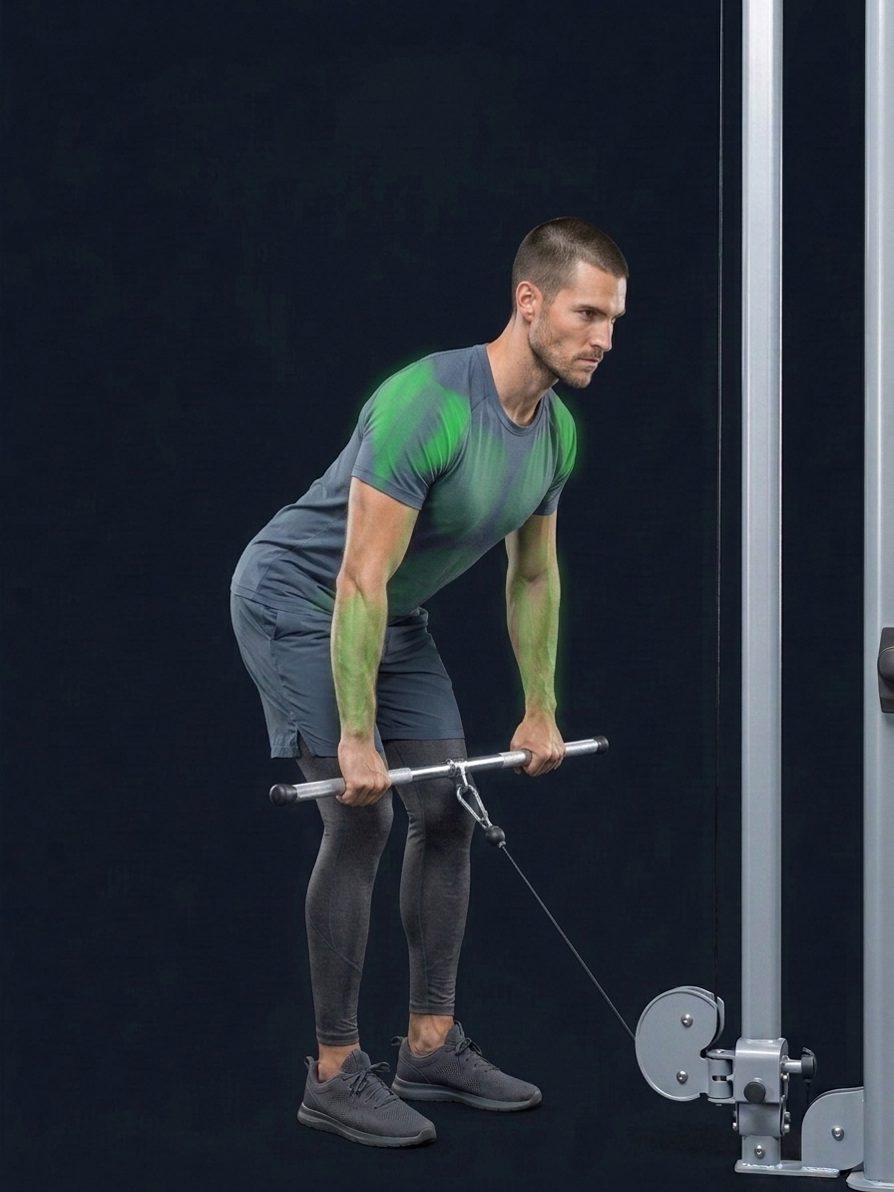
- Start with the arms straight, shoulders down and back, and the cable taut.
- Initiate by extending the legs and hips slightly, then pull as the elbows travel high and outside.
- Keep the handle close to the body path and wrists neutral; do not curl the attachment, and finish near upper-chest height with control and without leaning back or shrugging excessively.
- Lower smoothly along the same path until the arms are long, keeping the stack from slamming, then reset posture between reps and keep breathing steady throughout the set.
Common mistakes
- Pulling with the arms and shoulders before the hips extend.
- Standing too close to the machine, so the cable goes slack and the bottom of the pull loses tension.
- Leaning backward at the top to gain range.
- Bending the elbows too early and turning the pull into an upright row.
- Letting the shoulders round forward at the bottom instead of holding a flat back.
- Using a load so heavy that the movement becomes a slow lift rather than an explosive pull.
Safety
Keep the lower back neutral and avoid hyperextending at the top.
Do not shrug into the finish if you have existing rotator cuff problems.
Keep the cable path clear of your face and body, and control the return so the stack does not yank the arms down.
Check that the attachment and pin are secure before starting.
Tips
- Set up far enough from the machine that the cable is under tension at the bottom, not slack.
- Let the hips and knees start the pull; the arms finish it.
- Keep the handle close to the torso and the elbows above the hands at the top.
- Stay square to the machine and avoid leaning back to complete the rep.
- Use a weight you can accelerate smoothly; if the pull feels slow and grindy, reduce the load.
- Pause briefly at the bottom to reset the hinge rather than bouncing out of it.
Details
- Base movement
- High pull
- Arms
- Both
- Hand orientation
- Pronated (palms down / away)
- Torso lean
- Upright
- Grip width
- Wide
- Body position
- Standing
- Pulley height
- Low